
Review · GOLDEN TRIANGLE TOURS
Golden Triangle Group Tour with 5 Star Hotels – All Inclusive
Golden Triangle, without the stress. What makes this tour feel smart is how much is handled for you, especially local English-speaking guidance and included monument entrance fees for the big-name sights. You still get that classic mix of Delhi street culture, Mughal-era icons, and Jaipur’s royal geometry, but with a group plan that keeps the day from turning into guesswork.
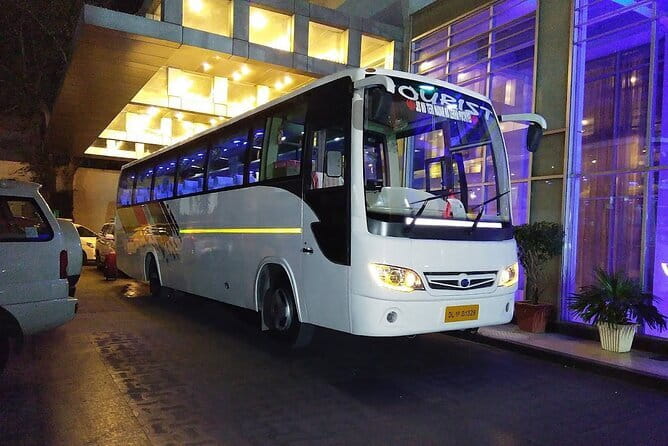
Two things I really like: you get the comfort of an air-conditioned vehicle between cities, and the sightseeing has enough breathing room that it does not feel like a sprint. One drawback to think about is that lunch and dinner are not included, so you’ll want a simple budget for food each day.
Key highlights at a glance
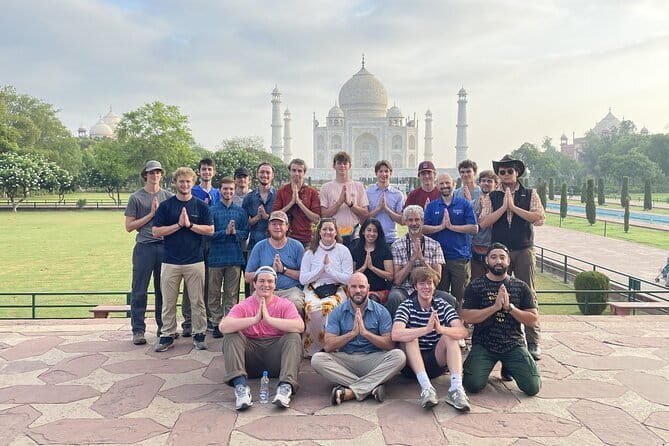
- Small group size (max 9 travelers) keeps questions easy and the pace more human.
- Electric rickshaw through Chandni Chowk gives you a quick hit of Old Delhi without walking everything.
- Major sites included: Qutub Minar, Taj Mahal, Agra Fort, Amber Fort, Jantar Mantar, and City Palace.
- Time-saving transfer plan: direct road travel with set stops, like the tea or coffee break on the Agra drive.
- AC transport plus parking and fuel handled means you’re not paying random extras for getting around.
- 5 breakfasts included helps you start mornings without hunting for a meal first.
Delhi arrival and your first feel for the city
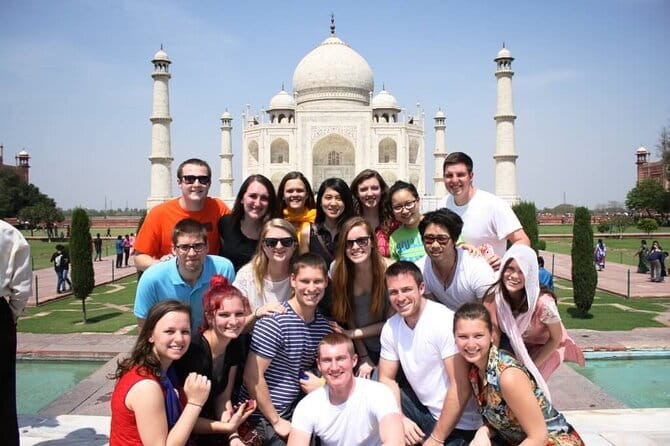
Day 1 is all about landing and settling in. You’re picked up at Indira Gandhi International Airport and transferred to your hotel for a two-night stay in New Delhi. This matters more than it sounds, because Delhi can feel intense on day one. Having a driver and a plan means you can focus on getting oriented, not sorting out logistics.
If you’re arriving on a flight that lands later in the day, this kind of “get settled first” start is a kindness. Even if you do not have a packed schedule on day one, you’ll be ready for Old Delhi the next morning.
You can also read our reviews of more tours and experiences in New Delhi.



Chandni Chowk by electric rickshaw, Jama Masjid, and the Old Delhi loop
On day two, you jump into Old Delhi where the streets do the talking. The big early moment is a ride by electric rickshaw through Chandni Chowk. This is one of the busiest and oldest markets in central north Delhi, and it’s known for being a major wholesale hub. The guide helps you keep your bearings, especially with the market being divided into smaller areas like Chawri Bazar.
From there, you head to Jama Masjid, the Mughal-era imperial mosque in Shahjahanabad. You get a sense of how the power center worked, and the scale helps you understand why this spot stayed important through centuries of change.
Next comes a calmer, reflective stop at Raj Ghat, the memorial dedicated to Mahatma Gandhi, built in 1956. It’s a good contrast after the market energy, and it slows the pace in the best way.
India Gate, Rashtrapati Bhavan, and Shantipath views from the road
After Raj Ghat, the tour adds a few landmark views that help connect Delhi’s layers. You’ll see a 42-meter memorial honoring the 70,000 Indian soldiers who died in World War I for the British Army. The way it’s set up makes it easy to appreciate the scale even if you do not spend long there.
You also pass the former Viceroy’s House, now the residence of the President of India, designed during the British period by Sir Edwin Lutyens and Herbert Baker. Then you drive through the Diplomatic Area called Shantipath, where you can spot embassies along the route.
These road segments are not just driving time. They give context for why Delhi looks the way it does, with government space and monumental architecture sitting side by side with markets and historic neighborhoods.
Qutub Minar stop: a 12th-century giant
The day ends with Qutub Minar, one of the tallest minarets in the world, at 72.5 meters, built in 1192 by Qutab-ud-din Aibak. Even if you’ve seen photos, you’ll likely feel the difference when you’re standing close. It’s a strong way to cap day two because it shifts from daily life and Mughal religion to early Indo-Islamic architecture.
The entry is included, so you’re not dealing with ticket-hunting mid-day. That sounds small, but it keeps the flow smoother for the whole group.
The Agra transfer: 4 hours, plus a real break
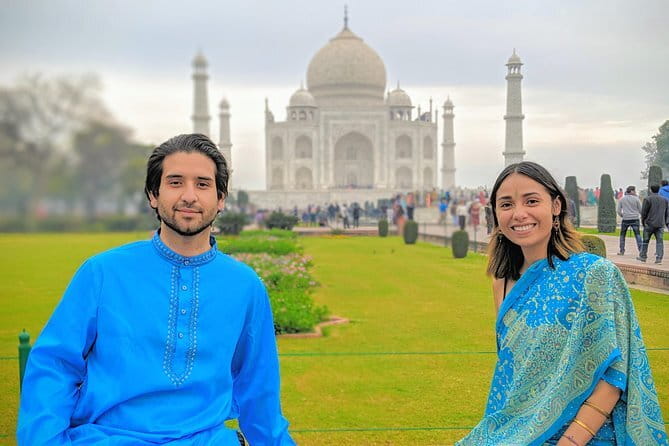
Day three moves you to Agra, the city tied to the Taj Mahal. After breakfast, you check out from your New Delhi hotel and board your vehicle. The drive is about 4 hours, with a 30-minute tea or coffee stop on the way.
That little pause is helpful. On a road trip, it’s rarely the big distance that wears you out, it’s the lack of breaks. Having one built in keeps everyone calmer and reduces the constant snack negotiations that happen on tours without structured stops.
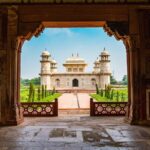
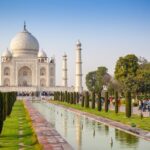
Taj Mahal view point across the Yamuna
When you arrive, you check into your Agra hotel for a night. Later, you get ready for a panoramic view of the Taj Mahal from a viewpoint across the Yamuna River. You spend about 30 minutes there, enough time to take photos, compare angles, and just get your first real impression.
This preview is a smart move. Even if you end up loving the main Taj visit later, the first sight helps you understand why the monument’s placement matters.
Taj Mahal and Agra Fort: the two must-sees that anchor the trip
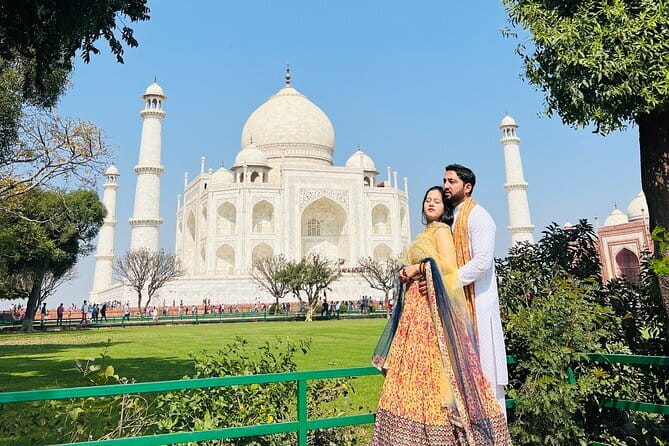
Day four is the day of icons. You start with Taj Mahal with about two hours inside the monument area. The focus here is the story of Shah Jehan building it in memory of Mumtaj Mahal, and you can feel how the architecture does the emotional work.
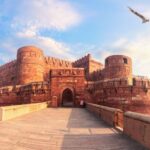
Then you move to Agra Fort, a UNESCO World Heritage Site not too far from the Taj. You get about one hour there. The fort story is less postcard and more political and military: built by Mughal Emperor Akbar for the Mughal Army, then expanded by Shah Jahan with royal palaces for residential life. If you like history that explains power, this is the spot.
By the time you leave, you’ve seen both the romantic centerpiece and the fortified control center that made such monuments possible.
Road to Jaipur: 5 hours of scenery and planned stops
After Agra, you head toward Jaipur by road, with the journey taking about 5 hours. You also stop one or two times for tea or coffee during the drive. It’s a long day, so the structure helps a lot. Everyone arrives ready for the next phase instead of arriving tired and cranky.
Amber Fort and the classic Jaipur trio: Amber, Jal Mahal, City Palace
Day five is built around Jaipur’s big names, in a logical order.
First is Amber Fort, which is described as originally built by Raja Man Singh and expanded by Maharaja Jai Singh I, with upgrades added by later rulers over roughly 150 years. You get about two hours. This is where you see Jaipur’s royal style become physical, from the fort’s scale to the way the complex is laid out.
Next is a quick photo stop at Jal Mahal. You only have about 15 minutes, but it’s enough to get the iconic feel of the palace sitting in the water. If you’re picky about photos, I’d treat this as a “capture quickly, then move on” moment rather than expecting a long visit.
Then comes City Palace of Jaipur, with around one hour. The palace is a blend of Rajputana and Mughal architecture. You’ll see parts of the complex and museums, including mentions of Chandra Mahal and Mubarak Mahal, plus the City Palace Museum area and the Shri Govind Dev Ji Temple. The tour also notes that the royal family still lives in private sections, which adds a living-in-the-background quality.
Jantar Mantar: the astronomy stop that surprises people
After City Palace, you go to Jantar Mantar, Jaipur’s astronomical observatory. It has 19 astronomical instruments, built by Maharaja Sawai Jai Singh II during the 18th century. You’ll have about 45 minutes here.
This is one of the most interesting “how did they do that” stops on the whole trip. If your travel style includes seeing how science and society mix, you’ll enjoy this more than you expect. If you mostly want pure sightseeing photos, the instruments still reward you because they’re visually strong.
Birla Mandir Temple: a calm finish to the Jaipur day
To wrap up day five, you visit Birla Mandir Temple, dedicated to Lord Vishnu and Goddess Laxmi. You have about 30 minutes. It’s a quieter stop after forts and palace halls, and it works well as a reflective pause before your departure day.
How the included things add up in real value
The most practical part of this tour is what’s handled upfront. You’re not just buying a ride and then paying entry fees separately. The price covers group touring, an air-conditioned vehicle, fuel and parking, and the monument entrances for several major stops, including Qutub Minar, Taj Mahal, Agra Fort, Amber Fort, Jantar Mantar, and City Palace.
It also includes five breakfasts. That’s a helpful foundation when lunch and dinner are on you. I’d plan around that like this: breakfast is covered, and then you choose your own lunches and dinners each day based on what you feel like doing.
Breakfast included also makes early mornings easier. You don’t lose time figuring out where to eat, and the group can keep moving.
Group tours, pace, and what “no rushing” means
This is a group tour with a maximum of 9 travelers. That size is big enough to meet people, small enough that you’re not stuck waiting forever.
You’ll still experience the classic reality of Golden Triangle travel: road time between cities. The good news is the schedule is built around set drives with breaks. On day three, you have a tea or coffee stop during the Agra transfer. On day four, you’re moving after the fort and then spending the hours to Jaipur with one or two more breaks.
The key is that the visits are slotted with reasonable time windows, so it does not feel like you’re only looking at monuments from the doorway. This is especially important at the Taj Mahal and Amber Fort, where time to walk and absorb is what makes the experience feel worth it.
Hotels and the “all inclusive” label you should read carefully
The tour name highlights 5-star hotels and an all-inclusive concept. From the details provided, what is clearly included is hotel nights at key points (two nights in Delhi, plus an Agra hotel night), plus breakfast (5). Lunch and dinner are explicitly not included.
So here’s the practical way to think about it: you’re getting a strong package for lodging, transport, guide help, and major entries. You’re just responsible for some meals.
That can still be great value. Many travelers actually like having control over lunch and dinner, because Indian food choices vary a lot by neighborhood and mood. Just don’t assume every meal is covered.
Who should book this Golden Triangle group tour
I’d point you toward this tour if:
- It’s your first time in India’s Golden Triangle and you want major highlights without planning each step.
- You like the idea of having a local English-speaking guide explain what you’re seeing.
- You prefer group logistics where transport, entry fees, and timing are already mapped out.
- You want a smaller group size up to 9, not a huge bus herd.
You might want to skip it if:
- You hate any fixed schedule and want fully free time each day.
- You want lunch and dinner included with no extra budgeting.
- You’re traveling in a way that requires a private pace, not a shared one.
Should you book this Golden Triangle Group Tour with 5-star hotels?
If you’re aiming for a smooth first Golden Triangle experience, I think this is a strong buy. At $190 for roughly 6 days, you’re not just paying for transportation. You’re paying for guide support, air-conditioned travel, key monument entrance fees, and breakfast coverage. That combination usually costs more when you piece it together on your own.
The main “check your assumptions” item is meals. Since lunch and dinner are not included, you’ll need to budget a bit. If that’s fine with you, this tour is a practical way to see Delhi, Agra, and Jaipur without getting tangled in planning.
FAQ
What cities are included in the Golden Triangle tour?
The tour covers New Delhi, Agra, and Jaipur.
How long is the tour?
It runs for about 6 days.
Is pickup available, and where does the tour start?
Pickup is offered, and the start point is Indira Gandhi International Airport in New Delhi.
How large is the group?
The tour has a maximum of 9 travelers.
What meals are included?
Breakfast is included for 5 days. Lunch and dinner are not included.
Are monument entrance fees included?
Yes. Entrance fees are included for Qutub Minar, Taj Mahal, Agra Fort, Amber Fort, Jantar Mantar Jaipur, and City Palace of Jaipur.
Is there an Old Delhi rickshaw ride?
Yes. You visit Chandni Chowk by electric rickshaw.
What transport will I use between cities?
You travel in an air-conditioned vehicle, with local English-speaking guide support during sightseeing.
Where will I be dropped off at the end of the tour?
On day 6, you return to New Delhi by road and your driver transfers you to Delhi Airport or your suggested place in Delhi.
More Tours in New Delhi
More Tour Reviews in New Delhi
Not for you? Here's more nearby things to do in New Delhi we have reviewed




More Golden Triangle Tours to consider.
 ★ 5.03-Days Private Golden Triangle Tour: Delhi, Agra & Jaipur by CarTickets from $1271,107 traveller reviews
★ 5.03-Days Private Golden Triangle Tour: Delhi, Agra & Jaipur by CarTickets from $1271,098 traveller reviews
★ 5.03-Days Private Golden Triangle Tour: Delhi, Agra & Jaipur by CarTickets from $1271,107 traveller reviews
★ 5.03-Days Private Golden Triangle Tour: Delhi, Agra & Jaipur by CarTickets from $1271,098 traveller reviews
 ★ 5.03-Day Delhi, Agra and Jaipur Private Tour – India Golden TriangleTickets from $110812 traveller reviews
 ★ 5.0Four-Day Private Luxury Golden Triangle Tour to Agra and Jaipur From New DelhiTickets from $160807 traveller reviews
 ★ 5.05 Nights 6 Days Private Golden Triangle Tour – Delhi Agra JaipurTickets from $240574 traveller reviews
 ★ 5.04 Days Golden Triangle TourTickets from $146499 traveller reviews
 ★ 5.0Private Car and Drive for Golden Triangle (4N/5D)Tickets from $167451 traveller reviews
 ★ 5.0Private Golden Triangle Tour Delhi Agra Jaipur ( Top Rated )Tickets from $148436 traveller reviews
More useful Delhi routes