
Review · GOLDEN TRIANGLE TOURS
Golden Triangle with Wildlife and Royal Castle Stay
Tiger chances and Taj views in one circuit. This Golden Triangle run through Delhi, Agra, and Jaipur adds two big twists: a morning safari in Ranthambore National Park and an overnight in Talabgaon Castle, a heritage fort turned boutique resort.
I really like the comfort and simplicity of the logistics. You get door-to-door, air-conditioned vehicle transfers with a chauffeur, and the trip also bundles a lot of the road costs like permits, parking, tolls, and fuel.
One consideration is that monument entry and camera fees are not included, so your total cost will depend on how many paid sites you choose and whether camera charges apply. Also, some stops are time-limited, so you will want to move efficiently and pre-decide what matters most to you.
Key things that make this tour worth a look
- Golden Triangle highlights with a wildlife add-on, not just postcard sights
- One included heritage night at Talabgaon Castle, in a 200-year-old fort setting
- Ranthambore jungle safari by shared gypsy with a nature guide and real chances to spot tigers
- Guided visits at major monuments, with you not stuck figuring things out alone
- Free-entry museum and temple stops in Jaipur, which helps control extra spend
Golden Triangle, plus Ranthambore wildlife and a heritage castle stop
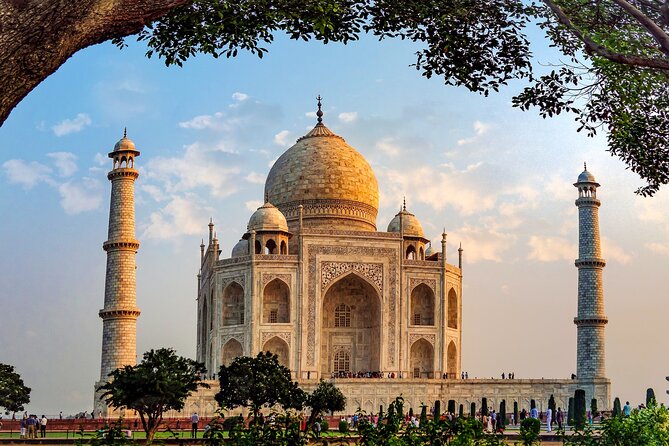
The Golden Triangle is popular for a reason. In a short window, you cover the big-name monuments people come to India for, especially the Taj Mahal and Amber Fort area.
What makes this version feel more satisfying is the contrast. Big stone monuments take up the first half, then you shift to wildlife time in Ranthambore, and finally you slow down with an overnight at Talabgaon Castle. That “different mode” of travel is where the memory gets bigger than the checklist.
More New Delhi tours and experiences for the shortlist



Getting around: air-conditioned chauffeur, door-to-door flow, and what it means for you
You are not taking trains between cities here. You are doing long-distance driving in an air-conditioned vehicle with an experienced chauffeur, and you start the day at 9:00 am.
That matters because the Golden Triangle can be tiring when you are constantly reorganizing transport. With this setup, you can focus on sightseeing and actually pace yourself, instead of losing energy to logistics. Past guests often single out the driver as a key part of the trip, including people like Prem, Kapil, Mayur, and Narendra Singh, nicknamed Verstappen, for keeping things smooth on the road.
Still, you should plan mentally for day-to-day sitting time. Even with comfort, you are spending multiple hours between cities, and you will enjoy the sights more if you bring snacks, water, and a relaxed mindset.
Day 1 Delhi stops that actually matter: Humayun’s Tomb, Red Fort, Qutub Minar
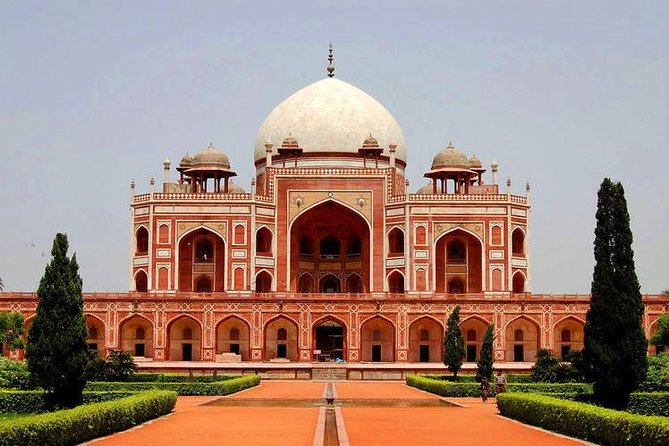
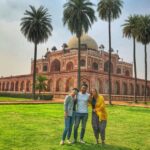
Delhi can feel like sensory overload, so I like a structured start. Your day begins at Humayun’s Tomb, a 16th-century Mughal monument built by Humayun’s wife, Haji Begum. It is often treated as an architectural predecessor to the Taj Mahal, so it gives you helpful context before you reach Agra.
Next is Raj Ghat, Gandhi’s cremation memorial on the banks of the Yamuna. This stop gives the trip a reflective pause, and the landscaped gardens make it feel calmer than you might expect from a city day.
Then you move to Red Fort, a 17th-century red sandstone fortress with palaces and gardens inside the massive boundary wall. After that, Qutub Minar closes the loop with scale and history, rising 237 feet and serving as the Delhi landmark you will likely recognize from photos.
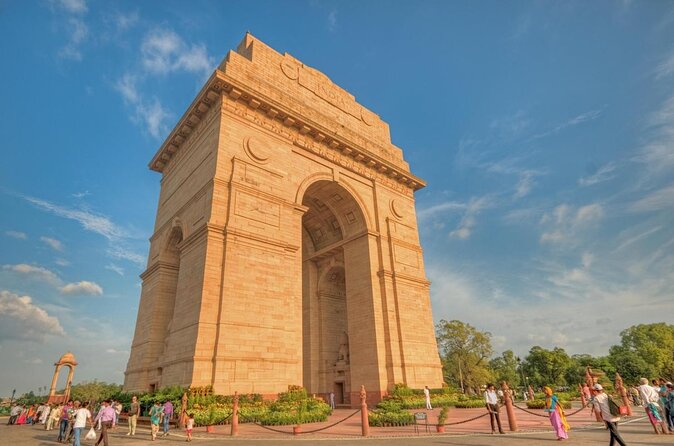
You finish at India Gate, the war memorial for the 70,000 Indian soldiers who died in World War I. One practical tip here: even if each stop is only about 30 minutes, that short timing can work well if you decide what to look for first, for example inscriptions, courtyards, or viewpoints.
Day 2 Agra: Taj Mahal guided viewing, plus Agra Fort and the Yamuna side
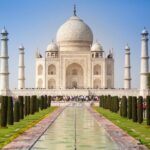
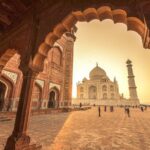
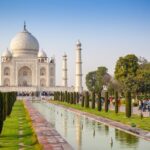
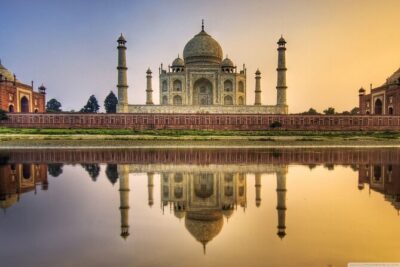
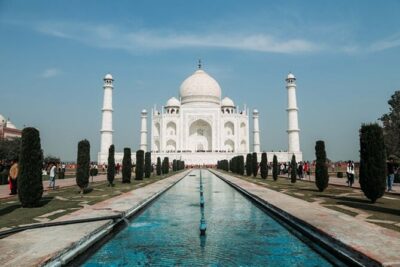
Agra is the day where you will feel the trip’s ambition. You get a guided hour at the Taj Mahal, and a guide will meet you there. That is a smart value if you want to understand what you are seeing without translating every detail yourself.
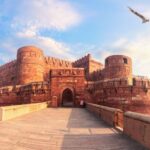
After the Taj, you move to Agra Fort, built by Emperor Akbar in 1565. It sits on the bank of the Yamuna, and the guide helps you connect the fort’s role to the broader Mughal story.
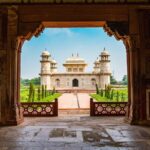
Then you visit Itmad-ud-Daula, a mausoleum overlooking the Yamuna River. This is one of those sights that feels smaller than the Taj but often hits harder for people who like craft and architectural details.
You wrap with Mehtab Bagh, a set of 11 parks on the Yamuna’s east bank. It is a good “breather” stop, especially if you want a different angle of the river and the area around the monuments.
Across all Agra stops, remember that monument and camera fees are not included. I suggest setting aside time at the start of the trip to handle tickets calmly, so you are not scrambling once you are already in the crowd.
Day 3 Ranthambore safari morning, then check into Talabgaon Castle
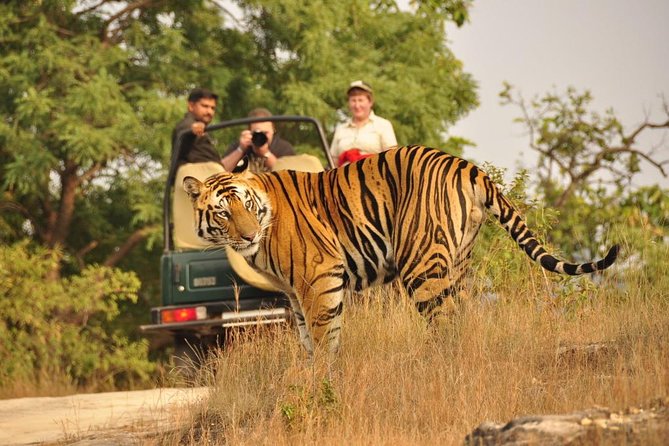
Ranthambore National Park is the headline wildlife moment. Your safari is in the morning using a shared gypsy with a nature guide, and it runs about 3 hours with admission included.
You do not get a guaranteed tiger sighting. What you do get is a real chance. The safari description specifically notes possible sightings like hyenas, chittas, jungle cats, panthers, and Indian tiger if you are lucky. That list is useful because it reminds you to watch for more than one animal, and it keeps your eyes busy even on slower sightings.
After the safari and breakfast, you travel to Castle Talabgaon. This place is a 200-year-old Indian fort and family home, now a heritage boutique hotel. The “fort to hotel” concept changes the feel of the trip, because you are not just swapping beds. You are switching to a setting that is built around the local past.
You also get a village safari at Talabgaon, which helps balance the wildlife day. It is a different kind of nature time, and it often turns into the kind of memory that is not strictly about animals or monuments.
Day 4 Jaipur: Birla Mandir and Albert Hall for a calmer pace
Jaipur can be intense, so I like that the day starts with a couple of stops that feel easier to manage.
First is Birla Mandir, a Hindu temple located in Jaipur. It sits on elevated ground at the base of Moti Dung, and it comes with free admission on this plan. It is worth going with a little time to look at the temple’s setting, not just the main structure.
Next you visit Albert Hall Museum, also with free admission. It is the oldest museum of Rajasthan and functions as the state museum. For many people, this is where you slow down and understand the region’s artistic and cultural background before the forts and palaces take over your camera roll.
This is also one of your smartest “cost-control” days. Since these two stops are free on the plan, you reduce the risk that daily paid-entry charges will blow up your budget.
Day 5 Jaipur grand hits: Amber Fort jeep ride, City Palace, Hawa Mahal, Jantar Mantar
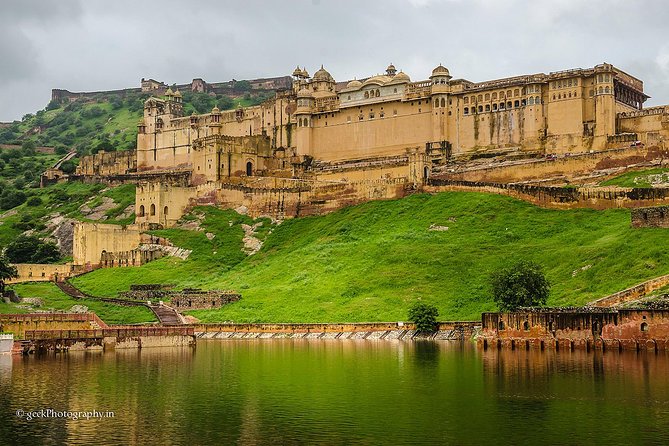
This is the day most people picture when they think of Jaipur. You start with Amber Palace and a jeep ride to and from the fort atop the hill.
The description highlights that your guide explains the history, so you get more than just a scenic drive. Amber Fort area is huge, so jeep access matters, and it helps you spend more energy on the palace experience itself rather than the uphill fatigue.
Next is City Palace in the heart of Jaipur. It is known for a blend of Rajasthani and Mughal architecture, and you will get to see collections like textiles, costumes, and armour. If you like design and material culture, this stop is where you can focus without feeling like you are just “passing through.”
Then comes Hawa Mahal, the Palace of Wind. It was constructed for royal ladies to watch royal processions without being seen. That detail gives you a better reason to look at the façade, not only admire it.
You end with Jantar Mantar, the stargazing observatory built by Maharaja Jai Singh. It is technical and visual, and it makes a nice capstone after palace architecture because it shows a different side of royal life.
One key practical note: monument entry and camera fees are not included for these stops. Even if you are excited, you should still plan for ticket time so the day stays enjoyable, not stressful.
Talabgaon Castle versus standard hotels: why one night changes the trip
Most Golden Triangle trips feel like hotel-to-hotel check-ins with a sprint between monuments. This plan breaks that pattern.
Talabgaon Castle gives you one night in a heritage fort turned boutique hotel. Because it is described as a 200-year-old family home and a heritage resort, you should expect the property to feel more “place-based” than a chain. That “place-based” feeling matters on this route, because the rest of the trip is dominated by big, famous sites.
You also get a village safari at Talabgaon. That pairing, wildlife one day and village nature the next, is how the trip avoids becoming just a photography marathon.
Price and value: what the $415 covers, and what you’ll still pay
At $415 per person for about 6 days, the headline value is that the major movement is handled for you. The plan includes accommodation in 3-star hotels for most nights, plus one night at Talabgaon Castle, plus daily breakfast and at least one included dinner.
It also includes transportation by air-conditioned vehicle with a chauffeur, and it covers interstate taxes, permits, parking, road tax, tolls, and fuel charges. That is often the hidden budget eater on self-planned routes.
What is not included is just as important. Monument entrance and camera fees are not included, so your add-on costs depend on how many paid areas you enter each day. To avoid surprises, treat paid entries as a separate line item rather than thinking of them as optional extras.
If you want the simplest value math, ask yourself this: do you prefer paying a bit more upfront to reduce planning friction? If yes, this plan fits well. If you prefer full control and you plan to handle taxis and tickets yourself, you might find cheaper options outside a package.
Who this tour suits best, and who should think twice
This tour is a strong fit if you want classic Golden Triangle sights with a serious wildlife day added. It is also a good choice if you do not want to manage intercity transport and tickets on your own.
It is also a decent match for solo travelers, because the tour is designed as a private experience with door-to-door transport, and at least one driver-led style of travel seems to prevent anyone from feeling stuck. For example, drivers like Prem have been praised for making solo travelers feel looked after, which matters when you are traveling alone in a new country.
If you dislike early mornings or you need a fully unstressful day with zero walking, you might want to reconsider. The tour asks for moderate physical fitness, and the safari and palace days include rides and walking inside monuments.
Also, because entry fees are not included, you should be comfortable budgeting extra money for the sites that charge.
Should you book this Golden Triangle with wildlife and Talabgaon?
I would book it if you want an efficient route that still gives you variety: Mughal-era masterpieces in Delhi and Agra, fort-and-palace days in Jaipur, and a legit Ranthambore safari plus a heritage castle night at Talabgaon.
I would hesitate if you hate the idea of additional monument costs, because camera and entrance fees will likely be on you. I would also be cautious if you want extra time at fewer sites, because some stops are designed to be short and you will need to prioritize.
If you like a well-run car-based circuit and you want the tiger-or-nothing factor built into your itinerary, this one deserves a place on your shortlist.
FAQ
What is the duration of the tour?
It runs for about 6 days.
Where does the tour start and what time?
It starts at 9:00 am.
Does the tour include transportation?
Yes. You get surface transportation in an air-conditioned vehicle with an experienced chauffeur, including door-to-door transfers.
Is pickup provided?
Pickup is offered, and you can also be dropped either at the airport or your hotel in Delhi on the final day.
Are meals included?
Breakfast is included (5 times). Dinner is also included.
Is the Ranthambore jungle safari included?
Yes. You get a jungle safari using a shared gypsy at Ranthambore with a nature guide (one round), and it includes admission.
Are Taj Mahal, Amber Fort, and other monument entry fees included?
No. Monument entrance and camera fees are not included.
Is there a night stay at Talabgaon Castle?
Yes. The tour includes one night accommodation at Castle Talabgaon.
What is the cancellation policy?
Free cancellation is available. You can cancel up to 24 hours in advance for a full refund.
Is this tour private?
Yes. It is described as a private tour or activity, meaning only your group participates.
More Wildlife Experiences in New Delhi



More Tour Reviews in New Delhi



Not for you? Here's more nearby things to do in New Delhi we have reviewed







More Golden Triangle Tours to consider.
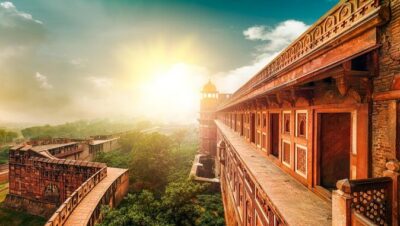 ★ 5.03-Days Private Golden Triangle Tour: Delhi, Agra & Jaipur by CarTickets from $1271,107 traveller reviews
★ 5.03-Days Private Golden Triangle Tour: Delhi, Agra & Jaipur by CarTickets from $1271,098 traveller reviews
★ 5.03-Days Private Golden Triangle Tour: Delhi, Agra & Jaipur by CarTickets from $1271,107 traveller reviews
★ 5.03-Days Private Golden Triangle Tour: Delhi, Agra & Jaipur by CarTickets from $1271,098 traveller reviews
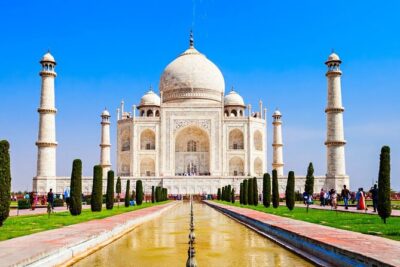 ★ 5.03-Day Delhi, Agra and Jaipur Private Tour – India Golden TriangleTickets from $110812 traveller reviews
 ★ 5.0Four-Day Private Luxury Golden Triangle Tour to Agra and Jaipur From New DelhiTickets from $160807 traveller reviews
 ★ 5.05 Nights 6 Days Private Golden Triangle Tour – Delhi Agra JaipurTickets from $240574 traveller reviews
 ★ 5.04 Days Golden Triangle TourTickets from $146499 traveller reviews
 ★ 5.0Private Car and Drive for Golden Triangle (4N/5D)Tickets from $167451 traveller reviews
 ★ 5.0Private Golden Triangle Tour Delhi Agra Jaipur ( Top Rated )Tickets from $148436 traveller reviews
More useful Delhi routes