
Review · GOLDEN TRIANGLE TOURS
Golden triangle & The Burning city Varanasi 9 Nights
India hits you fast, and this route hits harder. This 10-day loop strings together the big-name sights of Delhi, Agra, and Jaipur, then shifts gears to Varanasi, where the Ganges turns sightseeing into something more emotional. What makes it interesting is the balance, you get royal and Mughal landmarks on one hand, and on the other, you spend real time at the ghats and temples that locals treat as part of daily life.
Two things I like a lot are the guide-led pacing and the way the itinerary mixes headline monuments with lived-in spirituality. I’ve also found the best moments come from asking questions on the spot, and the guide on this trip, Rajendra Halduniya (friendship name Raji), has a reputation for handling requests and suggesting extra experiences when your group wants to wander a bit.
One consideration, this is a packed “see a lot” itinerary. You’ll be in transit and on-site for many hours each day, and lunch is not included, so you’ll want a plan for meals that work with your energy levels.
Key highlights you’ll actually feel

- Raji as a hands-on guide, known for detail, patience, and accommodating unplanned stops
- Golden Triangle icons plus the Varanasi river experience, not just photos from a viewpoint
- Ganges river boat ride and extended time at ghats, including Manikarnika Ghat
- UNESCO sites are covered (Humayun’s Tomb, Jantar Mantar, Agra Fort), with entrance fees included
- Transport handled end-to-end, including a train leg (Agra to Varanasi) and a flight (Varanasi to Delhi)
- Delhi tuk-tuk ride, a practical way to break up the monument days
Delhi Day 1, Jama Masjid, Lotus Temple, India Gate, plus the tuk-tuk break
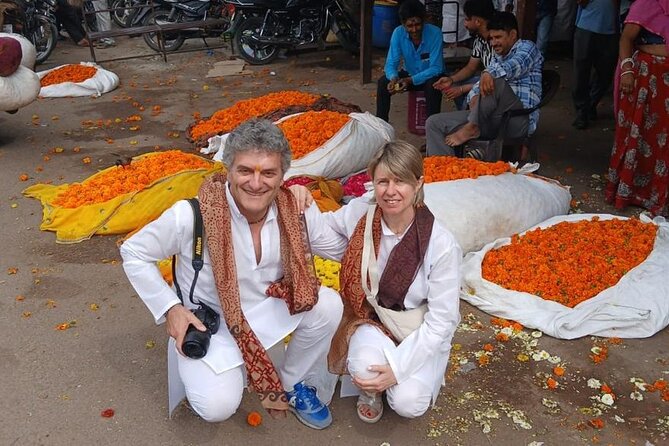
Delhi Day 1 is a strong “orientation” day. You start at Jama Masjid, one of the city’s most dramatic Mughal-era mosques. Red sandstone and white marble do the heavy lifting here, and the scale is the point, it’s meant to impress people moving through a huge public space.
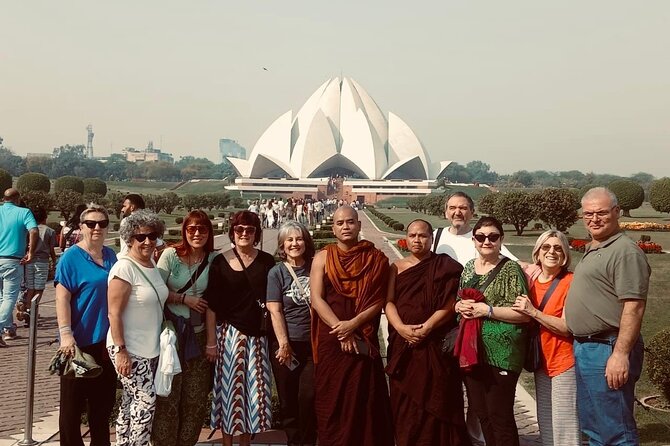
Next up is the Lotus Temple, the Bahá’í House of Worship with that instantly recognizable lotus shape. The best part is not the exterior alone, it’s the calm you feel after the energy of older Mughal streets. If you need a breather, this is your breather.
Then you hit India Gate, where you get a quick sense of the country’s public memorial landscape. It’s short and simple on time, which is good, since you’re saving stamina for later Delhi days.
The day ends with a tuk-tuk ride meant to show you more local life than you’d get from a nonstop bus approach. Expect traffic, stop-and-go streets, and a different perspective on the city. It’s also a reminder that India travel is not about speed, it’s about reading the streets as you go.
You can also read our reviews of more city tours in New Delhi

Delhi Day 2, Akshardham and the Mughal-to-modern mix
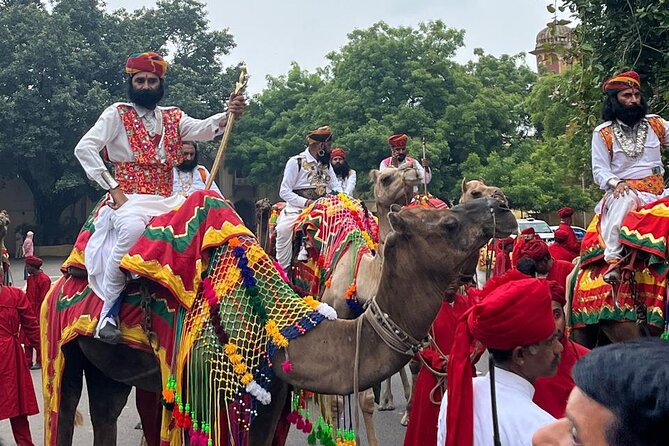
If Day 1 is Mughal and monuments, Day 2 is spiritual sites and major landmarks. You begin at Swaminarayan Akshardham, a large spiritual and cultural complex that opened in 2005. The experience is designed for more than a glance, so give yourself time to look slowly and not rush every section.
Then you go to Humayun’s Tomb, a UNESCO World Heritage site and a standout Mughal masterpiece. Even if you’ve visited other Mughal gardens and tombs, this one has its own visual language, symmetry, red sandstone, white marble, and a strong sense of planned space.
After that, you’ll stop at Raj Ghat, the memorial for Mahatma Gandhi along the Yamuna River. It’s free, and it’s a useful moment to shift from architecture to meaning.
Finally, you visit Gurudwara Bangla Sahib, a prominent Sikh gurdwara. Again, the timing here matters. This is not a long temple day packed with fifteen stops, it’s a focused slice that lets you observe how people pray, queue, and move through sacred spaces.
Jaipur Day 3, Birla Mandir, Albert Hall, and Patrika Gate
You arrive into Jaipur with a softer rhythm than the nonstop Delhi pace. Start with Birla Mandir (Laxmi Narayan Temple), a modern Hindu temple at the base of Moti Dungari Hill. It’s not trying to look ancient, and that’s the point, it shows how religious architecture stays active and evolving.
Next is Albert Hall Museum. The museum matters because it gives you a historical and cultural “frame” for what you’re about to see across Rajasthan. If you like context, this helps you connect the dots between royal architecture, arts, and craft traditions you’ll see over the next days.
Then you reach Patrika Gate, an entry gate at Jawahar Circle Garden inspired by traditional Rajasthani art. It’s a quick stop on time, but it’s also one of those places where the photo result actually looks like the place, colorful details and architectural patterning.
If you tend to get museum-fatigue, you can still enjoy Albert Hall without trying to absorb everything. Use it as a mental reset, then focus on the big outdoor sights coming next.
Jaipur Day 4, Hawa Mahal, Jal Mahal photos, Jantar Mantar, and City Palace
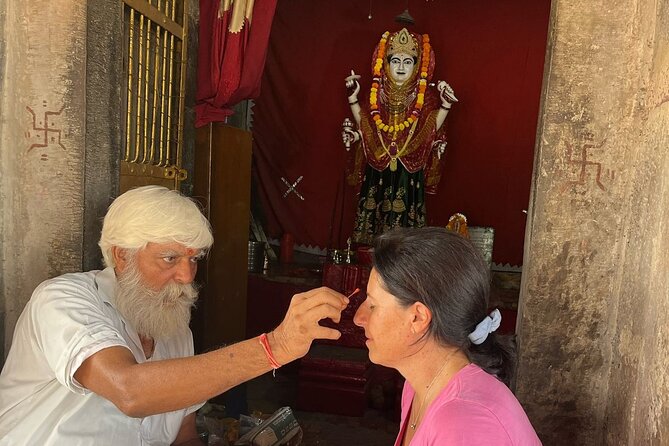
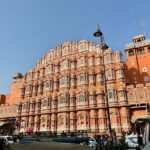
This is your “Jaipur postcard day,” but built with real structure. You start with Hawa Mahal, the Palace of Winds, a five-story facade built in 1799 by Maharaja Sawai Pratap Singh. What you’re really seeing is how the building’s shape lets a lot of light and air flow into the palace interior, and visually, the crown-like silhouette is why it’s famous.
There’s also time for the palace of water for photos. The itinerary suggests keeping it short, about 15 minutes, so use that time to grab one or two good angles rather than circling endlessly. Think of it as a quick “check the box” moment that still looks impressive.
Then comes Jantar Mantar, a UNESCO observatory built in the 18th century by Maharaja Jai Singh II. This is the kind of site that rewards curiosity. Those large instruments are not decorative, they represent serious astronomical tools designed for measuring time and celestial positions.
Next is the City Palace of Jaipur, a blend of Rajasthani and Mughal architecture and the royal residence area built over time. You’ll spend around two hours here, which is about right. It’s long enough to get beyond the exterior, but not so long that the day collapses under heat and walking.
You also stop at Jaipur Gems and Jewellery, presented as part of the city’s gem cutting and gemstone trading tradition. I’ll be honest, this sort of stop can be a love-it-or-leave-it moment. If you’re interested in craftsmanship, you’ll likely enjoy it as a window into Jaipur’s economy and skills. If you’re not, use the time efficiently, ask one or two questions, and move on.
Agra Day 5, Chand Baori stepwell and Agra Fort’s UNESCO presence
You head out toward Chand Baori in Abhaneri, a historic stepwell built in the 9th century. This stop is especially worth it if you like architecture that feels practical rather than purely decorative. The repetitive geometry and depth give you a visual rhythm, and the sheer scale makes people pause.
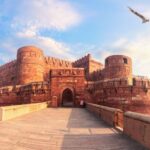
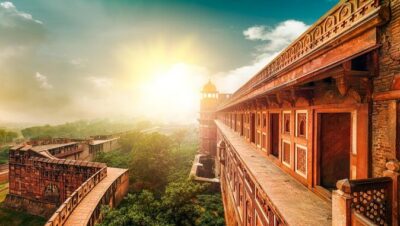
Then you go to Agra Fort, another UNESCO World Heritage site. It’s tied to Mughal power, and it was the main residence of Mughal emperors before the capital shifted. Forts can feel like a lot of stone with little story if your guide doesn’t connect them. On this trip, the guide approach matters, Raji’s style is built around explaining details and legends so you don’t just walk through walls.
You spend around two hours here. That’s a good chunk because you need time to move between viewpoints, see the fort’s layout, and not just rush the highlights.
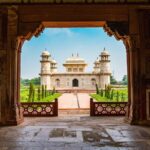
Agra Day 6, Taj Mahal as a centerpiece, then onward travel
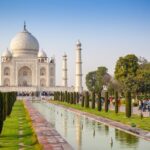
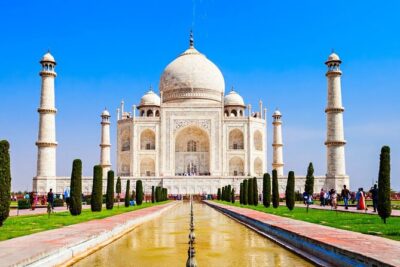
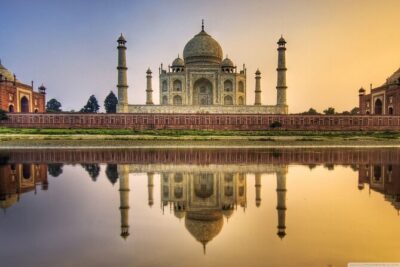
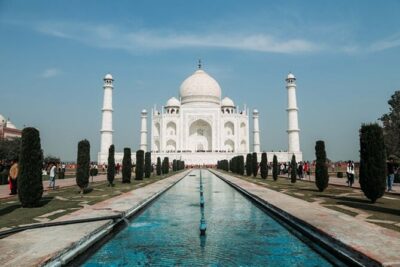
Day 6 centers on the Taj Mahal, and it’s included with entrance fees. This is your big monument moment, planned as a two-hour visit. The Taj works even if you’ve seen photos, because the real thing is about proportions and how light changes across the white marble.
After Taj, you’ll continue with onward travel as part of the trip’s transportation plan. The tour includes a train ticket from Agra to Varanasi, so you’ll feel the shift from the Mughal grand style into something much more river-centered.
Practical note, don’t stack too many expectations onto Taj Day. Let it be one major stop, then let the travel leg do what it does. The day is not about collecting ten more things, it’s about giving you the Taj and moving you forward.
Varanasi Day 7, Ganges River ghats and Manikarnika Ghat boat time
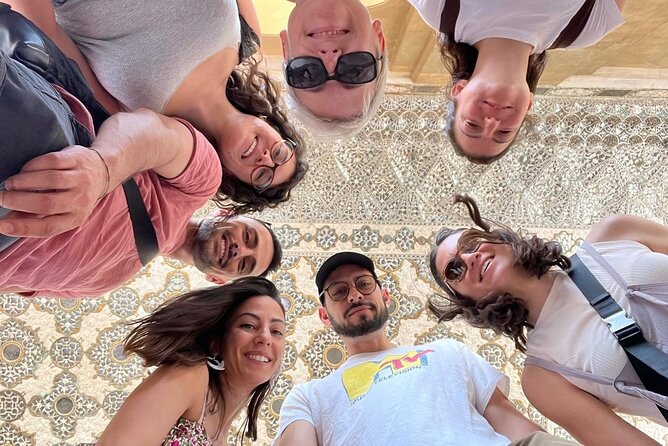
Then the itinerary becomes different, and that’s the whole point. In Varanasi, you spend about three hours at the Ganges ghats, which is the most direct way to understand why the city is a spiritual magnet. The ghats are steps leading down to the water, and there are over 80 ghats in Varanasi, each tied to its own rituals and traditions.
After that, you go to Manikarnika Ghat, including a boat ride on the Ganges and time connected to cremation places. This is the stop that most people don’t forget. It’s sacred and intensely human, so your mindset matters. Go in with respect, keep a little space in your head for what you might find confronting, and rely on your guide to interpret what you’re seeing.
Because the itinerary includes both the ghats and the boat time, you get two angles on the same river life. From the water, you see the flow of people, boats, and daily activity. On the ghats, you’re closer to the ceremonies and the architecture of steps and platforms.
If you’re sensitive to strong emotions, give yourself breaks. Sit, breathe, and let it land gradually.
Varanasi Day 8, Sarnath and a Durga Temple blessing hour
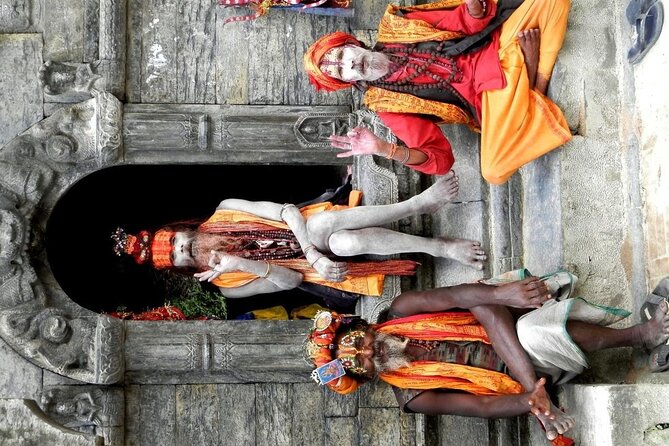
Day 8 gives you a calmer counterpoint to the river focus. You visit Sarnath, one of the holiest Buddhist sites in India and the place linked to the Buddha’s first sermon after enlightenment. It’s around two hours, enough time to appreciate the space and understand the site’s meaning without feeling rushed.
Then you visit Durga Temple for about an hour. The tour describes it as getting blessed with the energy of the goddess. You’ll likely experience this as a spiritual rhythm change, moving from river ceremonies to temple worship. It can feel like a reset for your senses after a heavy Varanasi day.
Day 9 and Day 10, the easy landing in Delhi after Varanasi
This itinerary does something smart at the end. You’re not thrown back into full sightseeing immediately after your most intense days. The trip includes a flight from Varanasi to Delhi, and then on Day 9 your driver picks you up from the airport and takes you to the hotel to relax.
So instead of forcing another “do it all” city day, this gives you a breather. It also helps you recover from late-day Varanasi travel and any jet lag-like effects from the schedule.
On Day 10, you’re dropped at Delhi airport IGI. Simple and straightforward, which is exactly what you want when your trip is already packed.
Guide Raji is the secret sauce for a trip like this
What turns this from a list of monuments into an experience you remember is the guide style. In multiple write-ups connected with this tour, the name that comes up is Rajendra Halduniya, Raji. People highlight his preparation, his passion for explaining places, and the way he handles requests.
That matters because this itinerary is detailed. You’ll be moving between different kinds of sacred spaces, tombs, forts, and viewpoints. A guide who can translate what you’re seeing into plain terms can prevent the “I saw it, now what” problem.
The reviews also mention that Raji accepts unplanned requests and suggests extra activities like markets when the group wants that. If you enjoy travel where you can steer the day slightly, that flexibility is a real value.
Another practical point, they mention he uses Italian and English. If your group has language needs, that can make your experience smoother without constant workarounds.
Price and value check, what $1,163 buys you here
The listed price is $1,163.18 per person for this roughly 10-day trip. The best way to judge value here is not the headline number, it’s what’s included.
Your tour includes:
- Air-conditioned vehicle with WiFi on board
- Entrance fees and government fees
- A Ganges river boat ride
- Tuk-tuk ride
- Train (Agra to Varanasi)
- Flight (Varanasi to Delhi)
- Breakfast (8) and Dinner (9)
- Fuel surcharge
Lunch is not included. That’s the one recurring gap you should budget for.
So you’re paying for a lot of “hard to coordinate” pieces: long-distance transfers, entrance fees, and a full guided schedule. If you’ve ever tried to stitch together Golden Triangle and Varanasi on your own, you know how much time gets eaten by trains, tickets, and routing. This package cuts down that stress and puts the focus on the sights themselves.
If your group is the type that likes to plan every detail to the minute, you may find the schedule a bit full. But if you want fewer logistics headaches, this is a sensible structure.
Who should book this Golden Triangle plus Varanasi plan
This tour fits you best if you:
- Want the classic Delhi, Agra, Jaipur highlights plus Varanasi without separately organizing everything
- Like having a guide who explains details, not just someone who points and goes
- Can handle a full schedule, with major stops and some long days
- Prefer private-group attention, since the tour runs only with your group
It may not be the best match if you hate crowds, dislike any “serious” cultural moments, or want a slow, leisurely pace. Varanasi can be emotionally intense, and the itinerary gives you real time there.
Also, if you’re picky about shopping stops, note the itinerary includes a visit related to Jaipur gems and jewellery. You can keep your expectations grounded and treat it as a quick cultural lens.
Should you book this tour?
If you want one trip that covers the big names and still gives you a genuine shot at understanding Varanasi, I’d say book it. The biggest reason is the structure: key sites are timed into coherent days, and the trip includes the transportation pieces that usually make India itineraries complicated.
I’d book it especially if you like guided storytelling and you appreciate flexibility, because Raji’s style is repeatedly described as helpful, patient, and detail-focused. The boat ride on the Ganges and the time at the ghats are the moments that make this route feel different from a standard Golden Triangle-only trip.
Before you go, do one simple thing: plan for lunch costs and be ready for a packed schedule. If you can do that, you’ll get a lot for your money and memories that go beyond the postcards.
FAQ
How long is the tour?
The tour is listed as 10 days approximately.
Where does the trip start and end?
It starts in New Delhi, India and ends with a drop-off at IGI Delhi airport.
What transport is included between cities?
The tour includes a train ticket from Agra to Varanasi and a flight from Varanasi to Delhi.
Is a boat ride included in Varanasi?
Yes, a Ganges river boat ride is included.
Are entrance fees included?
Yes, entrance fees and government fees are included.
What meals are included?
Breakfast is included for 8 days and dinner for 9 days. Lunch is not included.
More City Tours in New Delhi
More Tour Reviews in New Delhi


Not for you? Here's more nearby things to do in New Delhi we have reviewed








More Golden Triangle Tours to consider.
 ★ 5.03-Days Private Golden Triangle Tour: Delhi, Agra & Jaipur by CarTickets from $1271,107 traveller reviews
★ 5.03-Days Private Golden Triangle Tour: Delhi, Agra & Jaipur by CarTickets from $1271,098 traveller reviews
★ 5.03-Days Private Golden Triangle Tour: Delhi, Agra & Jaipur by CarTickets from $1271,107 traveller reviews
★ 5.03-Days Private Golden Triangle Tour: Delhi, Agra & Jaipur by CarTickets from $1271,098 traveller reviews
 ★ 5.03-Day Delhi, Agra and Jaipur Private Tour – India Golden TriangleTickets from $110812 traveller reviews
 ★ 5.0Four-Day Private Luxury Golden Triangle Tour to Agra and Jaipur From New DelhiTickets from $160807 traveller reviews
 ★ 5.05 Nights 6 Days Private Golden Triangle Tour – Delhi Agra JaipurTickets from $240574 traveller reviews
 ★ 5.04 Days Golden Triangle TourTickets from $146499 traveller reviews
 ★ 5.0Private Car and Drive for Golden Triangle (4N/5D)Tickets from $167451 traveller reviews
 ★ 5.0Private Golden Triangle Tour Delhi Agra Jaipur ( Top Rated )Tickets from $148436 traveller reviews
More useful Delhi routes