

Review · GOLDEN TRIANGLE TOURS
10 Days Private Golden Triangle Tour with Amritsar and Rishikesh
A trip through India’s icons is never short on drama, and this one is built for comfort too. I like the private door-to-door setup with an air-conditioned car and dedicated local guides, and I also like that you get both Taj Mahal sunset and sunrise angles instead of one rushed visit. One thing to plan for: monument entry fees (and some border and ticketed sights) are not included, so your final daily spending can add up.
This route mixes marble-and-fort sights with Sikh devotion and river rituals, so it feels like more than a checklist. You’ll spend enough time in each city to breathe, but you’ll still see a lot, including quick stops like India Gate and the stepwell at Chand Baori. If you hate long drives, you might find the day-to-day transit a lot, since the tour’s style is road travel between regions.
Price-wise, it’s positioned as a mid-range private experience. At $588.46 per person for a 10-day tour, you’re paying for transport, guides, and (when you choose that option) hotel nights plus daily breakfast, not just site tickets.
Key highlights you’ll feel right away
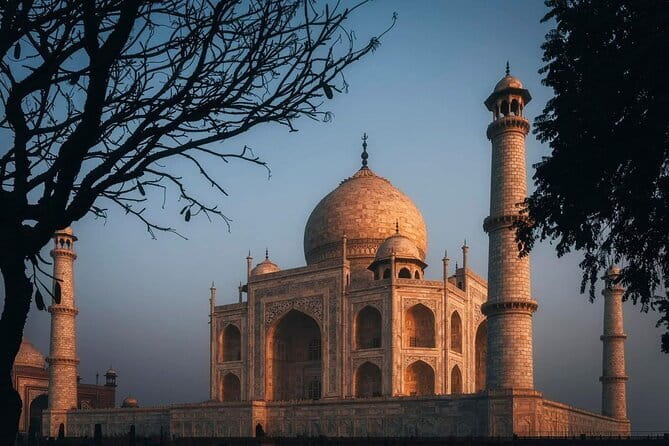
- Sunrise and sunset Taj Mahal moments (including a designated sunset viewpoint)
- Battery bus access to Taj Mahal area from the parking side
- Agra Fort and Itmad-ud-Daulah for the Mughal layer most people skip
- Golden Temple timing plus Wagah flag-down in Amritsar
- Rishikesh bridge-and-ghat loop across the Ganges, with an ashram visit
- Driver-guided logistics that multiple guests credit by name, including Surendra, Vinod, and Amritsar guide Vijay, plus coordination from Gopal
A 10-day private north-India route that mixes marble, devotion, and river life
This is a classic Golden Triangle backbone, expanded with two very different North India detours: Amritsar and Rishikesh. The payoff is range. You get Mughal monuments in Agra, Rajput royal visuals in Jaipur, then you pivot to Sikh spiritual life and a border ceremony, and you finish with the Ganges in Uttarakhand.
The private format matters because it keeps your day flexible. You’re not negotiating ticket lines and bus schedules. You’re also not waiting for a big group to finish each quick stop. Your guide can steer you toward what’s worth slowing down for, which is huge on a route full of famous names.
Just keep your expectations realistic. Even in a private tour, some stops are short by design, like 15 to 30 minute photo windows. That can feel great if you like moving, but it’s not the best choice if you want days with zero schedule.
You can also read our reviews of more private tours in New Delhi

Starting with Agra, then building Taj Mahal into two separate experiences

Your tour begins in the Agra direction. After a lunch at a local restaurant, you drive to Agra via an expressway and settle in at your hotel. That first day sets the tone: you’re not immediately sprinting through monuments. You arrive, check in, and you still get evening energy to wander at your own pace.
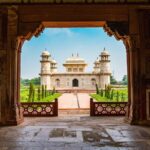
Agra in the itinerary includes Agra Fort, Itmad-ud-Daulah (often called the Baby Taj), and then a Taj Mahal sunset viewpoint. This matters because the Taj is not the only Mughal masterpiece in town. Agra Fort gives you the political spine. Itmad-ud-Daulah gives you that close-up, jeweled-mausoleum feeling that makes people understand why Shah Jahan’s later work became iconic.
Agra Fort, Itmad-ud-Daulah, and a sunset Taj viewpoint
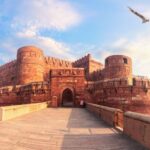
Agra Fort is a UNESCO World Heritage site, tied to Mughal emperors like Akbar and Shah Jahan. Even if you’re not a “fort person,” you’ll likely appreciate it because it helps you read the city. You’re seeing how power lived, not just how it was decorated.
Itmad-ud-Daulah is the opposite tempo. It feels intimate and detailed. It’s a great stop if you enjoy ornamentation and architectural craftsmanship.
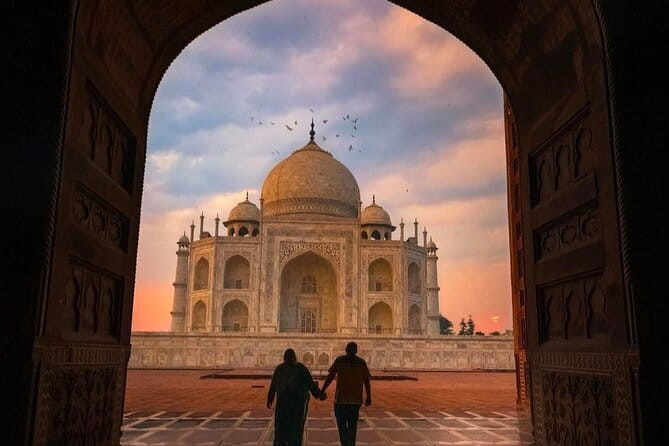
Then comes the Taj Mahal sunset viewpoint. The plan here is a perspective across the river, aimed at being away from the main crowd crush. That’s smart travel thinking. The Taj is famous for a reason, but you don’t need to be trapped in the busiest angles to understand why it’s so loved.
Taj Mahal at sunrise, plus Mehtab Bagh for the “other side of the river” look
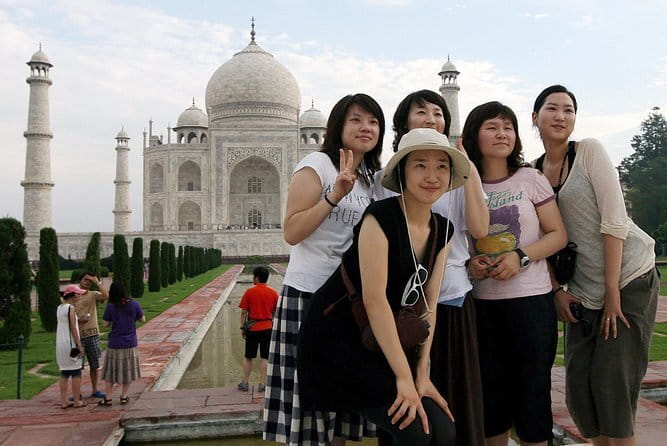
The next morning is a Taj Mahal sunrise visit. Sunrise is the classic move because the light turns the marble softer. It also tends to feel more peaceful than the high-hour rush, even on a structured tour day.
There’s also a battery bus ride included for access between the Taj Mahal parking area and the monument area. That’s one of those small logistics that makes a big difference in real life. You’re not spending energy on the shuttle chaos, and you’re arriving ready to look, not just ready to survive the getting-there part.
After the sunrise Taj Mahal time, you head to Fatehpur Sikri, the City of Victory built by Akbar. It’s a UNESCO site and it gives you a different Mughal mood: wide courtyards, monumental scale, and a whole sense of “capital-era” ambition. Even with limited time, it’s a stop that helps the Mughal story click.
Then you swing toward Chand Baori, the dramatic stepwell near Abhaneri. It’s one of those sights where photos almost don’t do it justice because the geometry pulls your eye down. If you enjoy architecture quirks, this is a satisfying detour.
And then you arrive in Jaipur, check in, and overnight there. You do not feel like you’re dropping into a new city and immediately falling behind. You get time to reset.
Jaipur without the race: Amber Palace, City Palace, and the UNESCO science stop
Jaipur is where the tour balances spectacle with structure. You start with Panna Meena ka Kund, the stepwell near Amber Fort. It’s a shorter stop, but it’s an easy win for anyone who likes Rajasthan’s architectural tricks.
Then it’s Amber Palace and its palaces, squares, and monuments area. Amber is popular because it looks like royalty. But the guide time is what helps you move beyond postcard impressions. You’ll be walking through spaces that explain how power and aesthetics worked together in Rajasthan.
You also get Jal Mahal for a quick photo window. The palace on the lake is a recognizable image, but seeing it in person helps you understand why it’s such a draw. Don’t expect a long stroll here. Treat it as a visual pause and keep moving.
City Palace comes after that, with about an hour to explore. This is one of the best “meaningful” stops because it connects the past to the ceremonial identity of Jaipur. Then you finish with Jantar Mantar, the UNESCO-listed astronomical instruments built by Sawai Jai Singh II. This part is a reality check in the best way. It shows that these weren’t just decorative structures, they were functional science.

Jaipur photo classics: Hawa Mahal, plus museum time
You also visit Hawa Mahal, the Palace of Winds, with its pink and red sandstone facade. It’s a quick look, but it’s a high-impact exterior. If you like architecture details, you can spend extra minutes just watching where the windows line up.
There’s also Albert Hall Museum for a short stop. It’s the oldest museum of Rajasthan, and even a brief visit helps you connect the city’s art world to the monuments around it.
If you’re thinking, yes, this is a lot of “big names,” you’re right. The advantage is that your day is broken into digestible segments, with guides organizing your time so you’re not wandering confused.
Temples and a Delhi landing: Birla Mandir and Galtaji Monkey Temple
One of Jaipur’s charm moves here is that it includes spiritual and local texture, not just palaces. You visit Birla Mandir, a white-marble temple with intricate latticework dedicated to Lord Vishnu. The stop is short, but it’s visually striking and calmer than the traffic outside the main sights.
Then there’s Galtaji Temple, also called Monkey Temple, known for its structure and sacred pools. It’s a lively stop because it has that mix of devotion and local energy. Just be ready for crowds and small-scale chaos, because that’s part of the place.
After that, you travel back toward New Delhi and check in at your hotel. This is a good time to reset before Delhi’s packed sightseeing. You’ll appreciate having a night in a big city rather than forcing Delhi into a rushed half-day.
Delhi’s highlights, from Qutub Minar to Jama Masjid and Chandni Chowk
Delhi is where the tour leans into variety: UNESCO monuments, modern architectural icons, and Old Delhi markets.
You start with Qutub Minar, a 73-metre tall UNESCO World Heritage tower tied to Qutub-ud-din Aibak and the Delhi Sultanate era. This is the kind of stop where timing and light matter. Even if you’re not reading every inscription, you’ll feel the scale.
Next is Lotus Temple, famous for its flower-like shape and for being open to people regardless of religion. It’s a peaceful contrast to the harder-edge monument days.
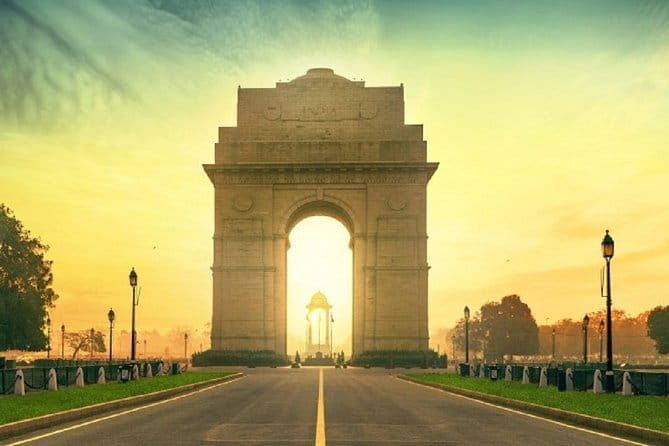
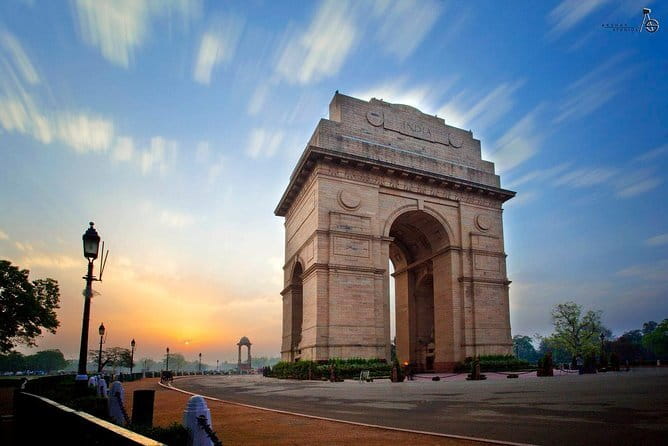
Then you pass by India Gate, the war memorial near Rajpath. It works as a breather, plus it’s a good place to understand Delhi’s layout.
You also stop around Sansad Bhavan (Parliament House), where the building’s form is described as based on the Ashoka Chakra. You won’t get a long deep look here, but the architecture is worth noticing if you’re into design.
Old Delhi comes with Jama Masjid, built by Shah Jahan in the 1600s, one of the largest mosques in India. This stop gives you the big scale of Mughal religious architecture, plus the surrounding streets feel like a living city.
You also visit Agrasen ki Baoli, a 60-metre long stepwell. It’s brief, but it’s one of those Delhi sights that rewards the “wait, what is that?” moment.
Humayun’s Tomb is included as well, another Mughal landmark with about an hour of time. Then you end the Delhi day with Chandni Chowk, a shopping area in Old Delhi with spices, dried fruit, silver jewelry, and busy lanes. Think of this as your sensory finale for Delhi.
Amritsar: Golden Temple time plus the Wagah border flag-down
Amritsar brings the trip into a different rhythm. You arrive, check in, and overnight. Then you visit the Golden Temple (Sri Harimandir Sahib). The key value here is that it’s not just a sight, it’s a working spiritual center. The tour frames it as a symbol of human brotherhood and equality, and that tone matters when you’re there.
You get about three hours for the Golden Temple experience, which is the right amount for soaking in the atmosphere without feeling rushed.
Then comes Wagah Border for the flag down ceremony. The ceremony is described with a specific timing, and it’s tied to the active border between India and Pakistan. This is the kind of event where your energy level changes fast. People show up ready for the moment, and the whole place has a performance intensity.
A practical note on drivers and guides here
In the feedback you’re drawing from, the Amritsar day stands out because people remembered the people, not just the places. One guest specifically mentioned guide Vijay and praised how well he explained things. Another talked about coordination with Gopal and service from drivers like Surendra and Vinod. That matters because both Golden Temple and Wagah can feel overwhelming if you’re moving on your own.
Rishikesh: bridge hopping across the Ganges, plus ashram and ghat time
Rishikesh is the decompression chapter. You drive in, check in, and overnight, then do a day focused on the Ganges and the riverfront ritual spots.
You start with Ram Jhula, an iron suspension bridge. From there you go to Parmarth Niketan Ashram, which is known for being founded in 1942. Even if you don’t plan to do a full spiritual program, the ashram stop helps you understand why Rishikesh attracts people who want quiet and meaning, not just views.
Then you visit Triveni Ghat, described as the biggest and most famous ghat and noted for ritual baths. Expect crowds, especially if you’re going during peak hours. It’s not a solitude spot.
Finally you cross to Lakshman Jhula, another suspension bridge connecting areas on opposite river banks. The sequence works well because bridges give you perspective, while ashrams and ghats show you the purpose.
If you like travel that balances sights with daily-life settings, Rishikesh is the right ending. It also softens the intensity of days like Wagah, because the energy becomes more reflective and slow.
Price and value: what $588.46 buys you, and what you should budget extra
At $588.46 per person, the big value is the private format: transport in a private air-conditioned vehicle with a driver, pickup and drop-off, and private local guides for sightseeing. For many people, that’s the real cost saver because it prevents you from spending your vacation time sorting out logistics.
If you choose the hotel-inclusive option, the tour can include 9 nights of accommodation and daily breakfast. That makes it easier to plan a whole trip rather than booking each city separately.
There’s also practical inclusions that reduce friction:
- Mineral water bottles during journeys
- Battery bus ride connected to Taj Mahal access
- Mobile ticket
- A private experience where only your group participates
What’s not included is important to know up front:
- Monument entry fees, camera fees, and similar charges
- Driver and guide tips
- Travel insurance
- Flights
- Any suggested extra activities
- Laundry and personal expenses
So the smartest approach is to treat the listed price as a foundation, then budget extra for entrances and any ticketed events you want to do on the side.
Who this tour fits best, and who should rethink it
This works best if you’re:
- A first-time visitor who wants major highlights in five cities without feeling like you’re sprinting
- The type who appreciates a guide to connect dots, not just to point at landmarks
- Traveling in a group that values a private car and schedule control
- Interested in pairing Golden Triangle culture with Amritsar faith and Rishikesh river life
You might reconsider if you:
- Hate road time and prefer rail or shorter hops
- Want long, unstructured museum wandering every day (this tour includes many time-boxed stops)
- Are trying to keep costs to the absolute minimum, since private transport plus hotels typically costs more than bus-based routes
Should you book this 10 Days Private Golden Triangle Tour with Amritsar and Rishikesh?
I think you should book it if you want a smooth, guided “best of North India” trip that still includes meaningful variety. The standout strengths for me are the two Taj Mahal experiences (sunrise and sunset) and the way the tour extends beyond Agra-Delhi-Jaipur into Amritsar and Rishikesh, which many Golden Triangle trips skip or reduce.
Book it with a realistic budget for monument entries and tips, and you’ll likely find it hits the sweet spot. Pick this tour when you care about logistics running clean and you want your time spent looking, not figuring out buses.
FAQ
Which cities are included on this tour?
You’ll visit New Delhi, Agra, Jaipur, Amritsar, and Rishikesh.
Is this a private tour?
Yes. It is listed as a private tour, and only your group will participate.
What is included in the tour price?
The tour includes private transport in an air-conditioned vehicle with a driver, hotel or airport pickup and drop-off, private local guides for sightseeing, and (if you book the option that includes hotels) 9 nights of accommodation plus daily breakfast. It also includes battery bus ride access related to Taj Mahal area entry and bottled mineral water during journeys.
Are monument entry fees included?
No. Monument entry and similar fees are not included.
Does the tour include Taj Mahal sunrise and sunset?
Yes. The plan includes a sunrise Taj Mahal visit and also a Taj Mahal sunset viewpoint.
Does the tour include Wagah border?
Yes. The tour includes the Wagah Border flag down ceremony.
What Rishikesh stops are included?
The Rishikesh portion includes Ram Jhula, Parmarth Niketan Ashram, Triveni Ghat, and Lakshman Jhula.
How are hotel rooms handled?
Rooms are generally provided on a twin-sharing basis. For three travelers, rooms are provided on triple-sharing by default, and if three guests prefer two rooms, an additional charge may apply.
Where does the tour start?
The start meeting point is Indira Gandhi Intl Airport, New Delhi.
Can I get a full refund if I cancel?
Yes. Free cancellation is available up to 24 hours in advance of the experience start time for a full refund.
More Private Tours in New Delhi



More Tours in New Delhi



More Tour Reviews in New Delhi
Not for you? Here's more nearby things to do in New Delhi we have reviewed







More Golden Triangle Tours to consider.
 ★ 5.03-Days Private Golden Triangle Tour: Delhi, Agra & Jaipur by CarTickets from $1271,107 traveller reviews
★ 5.03-Days Private Golden Triangle Tour: Delhi, Agra & Jaipur by CarTickets from $1271,098 traveller reviews
★ 5.03-Days Private Golden Triangle Tour: Delhi, Agra & Jaipur by CarTickets from $1271,107 traveller reviews
★ 5.03-Days Private Golden Triangle Tour: Delhi, Agra & Jaipur by CarTickets from $1271,098 traveller reviews
 ★ 5.03-Day Delhi, Agra and Jaipur Private Tour – India Golden TriangleTickets from $110812 traveller reviews
 ★ 5.0Four-Day Private Luxury Golden Triangle Tour to Agra and Jaipur From New DelhiTickets from $160807 traveller reviews
 ★ 5.05 Nights 6 Days Private Golden Triangle Tour – Delhi Agra JaipurTickets from $240574 traveller reviews
 ★ 5.04 Days Golden Triangle TourTickets from $146499 traveller reviews
 ★ 5.0Private Car and Drive for Golden Triangle (4N/5D)Tickets from $167451 traveller reviews
 ★ 5.0Private Golden Triangle Tour Delhi Agra Jaipur ( Top Rated )Tickets from $148436 traveller reviews
More useful Delhi routes