
Review · GOLDEN TRIANGLE TOURS
4 Days Golden Triangle Tour
Four days can feel like magic, not math. This Golden Triangle tour is built for people who want Delhi, Agra, and Jaipur without burning hours figuring out routes, lines, and timing. I especially like the air-conditioned transfers between scattered sights and the way the guide helps you handle monument entry so your day stays moving.
What I also like is how the schedule stitches together the headliners and the in-between stops in each city, from Old Delhi’s big mosque to Jaipur’s forts and astronomy. The main drawback to think about is simple: monument entrance tickets are not included, so you’ll need to budget extra for paid sites.
Key things that make this Golden Triangle tour work
- Air-conditioned car between cities, so you spend less time stuck in transport chaos
- Guide services included, with help to buy entrance fees and avoid ticket queues
- A tight 4-city highlight mix across Delhi, Agra, Jaipur, with a clear flow
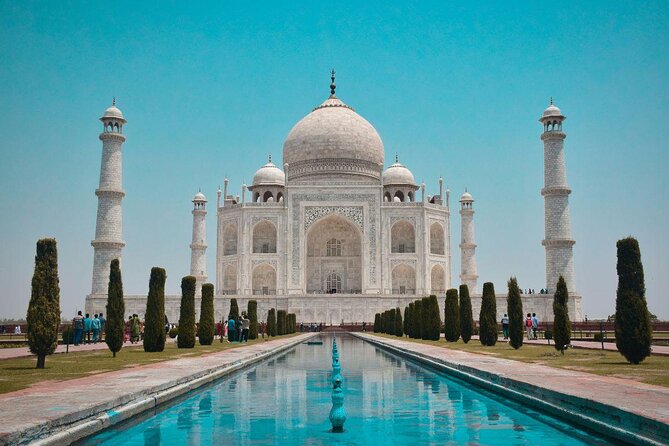
- Major monuments you came for, including Taj Mahal and Humayun’s Tomb
- Twin-sharing hotel rooms by default, which usually keeps costs sane for couples and friends
- Private group format, meaning it’s just your party, not a random crowd
Golden Triangle in Four Days, without turning it into a full-time job
The Golden Triangle idea sounds simple on paper: Delhi, Agra, Jaipur. In real life, those cities are busy, roads are busy, and the monuments are spread out. What makes this tour appealing is that it removes the two biggest headaches: transportation between far-off stops and the guesswork of daily logistics.
This is also a practical kind of sightseeing. You get a set plan that hits major landmarks in each city, with enough structure that you can spend your energy looking up, walking a bit, and taking photos instead of constantly checking maps and schedules.
And yes, it’s still a tour. You’ll follow a route, you’ll keep your pace, and some days are long. But the upside is big: you’re not losing half your vacation to commuting.
More New Delhi tours and experiences for the shortlist



Day 1 in Delhi, from Jama Masjid to Qutb Minar and Humayun’s Tomb
Delhi day one is a smart mix of Old Delhi and the grand government district, then it transitions into some of the city’s most famous Mughal-era landmarks.
Jama Masjid
You start in Old Delhi at Jama Masjid, the Mughal-era mosque built in the mid-1600s under Shah Jahan. It’s one of those places where scale hits first. You’ll spend about an hour here, and the experience is as much about atmosphere and people-watching as it is about architecture.
A quick consideration: the area can be active, so plan to move patiently and keep an eye on your own belongings. Also, your timing matters because this is an early anchor stop.
Raj Ghat
Next is Raj Ghat, the Gandhi memorial on the Yamuna riverfront. It’s a quieter break from the heavy visuals of the morning. You get about an hour, which is enough time to reflect and still keep the itinerary moving.
India Gate
From there, you head to India Gate in central Delhi, built in 1921 by Edwin Lutyens. This is a classic photo stop, short and straightforward, with a quick sense of how Delhi commemorates its modern-era past.
Parliament House and Rashtrapati Bhavan area
The itinerary also includes stops around Parliament House (Sansad Bhavan) and Rashtrapati Bhavan, both associated with the Lutyens-led imperial architectural style. Think of this as a fast look at the grand, formal heart of the city. If you like architecture and government districts, you’ll probably enjoy this part.
Qutb Minar
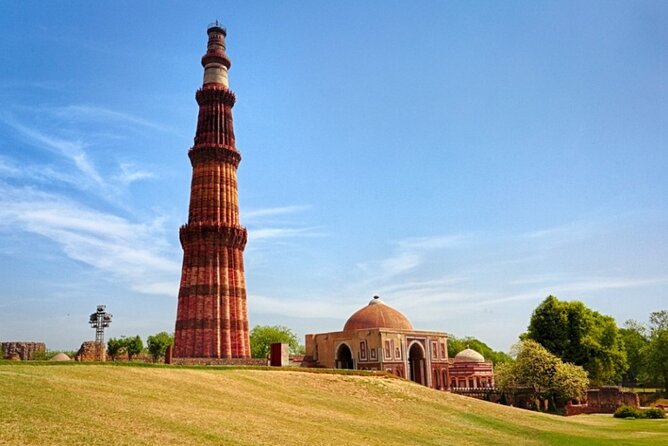
Then you reach Qutub Minar, the soaring 73-meter brick minaret complex. It’s the kind of landmark that makes you look up whether you plan to or not. You’ll have roughly two hours here, which is enough time to take in views from different angles and read the details without feeling rushed.
Humayun’s Tomb
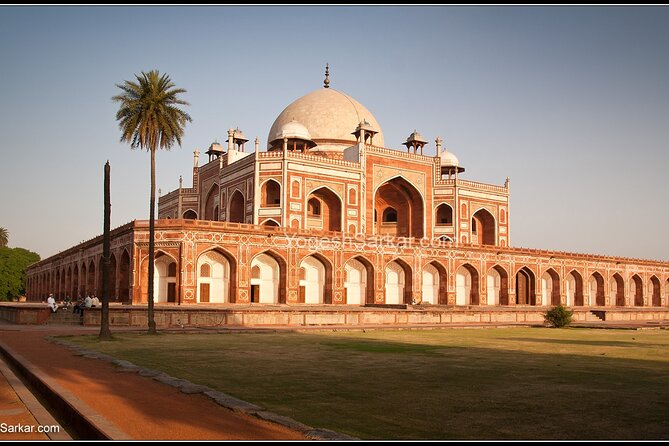
To close the Delhi loop, the tour includes Humayun’s Tomb, the UNESCO World Heritage site known for its Mughal design and garden-like layout. You’re allotted about an hour. It’s a good way to end day one because it slows you down after the busier Old Delhi energy.
Overnight in Agra
Finally, you drive from Delhi to Agra and stay overnight in an Agra hotel.
Day 2 Agra, Taj Mahal and Agra Fort, plus the Fatehpur Sikri stop
Day two is where the Golden Triangle stops feeling like an itinerary and starts feeling like the reason you came. Agra hits hard, mainly because you get both the iconic monument and the city’s broader royal story in the same day.
Taj Mahal
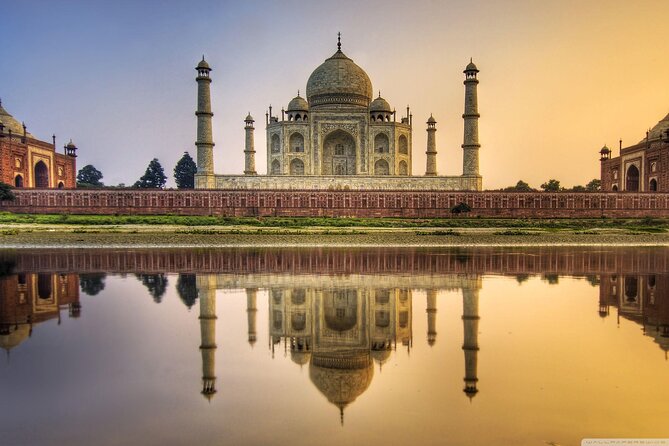
The day centers on the Taj Mahal in Agra. You’ll have about two hours. The tour notes the key basics: it’s the white marble mausoleum commissioned under Shah Jahan, built between 1631 and 1653.
A practical note for your pacing: two hours is enough to see the main views well, but not enough to linger for hours at every angle. If you’re a slow photographer, plan to prioritize. I like doing the main facade views first, then stepping back to breathe and look at details once the crowd intensity changes.
Also, remember this tour warns that the Taj Mahal remains closed for all visitors on Friday. That matters if your dates land on a Friday. (More on that later.)
Agra Fort
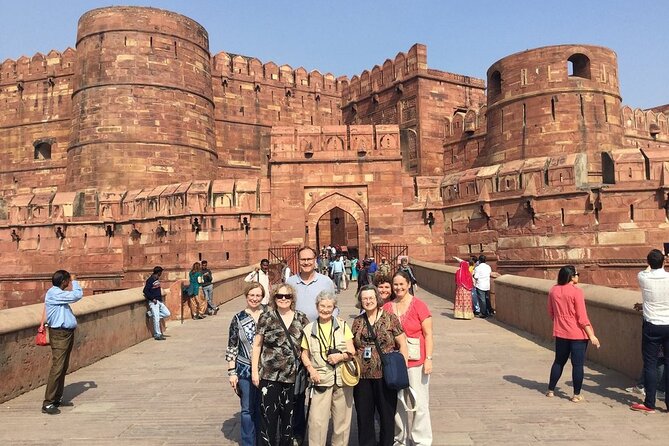
After Taj Mahal, you visit Agra Fort. This is a massive red-sandstone fort originally built in the 1500s by Akbar and later decorated with marble elements under Shah Jahan. You’ll spend about an hour here.
Agra Fort is worth it because it gives context to the Taj. You start to see how the city worked as a royal center. It also tends to feel different from the Taj, more rugged, more fortress-like, and less “perfect postcard.”
Drive to Jaipur via Fatehpur Sikri
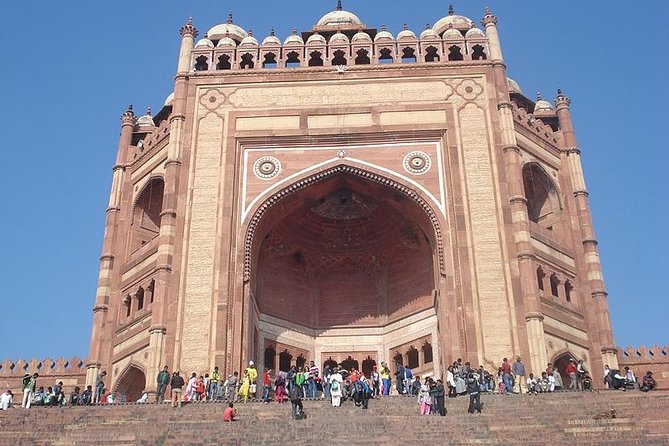
The tour then includes Panch Mahal – Fatehpur Sikri, the fortified Mughal city about 40 km west of Agra and ruled as Akbar’s short-lived capital between 1572 and 1585. You’ll have about two hours for this stop, then you drive into Jaipur for the night.
This is a good use of time because it turns the drive into a story, not just a car ride. But keep expectations realistic. Even with a guided pace, you’re still switching scenes a lot in a single day.
Day 2 wrap to Jaipur, why the timing can feel both efficient and intense
Your day ends in Jaipur with an overnight stay in a Jaipur hotel. The itinerary structure means you’ll move from Agra to Jaipur after Fatehpur Sikri, with limited downtime in between.
For me, the sweet spot is knowing that the day is packed and then embracing it. If you treat it like one long museum-with-car-intermissions day, you’ll have an easier time. If you want a relaxed, slow vacation rhythm, this may feel like a lot.
The good news is that the transportation is included in an air-conditioned vehicle. That doesn’t cancel jet lag, but it does make the travel component far more comfortable.
Day 3 Jaipur, Hawa Mahal, Amber Fort, City Palace, and Jantar Mantar
Jaipur day three is basically a greatest-hits tour of Rajasthan’s palace and fort world, with one interesting scientific detour at the end.
Hawa Mahal (Palace of Wind)
You start with Hawa Mahal, the five-storey Palace of Wind built in 1799. You’ll have about an hour.
This stop is famous for its honeycombed windows and the idea behind them, letting air flow through and giving royal women the ability to observe street life from inside. Even if you’re not chasing every historical detail, the building is visually dramatic.
Amber Fort
Next is Amber Fort, located near Jaipur in Amber, about 11 km away. You’re allotted about two hours. The fort dates to the late 1500s era, built in 1592 by Raja Man Singh, and it’s often described as one of the most recognizable forts in the region.
Amber Fort is where you’ll probably do more walking and climbing than you expect. Wear shoes you trust. Bring a bottle of water if it’s allowed on your route. This isn’t a “sit and sip tea” kind of stop.
City Palace
Then you visit City Palace, in the heart of the Pink City. The itinerary notes it was where the Maharaja reigned, and it includes sections like Chandra Mahal and Mubarak Mahal. You’ll spend about two hours.
City Palace works because it feels less like a single monument and more like a working palace complex. You see rooms and courtyards that help you imagine how power looked day to day.
Jantar Mantar
Finally, you hit Jantar Mantar, the early 18th-century astronomical observation site with around 20 main fixed instruments. You’ll have about an hour.
Jantar Mantar is a satisfying curveball after forts and palaces. It gives you a different lens on how people measured the sky, using massive masonry tools that are both functional and visually bold.
Evening free for shopping
You end with free time for shopping in Jaipur, about 30 minutes.
That’s a short window, so treat it like a “snack-and-browse” period, not a full market day. You’ll get a taste of what’s around without falling behind schedule.






Day 4 back to Delhi, with time for an airport or hotel transfer
Day four stays simple. You have breakfast, then you drive back to Delhi and get a transfer to the airport or your Delhi hotel.
The itinerary says you’ll be back to Delhi by around 2 pm. That’s helpful because it gives you a practical target for planning a flight or deciding where to store your luggage if you’re not heading out immediately.
So the big question is not what you’ll see, it’s what time you need. If you have a late flight, great. If you have an early one, you’ll want to be careful and double-check the timing with your operator. Traffic can shift transfer duration, and the tour itself notes travel times are approximate.
Price and value for $146, what is included and what you should budget for
At $146 per person, the value mostly comes from the included structure. You’re paying for a guide, pickup and drop-off, and an air-conditioned vehicle that handles transfers between Delhi, Agra, and Jaipur. That alone can save you real time and stress, especially if you’re not traveling with a local friend who knows the roads.
The tour includes breakfast for four days. What it does not include is food and drinks beyond breakfast, plus monument entrance tickets.
Here’s how I’d think about your budget: add money for ticketed monuments and meals, and you’ll feel much better about the total. The good news is you also get guide help to buy entrance fees and avoid queueing just to get tickets. That removes one common point of frustration on these tours.
So, is $146 a steal? It can be a strong deal for the logistics it bundles. But it’s not a full “everything paid” package, so your final comfort depends on how well you plan for tickets and daily meals.
Hotels, twin-sharing rooms, and how to handle the three-person setup
The tour states rooms are generally provided on a twin-sharing basis. If you book three people, rooms are provided on triple-sharing by default. If three guests prefer two rooms instead, an additional charge may apply.
In plain terms: this tour aims to keep accommodation costs controlled and predictable, which is why it works for couples, solo travelers, and small groups. And because it’s a group format, you typically won’t be stuck scrambling for your own hotel in each city.
One extra insight from the experience accounts is that the Agra hotel was often singled out as the best of the bunch. That doesn’t mean your other nights will be poor. It just means you may get a little extra payoff on the night closest to Taj Mahal.
How the guide and ticket help reduces stress at monuments
One of the more underrated benefits here is not the guide’s commentary alone, it’s the practical ticket support. The tour notes your guide helps you buy entrance fees at monuments so you don’t spend time waiting in line to buy tickets.
That matters because major sights in India can mean queues, and queues can drain your energy fast. When you arrive and you know the process is handled, you keep your momentum. You can actually enjoy the site instead of thinking about paperwork and waiting.
Also, the review sentiment around “no worries” and “safety-first driving” aligns with what you want from a guided format: someone managing the flow so you can focus on the places.
I also appreciate that the tour is set up as a private tour/activity, meaning it’s just your group. That can make the day feel more personal, not like you’re being herded among strangers.
Friday Taj Mahal closure and the itinerary swap you should expect
This tour includes a key warning: Taj Mahal remains closed for all visitors on Friday.
If your start day falls on Thursday, the itinerary changes so you still get the Taj experience by shifting the order to Delhi, Jaipur, Agra, then Delhi. That’s a big deal, because it means you are not automatically stuck missing the Taj just because of the calendar.
If your travel dates put you on Friday, pay close attention to what your operator tells you about the order. The good part is the tour is designed to account for this. The caution is that it will affect your day-by-day rhythm, including where you spend your longest sightseeing block.
Who should book this Golden Triangle tour, and who might not love it
This tour is a strong fit if:
- You want the classic Golden Triangle route but don’t want to plan every transfer yourself
- You like structured days with a guide and set stops
- You care about hitting famous monuments efficiently, like Taj Mahal, Amber Fort, and Hawa Mahal
- You prefer safety-focused, careful driving and a straightforward schedule
You might want to look elsewhere if:
- You want lots of free roaming time in each city
- You hate early starts and packed sightseeing days
- You want a totally unstructured, slow travel pace with lots of your own detours
For most first-timers, this kind of tour works because it gives you a firm foundation. Once you’ve seen the big sites, you can return later on your own and go deeper.
Should you book this 4-day Golden Triangle tour?
If your goal is to see Delhi, Agra, and Jaipur in one trip with minimal stress, I think this is a smart booking. The price is reasonable for the included guide, air-conditioned transport, and the way the schedule connects major monuments in a logical order.
Just go in prepared for two realities: you’ll still be doing plenty of walking, and entrance tickets plus meals are on you. If you’re ready for that, you’ll likely feel like the trip delivers what you came for, with less hassle than DIY planning.
FAQ
What cities does this 4-day tour cover?
The tour covers New Delhi, Agra, and Jaipur.
What time does the tour start?
The start time listed is 8:00 am.
Is pickup offered?
Yes. Pickup is offered from the airport or any location in Delhi or Gurugram, and there is also drop-off on the tour end.
How long is the tour?
It runs for 4 days approximately.
Are entrance tickets included for the monuments?
No. The itinerary shows monument admission tickets as not included for several stops.
Is breakfast included?
Yes. Breakfast is included for 4 days.
Do I need to worry about the Taj Mahal being closed?
Yes, the tour notes that the Taj Mahal remains closed for all visitors on Friday, and the itinerary order may adjust if you start on Thursday.
How are hotel rooms set up?
Rooms are generally provided on a twin-sharing basis. If there are 3 guests in a booking, rooms are provided on triple-sharing basis by default.
Is this tour private?
Yes. It’s described as a private tour/activity, and only your group will participate.
More 4-Day Experiences in New Delhi




More Tours in New Delhi



More Tour Reviews in New Delhi
Not for you? Here's more nearby things to do in New Delhi we have reviewed









More Golden Triangle Tours to consider.
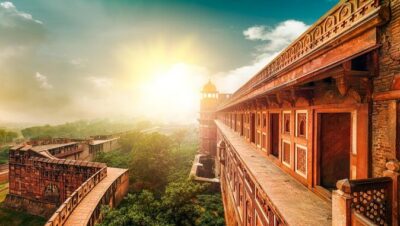 ★ 5.03-Days Private Golden Triangle Tour: Delhi, Agra & Jaipur by CarTickets from $1271,107 traveller reviews
★ 5.03-Days Private Golden Triangle Tour: Delhi, Agra & Jaipur by CarTickets from $1271,098 traveller reviews
★ 5.03-Days Private Golden Triangle Tour: Delhi, Agra & Jaipur by CarTickets from $1271,107 traveller reviews
★ 5.03-Days Private Golden Triangle Tour: Delhi, Agra & Jaipur by CarTickets from $1271,098 traveller reviews
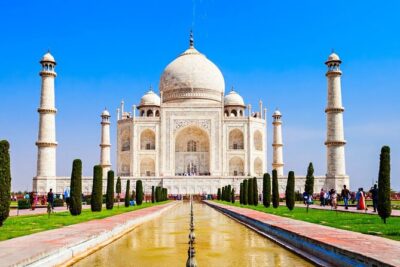 ★ 5.03-Day Delhi, Agra and Jaipur Private Tour – India Golden TriangleTickets from $110812 traveller reviews
 ★ 5.0Four-Day Private Luxury Golden Triangle Tour to Agra and Jaipur From New DelhiTickets from $160807 traveller reviews
 ★ 5.05 Nights 6 Days Private Golden Triangle Tour – Delhi Agra JaipurTickets from $240574 traveller reviews
 ★ 5.0Private Car and Drive for Golden Triangle (4N/5D)Tickets from $167451 traveller reviews
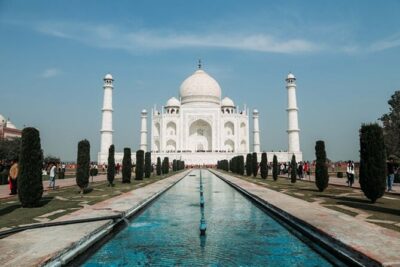 ★ 5.0Private Golden Triangle Tour Delhi Agra Jaipur ( Top Rated )Tickets from $148436 traveller reviews
 ★ 5.03-Day Private Luxury Golden Triangle Tour to Agra and Jaipur From New DelhiTickets from $164424 traveller reviews
More useful Delhi routes