
Review · NEW DELHI
India eSIM (1 to 30 days. Up to 45GB of data)
Internet help in your pocket beats guessing.
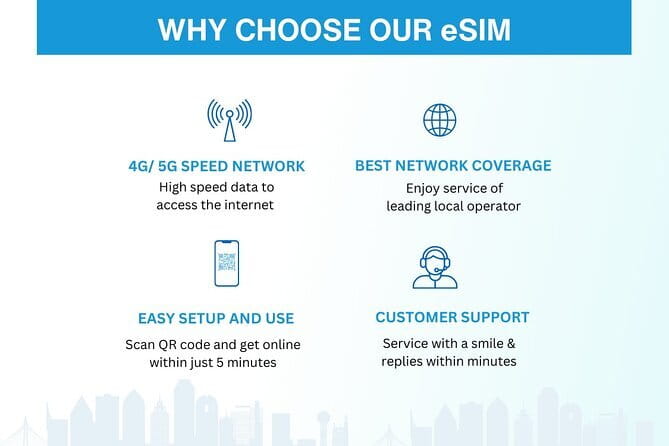
An India eSIM plan like this turns your phone into your connection tool fast, with QR code activation and delivery by email. I also like the practical value angle, it’s usually cheaper than doing an airport SIM rush and you avoid the language and counter-time headache. The main thing to watch is device fit, you need an eSIM-compatible phone, and once the high-speed data runs out, speeds drop to 3G.
If you’re using your phone for maps, ride-hailing, and keeping friends and family updated, the big win is simple: you’re not stuck paying roaming rates while you hunt for signal. The plan covers all Indian provinces and includes 4G/5G where available, so it’s built for real day-to-day travel.
This is a purely digital product, so there’s no pickup. That makes it easy to start, but it also means you’ll want to check eSIM compatibility and set up before you need it urgently.
Key things to know before you land in New Delhi
- Email delivery, QR activation in minutes: You get the profile by email and activate by scanning a QR code.
- Choose your length, 1 to 30 days: Pick a plan that matches your trip time.
- Up to 45GB high-speed data: Once you hit the cap, speed switches to 3G.
- All Indian provinces covered: The data plan applies across India, not just New Delhi.
- 4G/5G where available: You use modern mobile networks when they’re offered in your area.
- Manage from a phone app: Track usage, top up, and switch networks with a few taps.
Why a New Delhi India eSIM beats airport SIM pressure
New Delhi is often where you feel the “travel lag” most. You land, you’re tired, it’s noisy, and suddenly the only thing you need is data so you can figure out directions and costs without guessing. An eSIM fixes that with a setup that starts before you even step out of your hotel routine.
The value here is not just the price tag. At $5 per person, you’re paying for a connection that can be activated quickly from your own device, which typically saves time versus standing in line or working through an unfamiliar counter process. If you’ve ever tried to explain what you need while your phone battery is draining, you already understand why convenience matters.
There’s also a quiet benefit for planning: when your phone has working data early, you can confirm transit options, check addresses, and map routes while you’re still fresh. That’s usually when you make fewer wrong turns and spend less time backtracking.
One more plus that tends to get overlooked: this plan is built for people who want coverage across India, not only a short stay in the capital. If your itinerary includes more than New Delhi, having a single data plan concept is easier than managing multiple local purchases.
You can also read our reviews of more tours and experiences in New Delhi.



From email to QR code activation in minutes
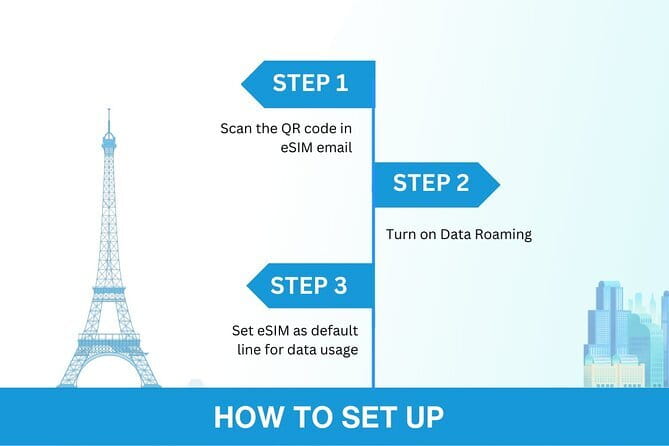
This eSIM is designed around one idea: start using data quickly without touching a physical SIM card. After you order, the eSIM is delivered to you by email. You then scan the QR code to activate your eSIM profile, and the connection is intended to come online within minutes.
That QR code step is the core moment. If your phone supports eSIM, activation is straightforward. If it doesn’t, you’ll be stuck troubleshooting at the exact time you need data. So I treat the compatibility check as part of the travel prep, not an afterthought.
Before you activate, make sure you can access the email you used for your purchase. It sounds obvious, but it’s easy to arrive and realize you cannot find the message while you’re trying to get online. Once activated, you’re set up to use the data plan on the device that supports eSIM.
Also note the practical reality of a digital setup: you will not meet someone in person. There’s no pickup point or physical handoff. That makes it faster, but it means you’re responsible for your own quick setup.
Using 4G/5G data across India provinces, not just New Delhi
The plan covers all Indian provinces, which is a big deal if you’re leaving the Delhi area. I like the way it’s described, it’s meant for staying connected while you explore, not just a short local window.
You’ll get 4G/5G where available. Mobile networks in India can vary by area and even by time of day, so it helps that the plan is built for modern speeds when they’re offered. In practical terms, this is what you use for:
- Navigation and location-based directions
- Messaging and staying in touch with family or friends
- Trip planning on the go
One subtle advantage of having a local data plan instead of roaming is budgeting clarity. With a roaming mindset, it’s easy to start checking data usage only after you see the charge. With a set plan like this, your usage is tied to what you selected upfront.
The setup is also intended to be practical for first-time visitors. If you’re in New Delhi and you’re still learning how signage, neighborhoods, and addresses work, reliable data early makes everything feel less chaotic.
The 45GB high-speed cap, and what 3G means for you
This plan includes up to 45GB of data, with a speed cap on high-speed usage. After you use your included high-speed amount, data speed switches to 3G.
This matters because people use data differently. If you mainly use navigation, messaging, and light browsing, the transition might not feel dramatic, especially when you’re moving around and not streaming. If you plan to do heavy video watching, large downloads, or constant social media uploads, the slowdown could be noticeable.
Here’s how I suggest you think about it. The high-speed portion buys you comfort for the first part of the trip when you need maps, backups, and quick confirmations. Once it drops to 3G, you can still use the connection for basics, but you might adjust your expectations for loading times.
The good news is you’re not flying blind. You can manage the eSIM and monitor data usage, so you can plan when to switch your habits. If you’re worried about hitting the cap, it’s worth choosing a plan length that better matches your travel days and your app usage.
Device compatibility: the one check you cannot skip

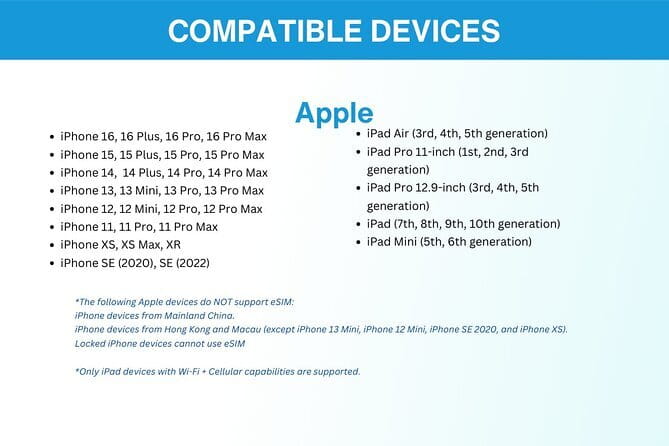
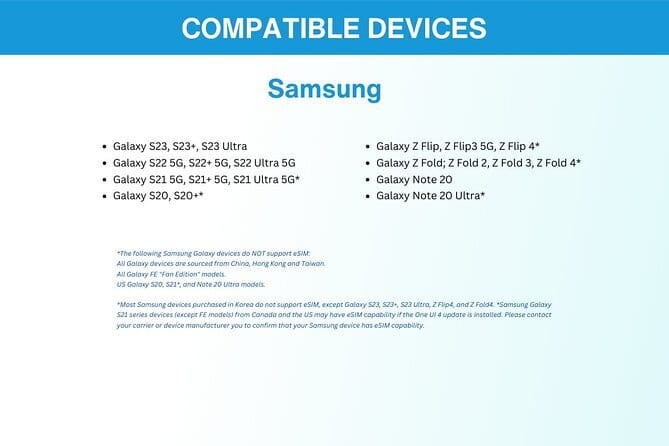
The provider is clear about it: your phone must support eSIM. The guide lists examples including iPhone XS and later, Pixel 3 and later, and Samsung S20, S21, and Fold.
I like that they’re specific about supported models, because it saves time. Still, not every phone with cellular support is automatically set up for eSIM, and not every region or carrier setup behaves the same. If you’re unsure, contact the provider in advance.
This is where the “purely digital” part can either work smoothly or become stressful. If your phone can handle eSIM, you’ll activate by QR code and move on. If not, you’ll need a different plan before you can rely on the data.
So my practical advice is to verify eSIM support while you still have time to fix it, not while you’re trying to find your way out of a busy arrival hall.



Managing your data plan with an app, plus customer support
Once you activate, managing the eSIM is part of the experience. The plan description includes a dedicated app where you can monitor data usage, top up, and switch networks.
That matters because travel habits change. Some days you might be out all day with maps and rides. Other days you might be indoors and use only messaging. Being able to check usage helps you avoid surprises, especially with the high-speed cap and the later switch to 3G.
You also have remote customer service available by email. That’s helpful if something doesn’t activate right away or if you need help understanding which settings to check.
I also appreciate the emphasis on avoiding delays. The whole point of the eSIM is speed from purchase to connection, and support by email is part of keeping that promise realistic.
Price and value: why $5 can be smarter than roaming
Let’s talk straight value. Paying $5 per person for an India eSIM that’s tied to your travel length is often cheaper than roaming through your home mobile provider. The cost difference usually comes from two things:
- Roaming charges tend to be based on usage and can add up fast.
- Airport SIMs add time and hassle, and the activation process can be harder when you’re dealing with unfamiliar systems.
This eSIM also avoids the language barrier and time-consuming setup at the airport. Even if the difference in raw cost is small, time has a price. Cutting that early friction can change how your first day feels, and first-day comfort can be worth more than a few dollars.
Now, one caution on value. If your phone cannot support eSIM, this plan becomes a poor match, even if the price looks great. And if your trip involves heavy video streaming or lots of downloads, you’ll need to think carefully about the 45GB high-speed cap and when your usage will shift to 3G.
For most travelers, though, this looks like a smart budget-friendly choice because it covers all India provinces, supports 4G/5G where available, and gives you a clean setup path.
Who this is best for, and who should think twice

This India eSIM is a strong fit if you:
- Want data for navigation and staying in touch from the start
- Are visiting more than just New Delhi
- Prefer activating from your phone instead of dealing with a physical SIM
- Like the idea of managing usage and topping up in an app
It may be less ideal if you:
- Have a phone that does not support eSIM
- Need high-speed data for heavy streaming for the full duration
- Want a lot of hands-on assistance at the point of arrival, since there’s no pickup and it’s fully digital
The best part is that the “duration flexibility” lets you match your plan to your trip length, from short stays to longer travel windows.
Quick setup tips before you activate the QR code
If you want the smoothest experience, do these small prep steps:
- Confirm your phone supports eSIM, using the provider’s listed example models as a guide
- Make sure you can access the email where the eSIM details arrive
- Plan to activate with a stable connection and enough battery
- After activation, check that your phone is using the new data profile before you leave Wi-Fi
These are the kinds of small actions that prevent the common travel annoyance of chasing settings while you’re trying to get somewhere.
And once it’s working, you can use the plan for trip planning and finding your way around town, with the assurance that it’s meant to work across India provinces.
Should you book this India eSIM for your trip?
Book it if you want fast connectivity without airport SIM stress, and if your phone supports eSIM. The combination of email delivery, QR code activation, and 4G/5G where available makes it a practical tool for New Delhi and beyond, and the all-India coverage is a big plus if your route goes outside the city.
Skip it if you haven’t confirmed eSIM support on your device, or if your trip data needs are likely to blow through high-speed quickly with lots of video and downloads. In those cases, you’ll want to compare your likely usage patterns with the included high-speed cap and the later switch to 3G.
FAQ
How do I get the India eSIM?
You receive the eSIM delivery by email after you order. You’ll use that information to activate the profile.
How do I activate the eSIM once I have it?
Scan the QR code included with your eSIM details to activate your eSIM profile. The connection is intended to be available within minutes.
How long can I use this eSIM?
You can choose a plan duration from 1 to 30 days.
How much data do I get?
The plan provides up to 45GB of data for the selected duration.
Does it work across India provinces?
Yes. The data plan covers all Indian provinces.
What network speeds should I expect?
You can use 4G/5G where available. High-speed data usage is capped, and after that speed switches to 3G.
Do I need a physical SIM or pickup?
No. This is a purely digital product. There is no pickup or meetup.
What is free cancellation?
Free cancellation is available. You can cancel up to 24 hours in advance for a full refund, and cut-off times are based on local time.