
Review · GOLDEN TRIANGLE TOURS
Majestic Golden Triangle With Varanasi
First-time India can feel huge. This trip gives you a clear route through Delhi, Jaipur, and Agra, then adds Varanasi’s river life and Sarnath. What makes it interesting is the mix of Mughal-era landmarks, royal Jaipur sights, and a spiritual finish on the Ganges.
I like how much you’re actually moving day to day, with a private vehicle and a professional guide keeping the story straight across all four cities. I also appreciated the human touch from the company side, with clear communication and a safety-focused approach noted in feedback that mentioned Sanjeev Paul and the Fragrance of Taj team.
One thing to watch: the pace is structured, and many stops are timed in about an hour or two each. If you hate ticking clocks, you might wish you had more time at each monument, and you will also need to budget for entrance fees and meals since they are not included.
Key highlights to look forward to
- A full Golden Triangle loop plus Varanasi in about a week, with a logical city order
- Private transport plus a professional guide, so you are not piecing things together
- Delhi on a single day covering Old Delhi (Red Fort, Jama Masjid, Chandni Chowk) and key New Delhi landmarks
- Jaipur sights that cover different moods (Hawa Mahal, Amer Fort, City Palace, Jantar Mantar, plus markets)
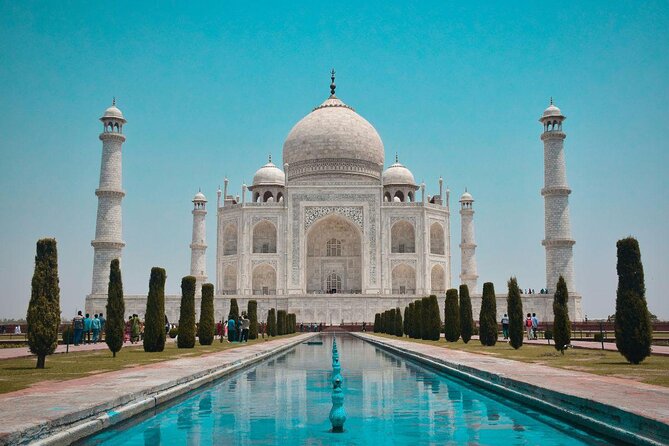
- Agra with the big icons and add-ons (Taj Mahal, Agra Fort, Itmad-ud-Daula, Mehtab Bagh, plus Fatehpur Sikri and Abhaneri)
- Varanasi with both Sarnath and a Ganges boat ride after an AC train from Agra
How the Golden Triangle plus Varanasi routing works
This is an 8-day plan built around the classic Golden Triangle cities, with Varanasi added at the end. You start in New Delhi, move to Jaipur, then Agra, and finally finish in Varanasi.
On day 1, you arrive in Delhi and go to your hotel, with a traditional welcome noted in the plan. Day 2 is a full Delhi sightseeing day, then day 3 is a drive to Jaipur (about 4 hours). Days 4 and 5 focus on Jaipur sights and then the route onward to Agra with stopovers.
The Agra portion lands on day 6 with the main monuments, then day 7 shifts north to the spiritual side of India. You take an AC train from Agra to Varanasi, arriving early (the plan says around 7:00 am), then you head to your pre-booked hotel, followed by local sightseeing, Sarnath, and a Ganges boat experience.
Your trip ends with a drop-off arrangement in Varanasi, with the company stating they drop guests at Varanasi airport and Varanasi train station.
You can also read our reviews of more tours and experiences in New Delhi.



Day 2 in Delhi: Old Delhi icons to New Delhi landmarks
Delhi here is treated like two different cities in one day. You start in Old Delhi with major Mughal-era stops, then you move toward New Delhi’s big open-air landmarks.
Red Fort (Lal Qila) is the first anchor. It is scheduled for about 1 hour, and since admission tickets are not included, it is smart to plan that cost ahead rather than expecting it to be covered.
Next you visit Jama Masjid, one of the largest mosques in India, built by Shah Jahan between 1650 and 1656. The tour schedule gives it about 1 hour, and again admission is not included, so you should expect to pay on-site.
Then comes Chandni Chowk area, with time set aside for browsing narrow lanes and specialty markets. The plan allows about 2 hours here, and admission is listed as free. This is one of the best parts of the Delhi day if you like street energy and shopping stops, but keep in mind it is also where the walking adds up.
After that, you have a quick break at India Gate (about 30 minutes, free). It is more of a pause-and-reorient stop than a long museum visit, which works well in a packed day.
Lunch is built in at Gulati Restaurant, Pandara Road, described as a buffet lunch option with menus that change daily. Meals are not included in the tour price, so this is where your daily food budget becomes real.
The itinerary then layers in more landmarks: Humayun’s Tomb (about 1 hour), Lotus Temple (about 1 hour, free), and Qutub Minar (about 1 hour). Admission for Humayun’s Tomb and Qutub Minar is not included, while Lotus Temple is listed as free. This mix is good because it shows different eras, from Mughal funerary architecture to later religious architecture.
Practical takeaway: this day is not about slow exploration. It is about seeing key sights efficiently, with a guide and transport doing the heavy lifting.
Jaipur days: Hawa Mahal, Amer Fort, Jal Mahal, and the science of Jantar Mantar
Once you leave Delhi, day 3 is all about transit and transition. The plan says you drive to Jaipur in roughly 4 hours, with a tea break on the way, then check in when you arrive.
Day 4 is a classic Jaipur highlights run. You start with Hawa Mahal, the Palace of Breeze, scheduled for about 30 minutes. The tour treats it as a quick, worthwhile stop, and admission is listed as free.
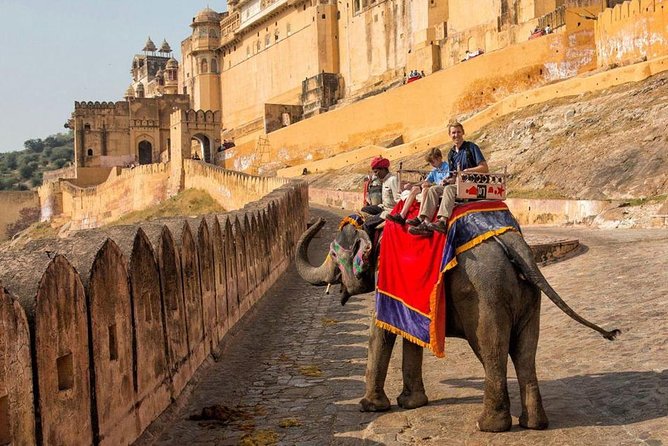
Then you head to Amber Fort (Amer Fort) for about 2 hours, with admission not included. This is one of the bigger time investments in Jaipur on the itinerary, so if you only care about one major fort experience, this is the one the schedule gives you.
You also visit Jal Mahal, the palace in the middle of Man Sagar Lake, with about 30 minutes allocated and admission listed as free. You will likely enjoy it most if you like viewpoints and photo moments, since the plan does not position it as a long sit-down attraction.
Lunch is included in the flow at Pink City cafe & Restaurant as a buffet, but admission is listed as not included, which mainly means food is not covered by the tour price. After eating, you continue to City Palace (about 1 hour, admission not included) and then Jantar Mantar (about 1 hour, admission not included). The plan notes Jantar Mantar is a major observatory built in 1728, and UNESCO recognition is mentioned in the description.
Finally, you end with shopping time at Bapu Bazar (about 1 hour, admission free), located on MI Road and described as one of Jaipur’s older markets. This is a good final stop because it lets you trade monuments for smaller, more flexible browsing before heading back to the hotel.
One small pacing note: Jaipur gets a full day of sights plus market time, but since you are on a fixed route, you should not expect to linger at one location longer than the schedule allows.
The Agra build-up: Fatehpur Sikri and Abhaneri step well stops
Day 5 shifts gears. After breakfast you drive to Agra, scheduled as about 4 hours. The itinerary also adds two stopovers on the way: Abhaneri and Fatehpur Sikri.
In Abhaneri, you visit Chand Baori, the photogenic step well with symmetric triangular steps. The plan allocates about 1 hour and lists admission as not included. This is the kind of stop that can turn into a strong photo session because the geometry is so striking.
Then comes Panch Mahal in Fatehpur Sikri, plus the wider Fatehpur Sikri site focus, scheduled for about 2 hours, with admission not included. The description mentions red sandstone buildings clustered at the center and highlights the Buland Darwaza gate as an entrance point, so you should expect a heavy architectural, Mughal-era vibe.
When you reach Agra, you check in at your hotel. From here, the trip saves the full “big icons” for day 6.
Taj Mahal day and the Mughal museum circuit in Agra
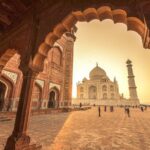
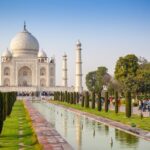
Day 6 is the day most people remember first. You meet a scheduled guide and start with Taj Mahal, with about 2 hours on the itinerary.
Admission for the Taj Mahal is not included. The plan also specifically says a specialized executive will assist you with photos at the best angles, which matters if you care about getting good shots without wasting time trying to figure out the angles yourself.
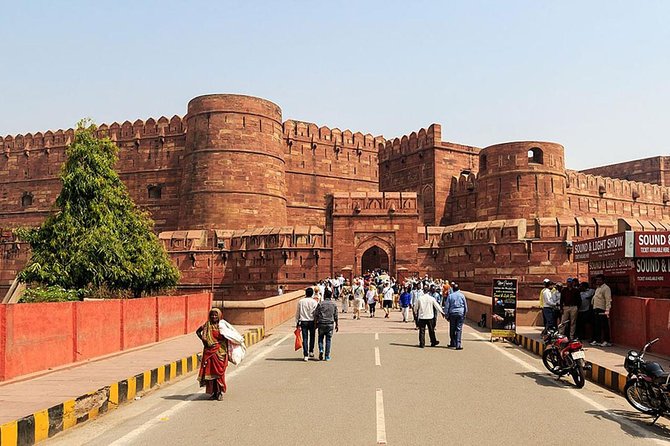
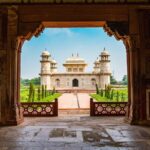
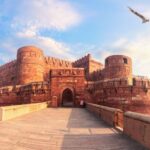
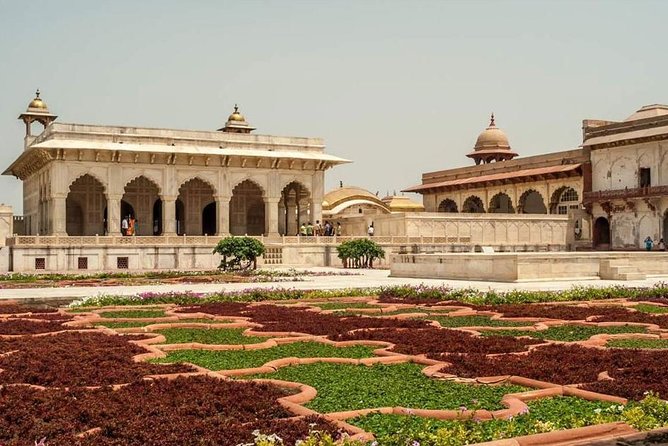
After the Taj, you move through more layers of Agra history: Agra Fort (about 1 hour, admission not included), Itmad-ud-Daula also described as the Baby Taj (about 1 hour, admission not included), then Mehtab Bagh (about 1 hour, admission not included).
There is also a lunch block included in the plan at Sun Barbecue, described as grilled dishes and a buffet lunch. Since food is not included in the package price, this is another point where your personal budget matters.
What I like about how this Agra section is built is that it does not send you straight from one main site to departure. You get the Taj Mahal, then you get forts and related tomb architecture, plus Mehtab Bagh on the far side context. If you like seeing a place from multiple viewpoints, this helps.
Potential drawback: this is a lot of monuments in one day. If you are the type who wants to sit quietly and absorb, you may feel the day is tight. That matches the common sentiment in feedback that people wished they had more time at each stop.

Varanasi on day 7: boat ride plus Sarnath after an AC train
This is where the tour changes tone. Instead of forts and palace walls, you get the Ganges river as the main character.
The plan says you take an early AC train from Agra to Varanasi, arriving around 7:00 am. A company representative picks you up and drops you at your pre-booked hotel.
Afternoon is for local sightseeing, and then you head out to Sarnath after lunch. Sarnath is scheduled for about 2 hours, and the description ties it to the Buddha’s first sermon delivered to disciples, along with visits to Buddha temples and the Dhamekha stupa area (with listed attractions mentioned in the tour description). Admission is not included for this stop.
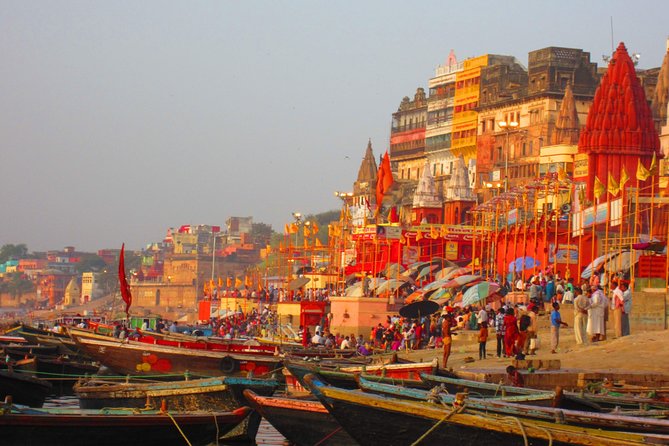
Then you have the signature moment: an early morning Ganges boat ride. The plan describes it as mystical and spiritual, with people offering water and devotees taking holy dip in the river. The itinerary lists a long time block for this experience, and it is marked as admission free.
I love this part of the plan because it is not just “see a temple.” It is an experience tied to the rhythm of the river and local life. If you are even slightly curious about how faith looks in everyday motion, Varanasi is a real shift.
One consideration: the boat ride is scheduled as a major time block, so if you dislike long outings or you get tired easily, plan for that in your energy budget on day 7.
Value check: what your money covers, and what to budget separately
At $380 per person for an 8-day route, the value story depends on what you care about and how much you plan to pay out of pocket.
The tour includes:
- Professional tour guide
- Private vehicle transport
- Free Wi-Fi
- Water bottles
- 6 nights accommodation in 3-star hotels
- An AC train journey from Agra to Varanasi
- A mobile ticket and pickup offered
That is a lot of the hard parts covered, especially transport and guided structure. For many people, the time saved alone is worth something. You are not figuring out routes between Delhi, Jaipur, and Agra while also trying to manage monuments.
What is not included:
- Food and drinks
- Monument entrance fees
This is the key “hidden variable.” Taj Mahal, Red Fort, Jama Masjid, Amber Fort, Agra Fort, and other stops all have admissions that you will likely need to pay yourself. If you want a simple budget, add an extra allowance for entries plus sit-down meals like the buffet lunches listed in Delhi, Jaipur, and Agra.
The reviews also mention safety and confidence, plus punctual support from drivers and guides. That matters because in India, good logistics reduce stress fast.
Price note: group discounts are mentioned in the tour summary, and the trip is described as private in the sense that only your group participates. That can be great for families or friends who want the same itinerary without random mixing, but the final cost impact depends on your group size and the exact booking terms.
Comfort and logistics that make the trip feel managed
From a comfort standpoint, you get a steady rhythm. You stay in 3-star hotels for 6 nights, with AC comfort during the train leg. The company also provides water bottles and free Wi-Fi, which sounds small until you are stuck on the move with limited downtime.
Transport is a private vehicle, and the plan includes pickup at the start of the experience in Delhi, plus a clear end plan in Varanasi with drop-off at the airport and train station. In practical terms, this reduces the risk of last-day confusion.
Feedback also highlighted the feeling of safety, with people pointing to care from the airport pickup through departure drop-off. Names like Sanjeev Paul showed up in written thanks, which usually means there was someone hands-on for the coordination.
There is also a good broad-fit note in the tour details: minimum age is 3 and maximum is 85. That suggests the schedule is aimed at a wide range of ages, though the walking inside forts and around markets will still be a factor for anyone with mobility limits.
Finally, the tour uses a mobile ticket. That matters if you prefer digital convenience over paper.
Who should book this, and who might want a different pace
This is a good fit if you:
- Want a first full look at Delhi, Jaipur, Agra, and Varanasi in a single plan
- Like guided explanations rather than reading everything yourself
- Prefer a structured route that handles transport and daily planning
- Want a safety-focused, organized experience, based on how the company is described in feedback
You might not love it if you:
- Hate timeboxed sightseeing, since many stops are scheduled in 30 to 120 minute blocks
- Want lots of unplanned free time or flexible detours
- Have a low tolerance for long travel days, especially when you drive between cities and still fit multiple sights afterward
If your ideal trip is slow travel, choose a different format. This one is more “see the essentials, see them well.”
Photo stops, walking time, and realistic expectations
You will get a mix of photo-friendly moments and museum-like visits. The itinerary explicitly calls out photo help at the Taj Mahal, which is useful if you want the classic shots without spending your whole time waiting around.
Delhi’s plan includes marketplaces like Chandni Chowk, where you can take street photos and shop as you go. Jaipur’s forts and palaces are strong for architecture photos, and you also get Jal Mahal, which typically gives that layered water-and-sandstone look.
Agra adds the big icon plus supporting sites like Itmad-ud-Daula and Mehtab Bagh. If you like comparing different vantage points, the itinerary is built for that.
For Varanasi, the boat ride is the obvious camera highlight, but also the “feel the moment” highlight. The plan describes offerings on the water and devotees in the river context, which means this stop is about atmosphere as much as photos.
Also plan for practical reality: entrance fees and meals are on you, and since many days are packed, you will likely want to move efficiently and keep your schedule tidy.
Should you book Majestic Golden Triangle With Varanasi?
I think this tour is worth considering if you want an organized, guided sweep of north India that ends with a very different experience on the Ganges. The included pieces, private transport plus a professional guide plus hotel stays plus the AC train, do a lot to remove uncertainty.
Book it if your priority is seeing the key sights across Delhi, Jaipur, and Agra, then adding Varanasi and Sarnath as a meaningful finish. The strong feedback around safety and support, plus the coordination named in reviews, also points to a smooth process from start to finish.
Skip it or switch plans if you want long, slow monument time, or if you have a strict budget that cannot absorb entrance fees and meals. The schedule works best when you are okay with a full day structure and you treat each stop as a highlight, not a half-day sit-down.
If you want, tell me your travel month and your group size, and I can help you estimate entrance and meal budgeting so the $380 price feels clearer before you commit.
FAQ
How long is the tour?
The tour duration is listed as 8 days approximately.
What cities does the itinerary include?
The route includes Delhi, Jaipur, Agra, and Varanasi.
Where does the tour start and where do you get dropped off?
It starts in New Delhi, India. The provider states they drop guests off at Varanasi airport and Varanasi train station.
What is included in the price?
Included items are a professional tour guide, transport by private vehicle, free Wi-Fi, water bottles, 6 nights accommodation in 3-star hotels, and an AC train journey from Agra to Varanasi. A mobile ticket is also mentioned.
Are monument entrance tickets included?
No. Monument entrance fees are listed as not included.
Are meals included?
No. Food and drinks are listed as not included, even though the itinerary includes lunch stops at specific restaurants.
Do you use a train during the trip?
Yes. The plan includes an AC train journey from Agra to Varanasi, with Varanasi arrival described as around 7:00 am on the seventh day.
Is pickup offered?
Pickup is offered. The plan also states a company representative picks you up after the train arrival in Varanasi and drops you at your pre-booked hotel.
What are the age limits?
The tour details list a minimum age of 3 and a maximum age of 85.
Is this tour private?
Yes. It is described as a private tour or activity, meaning only your group will participate.
More Tour Reviews in New Delhi
Not for you? Here's more nearby things to do in New Delhi we have reviewed








More Golden Triangle Tours to consider.
 ★ 5.03-Days Private Golden Triangle Tour: Delhi, Agra & Jaipur by CarTickets from $1271,107 traveller reviews
★ 5.03-Days Private Golden Triangle Tour: Delhi, Agra & Jaipur by CarTickets from $1271,098 traveller reviews
★ 5.03-Days Private Golden Triangle Tour: Delhi, Agra & Jaipur by CarTickets from $1271,107 traveller reviews
★ 5.03-Days Private Golden Triangle Tour: Delhi, Agra & Jaipur by CarTickets from $1271,098 traveller reviews
 ★ 5.03-Day Delhi, Agra and Jaipur Private Tour – India Golden TriangleTickets from $110812 traveller reviews
 ★ 5.0Four-Day Private Luxury Golden Triangle Tour to Agra and Jaipur From New DelhiTickets from $160807 traveller reviews
 ★ 5.05 Nights 6 Days Private Golden Triangle Tour – Delhi Agra JaipurTickets from $240574 traveller reviews
 ★ 5.04 Days Golden Triangle TourTickets from $146499 traveller reviews
 ★ 5.0Private Car and Drive for Golden Triangle (4N/5D)Tickets from $167451 traveller reviews
 ★ 5.0Private Golden Triangle Tour Delhi Agra Jaipur ( Top Rated )Tickets from $148436 traveller reviews
More useful Delhi routes