
Review · GOLDEN TRIANGLE TOURS
Golden Triangle Tour 3 Days
Golden Triangle in three days, no sprint required. This is a structured way to see Delhi, Agra, and Jaipur with a guide who explains what you are looking at, plus a private tour for just your group. You can also choose packages that include monument admission, which matters a lot for a trip like this.
My favorite part is how the day-by-day pacing lets you enjoy the big-name sights without feeling like you are only sprinting between entry gates. The other win is the variety in the mix, from Jama Masjid and Old Delhi markets to Taj Mahal at sunrise and then Jaipur forts and palaces. The main drawback to consider is the schedule is still busy, with several stops that are 10 to 30 minutes, so you will want to be ready for a fast, full day.
Key takeaways before you go
- Private, group-only touring: you are not sharing with strangers in this format, so the day feels more flexible.
- Guide commentary at multiple stops: you get explanations at major monuments, not just photo time.
- Sunrise Taj Mahal included in the plan: start early enough to catch the famous early light.
- Two overnight stays, built in: you sleep in Agra and Jaipur, then finish back in Delhi.
- Optional monument fees and accommodation: your exact value depends on the package you pick.
- A/C vehicle plus unlimited water bottle: long drives feel more manageable.
How This 3-Day Golden Triangle Gets You From Delhi to Agra to Jaipur
This tour follows the classic Golden Triangle route, but it does it with a practical goal: tick off the highlights without trying to see everything in one exhausting day. You will spend time in Delhi first, then travel to Agra for the Taj Mahal and Agra Fort, and finally reach Jaipur for forts and palaces before returning to New Delhi.
What makes it work for real people is the rhythm. Day 1 ends with an overnight stay in Agra. Day 2 ends with another overnight stay in Jaipur. Then Day 3 finishes with a drop back in New Delhi. That structure helps because the drive time is built into the plan, not added on at random.
You also get a guide and an air-conditioned vehicle, plus pickup is offered. For a first-time trip, that removes a lot of decision fatigue. For repeat travelers, it still helps because you spend less energy figuring out how to move and more time on the sites themselves.
One small thing to keep in mind is that the “big ticket” moments do not get stretched into all-day affairs. Many stops are timed tightly, so if you like to linger and chat for a long time at every viewpoint, you may feel slightly rushed.
More New Delhi tours and experiences for the shortlist



Day 1 in Delhi: Old Delhi Mosques, Market Energy, and Mughal-Delhi Landmarks
Day 1 is basically Delhi in layers. You start in Old Delhi and then move toward the grand Mughal-era sites and major city landmarks.
Jama Masjid is a strong opening. It is described as one of the largest mosques in India, built by Mughal emperor Shah Jahan between 1644 and 1656. With about 30 minutes there, you will get enough time to take in the scale and learn the story without turning it into a whole day. If you like architecture and historical context, this is a good anchor start.
Next comes Chandni Chowk, where the description leans straight into sensory detail. You are looking at a dense Old Delhi shopping area with spices, dried fruit, silver jewelry, and vivid saris, plus side streets where small shops sell essential oil. This stop is around one hour, and that time is useful because you can walk at market speed, not just stand in one spot for ten minutes.
Then you add Rickshaw Tours, about 1 hour 30 minutes. The idea is a mix of Old Delhi heritage and culture, and the plan frames it as a way to get a feel for the Old City. If you do not want to figure out logistics inside the chaos, this timed chunk is a smart move.
After that, you shift tone with Raj Ghat. It is dedicated to Mahatma Gandhi, marked by a black marble platform and includes an eternal flame. You only get around 30 minutes, but it is the kind of place where even a short stop can feel meaningful because it is designed as a reflective memorial.
You also pass India Gate for about 5 minutes. It is a war memorial built in memory of a soldier who died in the first world war. Since it is a drive pass, manage your expectations: this is more of a landmark view than a deep sit-down moment.
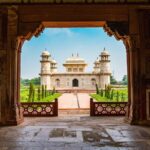
Then you move into Mughal Delhi with Humayun’s Tomb (about 1 hour 30 minutes). It is described as a landmark in the development of Mughal architecture and as the earliest extant specimen of the Mughal garden tomb scheme, with causeways and channels. This is a great stop for anyone who likes a guided explanation, because the garden-tomb layout is easier to understand when someone points out what you are seeing.
After Humayun’s Tomb, you visit Gurudwara Bangla Sahib for about 1 hour 30 minutes. It is one of Delhi’s prominent Sikh gurdwaras and linked with Guru Har Krishan, plus there is mention of langar. That pairing is helpful, because it gives the site both cultural and community context, not only visuals.
The day then includes a quick look at Rashtrapati Bhavan (about 10 minutes). It is the official residence of India’s President at the western end of Rajpath and was formerly known as Viceroy’s House. Since your time here is short, your guide’s commentary will matter more than lingering.
To close Day 1 in Delhi, you go to Lotus Temple for about 30 minutes. It is a Baháʼí House of Worship, dedicated in December 1986, known for its lotus-like shape. It is timed well, because it gives you a calm, modern-feeling contrast after the busier Old Delhi moments.
Finally, you drive to Agra (about 3 hours) for the overnight stay. Day 1 is a lot of moving parts, but the stops are chosen to cover different “Delhi moods” in a single day.
A practical Day 1 strategy
If Day 1 feels like it might be too much, you should focus on quality over quantity. Pick a couple of stops you truly care about and let the rest be about orientation. This tour does a good job of giving you that orientation fast.
Day 2 in Agra: Sunrise Taj Mahal and Agra Fort Built for Big-Name Fans
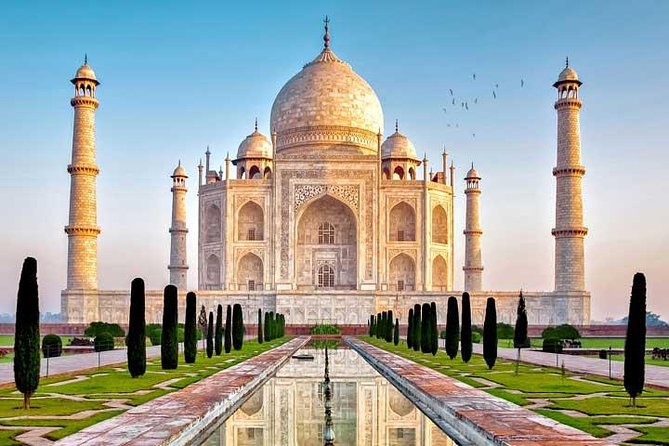
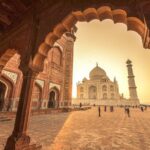
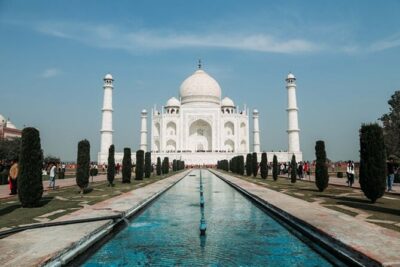
Day 2 is the “this is why you came” day, with Taj Mahal at sunrise. The plan calls for an early orning visit at sunrise time, and the Taj Mahal is described as an ivory-white marble mausoleum on the south bank of the Yamuna River. It was commissioned in 1632 by a Mughal emperor. With about 3 hours allocated, you should have time not only for the iconic views, but also for the guide to explain what makes the site significant.
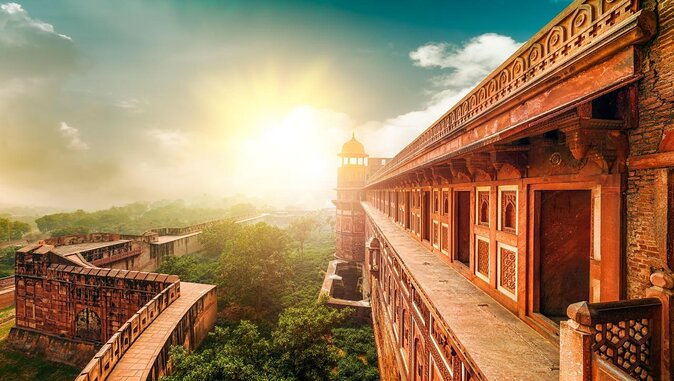
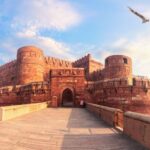
After that, you head to Agra Fort for about 2 hours. It is described as the former imperial residence of the Mughal Dynasty and a UNESCO World Heritage site. That combination is useful because you get both spectacle and the sense of political power tied to where you are standing.
You then add a major detour stop: Fatehpur Sikri, around 1 hour, while driving from Agra to Jaipur. The plan states it was founded in 1569 by Mughal emperor Akbar and served as the capital of the Mughal Empire from 1571 to 1585. With only about an hour, you will want to treat this as a highlight taste, not a deep, museum-style visit.
Then you drive to Jaipur (about 4 hours) and overnight there.
Day 2 timing reality check
You are hitting sunrise Taj Mahal and then continuing with two more significant stops. If you are traveling with low energy, plan for an early bedtime in Agra the night before. The tour’s pace is set, but your recovery time is your choice.


Day 3 in Jaipur: Forts and Palaces with Quick Wins Like Hawa Mahal
Day 3 keeps the “big names,” but it also varies how long you spend at each place. That is good because it gives you standout moments without turning the final day into a blur.
You start at City Palace in Jaipur for about 2 hours. The description specifies it includes Chandra Mahal and Mubarak Mahal palaces and other buildings. If you like palace complexes, this is your longer anchor stop, where you can actually follow the flow instead of rushing from gate to gate.
Next is Hawa Mahal (about 15 minutes). It is called the Palace of Wind, and the key explanation is that it is essentially a high screen wall built so women of the royal household could observe street festivals while unseen from the outside. With only 15 minutes, this works best as a quick appreciation stop plus a photo moment, not a long exploration.
Then comes Amber Palace (about 2 hours). It is described as a majestic fort on the top of Aravali Hills, known for a mixture of Indo-Islamic architecture, gold plated painting, mirror work, and European architecture. That set of details helps you understand what to look for when you are on-site, even during guided time.
You continue to Jantar Mantar for about 1 minute. The plan explains that “Jantar Mantar” means instruments for measuring the harmony of the heavens, and it consists of 13 architectural astronomy instruments. With such a short time allocation, this is more like a quick hit, where you focus on the guide’s explanation and capture a few key visuals rather than expecting a slow walk-through.
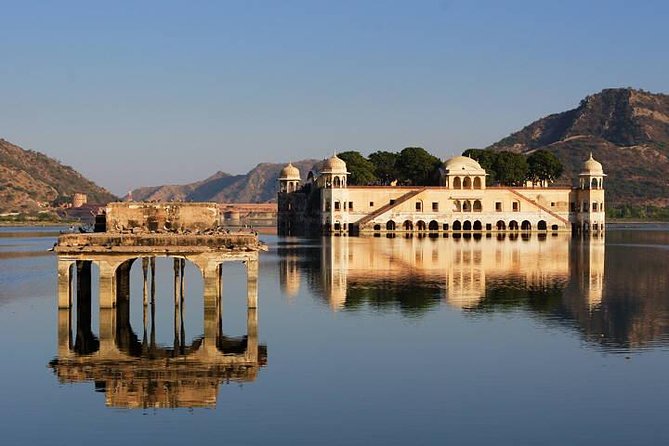
You finish with Jal Mahal for about 10 minutes, mostly for photos. It is described as the water palace located in the middle of Man Sagar lake in Jaipur. This is a nice closing moment because it feels different from the palace-and-fort theme, and it gives you a break from heavy walking.
Finally, you drive back to New Delhi and drop at your preferred location.
Price and What It Really Includes at About $20 Per Person
The headline number is $20.00 per person, and that is where you should pay attention to what your package includes, because the “value” changes depending on the selected options.
Here is what is included:
- Air-conditioned vehicle
- Guide services
- Unlimited water bottle
- Hotel accommodation with breakfast if you select an accommodation option
- Breakfast (2) listed as included
- Monument fee if that option is selected
Not included:
- Tip or gratuities
That means your cost can cover a lot of real-world friction, like transport in an A/C vehicle, a guide to interpret what you are seeing, and water during the day. The monument fees and hotel are the two big swing factors. If you choose a package that includes monument admission and hotel, you basically get a more complete “all-in plan” for the route.
Also note the listing says group discounts are available, and pickup is offered. And because you get a mobile ticket, you are less likely to lose time hunting for paper confirmations.
If you are price-shopping, I would compare package options first, not just the base price. For this kind of trip, the guide time and transport matter every day, while monument admission and accommodation change your total spend and comfort level.
Package Choice: Monument Admission and Hotel Options Matter
The tour is set up so you can pick packages that include monument admission and accommodation. That is not a small detail in the Golden Triangle, because most of the famous stops are ticketed or have fees associated with entry.
If you want the simplest day, I would choose the option with monument fee included. Then you are not thinking about paying at the door or arguing about what is included once you arrive.
If you want the most comfort and less hassle, you will also want an accommodation option with breakfast. Day 1 and Day 2 both include overnight stays, in Agra and Jaipur. Having breakfast included can also help you avoid searching for early food on tight mornings, especially with Taj Mahal at sunrise time on Day 2.
Your pacing will also depend on your priorities. Since some stops are short, you will get the most satisfaction if you think of this as a structured highlights trip rather than a slow art-and-history marathon.
Guide and Vehicle Setup: Why You Spend Less Time Confused
This is not a “self-guided city hop” style tour. Guide services are included, and the stops are selected in a way that benefits from commentary. A mosque, a memorial, a palace, an astronomy instrument site, and a water palace all need context to really land. A guide helps you connect the dots faster.
The tour’s guide experience also seems to be a strong point in the overall feedback you provided. Names you might see associated with this kind of service include Kaushal Pandey for Delhi, and then guides such as Indu for Delhi, Kalim for Agra, and Nameera for Jaipur. Another name that comes up with the team is Vishal. Even if you do not know which guide you will get, that mix suggests the tour company has staff assigned by region, which usually helps because the explanations stay local.
On the logistics side, you ride in an air-conditioned vehicle. You also get unlimited water bottle. Those two inclusions might sound basic, but when you are doing multiple drives between Delhi, Agra, and Jaipur, it makes the day feel more human.
Finally, the tour is described as a private tour/activity, meaning only your group participates. That is huge for comfort because you are not stuck waiting for other people who move at a slower pace.
Should You Book This Golden Triangle Tour With Agra Voyage?
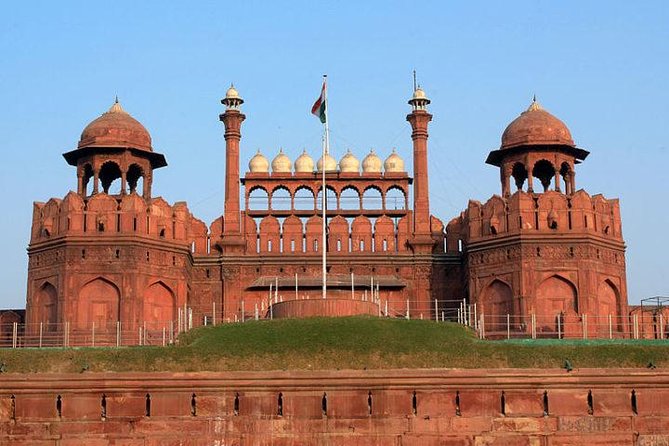
If you want a structured introduction to the Golden Triangle, this is an easy yes. The route hits the big essentials: Delhi landmarks like Jama Masjid, Humayun’s Tomb, and Gurudwara Bangla Sahib, then Agra with Taj Mahal at sunrise and Agra Fort, and then Jaipur with City Palace, Amber Palace, and Hawa Mahal.
I think it is a particularly good fit if:
- You want a guide instead of guessing your way through major monuments
- You prefer a plan that includes transport and overnight stays
- You like the idea of choosing a package with monument admission included
- You are okay with a busy schedule and shorter time slots at some stops
The one “maybe not” case is if you hate fast pacing. Some stops are timed tightly, including Jantar Mantar at about 1 minute and India Gate at about 5 minutes, plus several others around 10 to 30 minutes. If your style is slow and you want to linger everywhere, you might end up feeling you could have used more time.
My bottom line: book it if you want a well-organized highlights route with less planning stress. If your dream Golden Triangle trip is about deep, unhurried exploration, then you may want a different format with fewer stops.
FAQ
What is the duration of the Golden Triangle tour?
The tour runs for 3 days (approximately).
Where does the tour take place?
It is based in New Delhi, India, and covers Delhi, Agra, and Jaipur.
Does the tour include pickup and transportation?
Pickup is offered, and you travel by an air-conditioned vehicle.
Is there a guide during the tour?
Yes. Guide services are included.
Are monument tickets included?
Monument fees are included only if you select a package option that includes monument admission.
Is hotel accommodation included?
Hotel accommodation with breakfast is included if you select the option that includes accommodation.
Can I cancel and get a full refund?
Yes, you can cancel for free and receive a full refund if you cancel up to 24 hours in advance.
More 3-Day Experiences in New Delhi


More Tours in New Delhi



More Tour Reviews in New Delhi
Not for you? Here's more nearby things to do in New Delhi we have reviewed








More Golden Triangle Tours to consider.
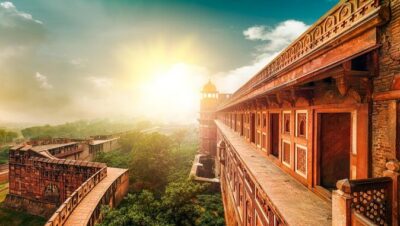 ★ 5.03-Days Private Golden Triangle Tour: Delhi, Agra & Jaipur by CarTickets from $1271,107 traveller reviews
★ 5.03-Days Private Golden Triangle Tour: Delhi, Agra & Jaipur by CarTickets from $1271,098 traveller reviews
★ 5.03-Days Private Golden Triangle Tour: Delhi, Agra & Jaipur by CarTickets from $1271,107 traveller reviews
★ 5.03-Days Private Golden Triangle Tour: Delhi, Agra & Jaipur by CarTickets from $1271,098 traveller reviews
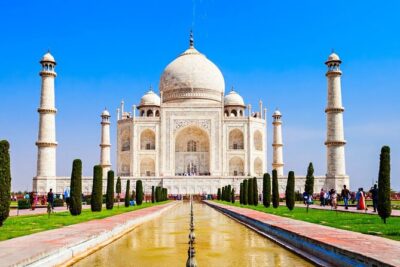 ★ 5.03-Day Delhi, Agra and Jaipur Private Tour – India Golden TriangleTickets from $110812 traveller reviews
 ★ 5.0Four-Day Private Luxury Golden Triangle Tour to Agra and Jaipur From New DelhiTickets from $160807 traveller reviews
 ★ 5.05 Nights 6 Days Private Golden Triangle Tour – Delhi Agra JaipurTickets from $240574 traveller reviews
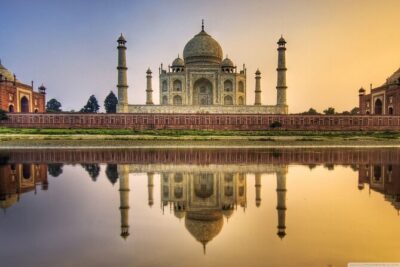 ★ 5.04 Days Golden Triangle TourTickets from $146499 traveller reviews
 ★ 5.0Private Car and Drive for Golden Triangle (4N/5D)Tickets from $167451 traveller reviews
 ★ 5.0Private Golden Triangle Tour Delhi Agra Jaipur ( Top Rated )Tickets from $148436 traveller reviews
More useful Delhi routes