

Review · DELHI CITY TOURS
3DAYS Luxury Golden Triangle Tour To Agra, Jaipur from New Delhi
Golden Triangle, guided and ready to go. In three days, you move through Delhi, Agra, and Jaipur with a dedicated driver and tour guide, plus a dawn-focused Taj Mahal visit that sets the tone for the whole trip. It is built for travelers who want the big icons without spending your vacation wrestling with tickets, traffic, and timing.
I especially like how the schedule mixes famous monuments with real, day-to-day-feeling places like Old Delhi markets. I also love the photo-friendly guidance, since guides such as Riyaz and Ali are repeatedly praised for helping you capture great angles and even sorting out extra picture time without you needing to hire an expensive photographer.
One drawback to keep in mind: this is a fast, full-days style itinerary. Even with an air-conditioned car and a private setup, you will still do a lot of walking, entry lines, and moving between cities.
Key highlights you should know before you go
- Taj Mahal at dawn plus a battery bus or golf cart ride from the Taj parking area
- Private driver and professional guide for all excursions, so you are not guessing
- Delhi old and new mix, from Lotus Temple and Qutub Minar to Jama Masjid and Chandni Chowk
- Agra Fort and Itmad-ud-Daula included, not just the one-photo Taj moment
- Jaipur classics in one push: Jantar Mantar, City Palace, Hawa Mahal, and Jal Mahal
- Riyaz, Ali, Salman, and Mohsan are named in reviews as strong, helpful guides who handle questions and photos
Golden Triangle in 3 Days: The realistic value of this route
The Golden Triangle is famous for a reason, Delhi to Agra to Jaipur. What makes this tour work for many people is the way it keeps logistics tight: you get picked up in New Delhi, you get a guide to explain what you are seeing, and you move on to the next city without the stress of booking each step yourself.
At a headline price of $16 per person, the big question is value, not luxury marketing. The good news is that the tour includes private transport and, in many cases, entrance fees for the sights listed under the selected option. If you add higher-end hotel choices, the cost shifts, but you still stay within a package logic: travel, guidance, and key entries are handled so you can spend your time looking, not troubleshooting.
This is also the kind of itinerary that fits well when you want classic highlights but still want context. A guide can turn a monument into a story, and it matters most at the sites where you might otherwise miss the details.
More New Delhi tours and experiences for the shortlist



New Delhi pick-up and first views: getting oriented quickly
Your day starts with a representative meeting you at Delhi Railway station or the airport. From there, the plan is straightforward: a loop through major Delhi landmarks, with multiple stops that give you a quick feel for how the city layers modern government buildings with older monuments and Mughal-era sites.
This matters because Delhi can overwhelm you on day one. With a driver and someone coordinating timing, you spend less energy on getting your bearings and more on seeing what you came for.
Then the itinerary begins with a major contrast in style and setting. You start at the Lotus Temple, move to Qutub Minar, and then head toward India Gate and the government buildings area. That sequence gives you a visual “range” fast, from serene worship space to towering history and then to the grand civic look of the capital.
Lotus Temple and Qutub Minar: two big Delhi monuments in the first stretch
The Lotus Temple is the calm opener. The tour frames it as a heritage site worth exploring, and the visit window is set to around two hours. Even if you are only there briefly, this stop is useful because it slows you down after arrival, before you jump into the busier Old Delhi atmosphere later.
Next up is Qutub Minar, described as the best and tallest monument in Delhi and allocated around two hours. This stop is valuable in a package like this because you get time to actually look, not just pass by for a photo. When you pair Qutub Minar with the earlier Lotus Temple, you get two different “architectural moods” in one morning.
Practical note: wear comfortable shoes. Delhi’s monuments are manageable, but the tour flow adds up, and you will be on your feet more than you expect.
India Gate and the Presidential area: civic Delhi with photo stops
After Qutub Minar, the itinerary includes India Gate for about two hours. The tour describes it as a victory monument linked to those who died in World War I, so you are not just looking at a landmark. You are stepping into a memory of modern India carved into stone.
Then you have stops for Parliament House and Rashtrapati Bhavan. Parliament House is described as shaped around the Ashoka Chakra concept, a circular form tied to India’s symbolism. Rashtrapati Bhavan is the president’s official residence, with presidential gardens and surrounding grounds.
Because entrance details are not specified for those buildings, expect a sightseeing style stop focused on viewing and photos rather than long interior tours. That still works for the goal of a 3-day trip, which is to see the major outlines without getting stuck on paperwork.
Old Delhi essentials: Chandni Chowk and Jama Masjid
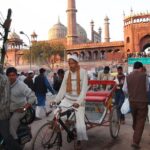
Once you transition toward Old Delhi, the itinerary shifts into street-level energy. You stop at Chandni Chowk for about one hour. The tour highlights markets full of spices, dried fruit, silver jewelry, and colorful saris, plus narrow side streets with tiny shops, including those selling essential oil. This is one of the best “real life” stops on the route because it feels like you are walking through commerce, not museum glass.
Then you visit Jama Masjid for around one hour, described as one of the largest mosques in India, built by Shah Jahan between 1650 and 1656. Again, this is why having a guide helps. You get context for what you are seeing, and you also get help timing your visit so you are not stuck waiting around.
It is a good chunk of the day, and it sets up a deeper understanding of Delhi’s layers before you head out toward Agra.
More New Delhi tours and experiences for the shortlist



Red Fort and Humayun’s Tomb: Mughal landmarks that anchor the history
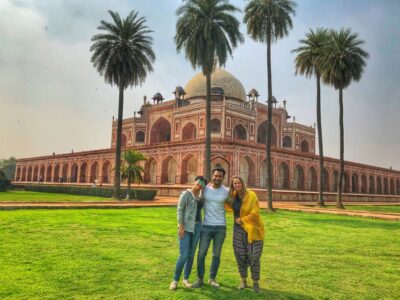
The itinerary includes Humayun’s Tomb for about one hour. It is identified as the tomb of Mughal Emperor Humayun, commissioned by his chief consort, Empress Bega Begum, in 1558. That detail matters because it turns the visit into a specific story, not just a pretty structure.
You also have Red Fort listed, with the note that it served as the main residence of Mughal emperors for nearly 200 years until 1856, and that it now houses museums. For many visitors, Red Fort is where the Golden Triangle starts to feel less like postcard shopping and more like history with an actual setting.
The tour flow keeps these stops grouped, so you are not jumping randomly. That makes it easier to remember what is what, especially if it is your first time in Delhi.
Lunch break and the Delhi to Agra drive
After your Delhi sightseeing block, you get time for lunch at a local restaurant. Lunch is not listed as included, so budget for it separately. You then set off via the expressway toward Agra, with the drive time listed at around three hours.
This is another value moment for a package tour. The Golden Triangle is not just “three cities.” It is also time spent in transit, and the tour handles the vehicle and the route. That means you can relax, drink the bottled water included, and save your energy for the sites that require concentration.
When you arrive, you check in to your Agra hotel. The itinerary also calls out a rest of the day free at leisure, with an overnight stay. That break is important if you want to enjoy the Taj Mahal day without feeling run over.
Taj Mahal dawn: timing, access, and why the early start matters
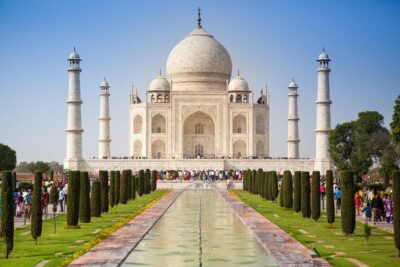
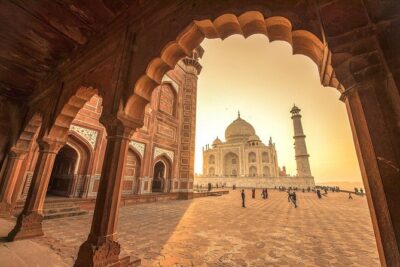
The Taj Mahal is the centerpiece, and this tour treats it like that. Early morning pickup is set up so you catch the sunrise perspective, with about two hours for the visit. The tour also notes that Taj Mahal is a UNESCO World Heritage landmark.
Getting there early is not just romantic. It is practical. In the guide feedback, people specifically highlight that arriving earlier helps avoid a large number of people. That is exactly what you want for photographs too, since light and spacing are both better before the busiest crowds fully land.
Another practical inclusion: you get a battery bus or golf cart return ride from the parking area to the Taj Mahal. That saves energy and walking, especially if your feet are already tired from the day before.
Once you are inside, your guide role becomes more than nice-to-have. A good guide helps you understand where to look and how the monument reads from different angles, instead of just telling you where to stand for the main photo.
Agra Fort and Itmad-ud-Daula: the sights beyond the one iconic frame
After Taj Mahal, the tour adds Agra Fort for about two hours. It is described as a fort built with red sandstone marble and tied to Mughal power. The tour also hints at secret spots, though it does not give specifics. Either way, this is the stop that helps the Taj feel less like a standalone sculpture and more like part of a fortified world.
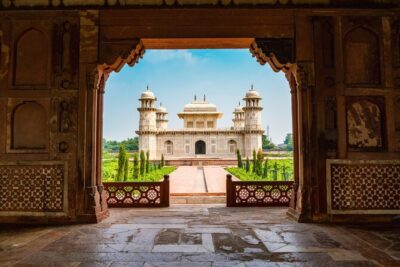
Then you visit Itmad-ud-Daula for about 30 minutes. The tour describes it as a Mughal structure built completely from marble, with early use of pietra dura style inlays, and notes it was the first tomb built on the banks of the Yamuna. Even in a shorter visit, the guide context can help you spot why this site is considered a stepping stone in the Mughal marble tradition.
If you only do Taj Mahal on a day trip, you lose a lot of texture. This itinerary prevents that by pushing past the obvious.
Jaipur day with Jantar Mantar, City Palace, Hawa Mahal, and Jal Mahal
After Agra, you head to Jaipur, and the Jaipur sightseeing block starts with breakfast. The itinerary then includes multiple “big names,” each with a different look and purpose.
First is Jantar Mantar, listed as about two hours and described as a pleasant spot with an alternate attraction experience. Even without going too technical, this stop is useful because it breaks the pattern of palaces and forts with something that feels different.
Next is City Palace, described as a grand attraction that is now a museum. A museum stop on a tour like this can be a relief: you get to slow down a bit and look at objects and design choices that connect to what you are seeing on the outside of the buildings.
Then comes Hawa Mahal (Palace of the Winds) for about two hours. The tour highlights it as Jaipur’s most lovely landmark and notes its tall screen-like facade. This is the classic photo stop, but the guide help can make it more than copying the same shot everyone does.
You also visit Jal Mahal, described as a landmark situated in the middle of water, giving a lovely look and also called the water place. This stop gives you an atmospheric break from Jaipur’s city streets.
Finally, there is Panna Meena ka Kund, a step well near Amber Fort listed for about 15 minutes. It is short, but it is a fun change of pace, and it is the kind of detail you can miss if you only chase the biggest entrances.
Returning to Delhi or dropping at Jaipur airport
After Jaipur, the itinerary includes an approximately five-hour journey back to New Delhi, or you can be dropped off at Jaipur airport. That choice can help if you have an onward flight and you do not want to fight for another hotel night.
The key is to plan your end-of-trip timing carefully. Jaipur to Delhi can take time, and you will want buffer if you are catching trains or flights right after.
Price and inclusions: where the package actually earns its keep
On paper, the price listed is $16 per person, and that is startlingly low for a multi-day route with a private driver and guided visits. The most realistic way to read it is as a base figure, then you choose options for the parts that matter most to you.
Here is what is explicitly included:
- 2 nights accommodation on twin sharing with breakfast if you pick the option including hotels
- Private driver with air-conditioned vehicle throughout
- Professional private tour guides for all excursions
- Entrance fees for the listed monuments, if the option includes them
- Battery bus or golf cart return ride from parking to Taj Mahal
- Bottled water, taxes, handling charges, and parking fees
- Breakfast twice
Not included:
- Lunch and dinner
- Personal expenses
What I like about these inclusions is that they cover the “annoying” parts of travel. Entrance fees can be a headache to line up. Parking is another hidden cost. Having someone coordinate pickup and guiding removes a lot of wasted time.
What you should watch for is the difference between what is included by default and what depends on your selected option. The tour notes that monument entrance fees and hotel style can be included based on your selection, and that is the main lever that changes your actual final value.
If you are trying to keep costs down, you still get the private transport and guide support. If you want comfort upgrades, you can choose 4- or 5-star accommodation options as stated.
Guide quality and photo help: the names that keep showing up
The most praised aspect in the feedback is the guide experience, especially around pacing and photos. Several names show up: Riyaz, Ali, Salman, and Mohsan. The tone across reviews is consistent. People felt cared for, got clear explanations, and did not feel rushed.
Two specific wins repeat:
- Guides help you with photo opportunities and are happy to take photos, not just point at landmarks
- Some guides go beyond basics, with help for extra picture spots and even connecting you with a professional photographer setup in at least one reported case
You should not treat that as a guaranteed add-on. But it does tell you something important: the guide is part of the product, not an optional extra.
If you like taking pictures but hate the awkward moments of finding a stranger to photograph you, this tour’s guide focus is a big deal.
What to watch for on a tight 3-day schedule
This itinerary is packed, so your success depends on your expectations.
First, plan for long days. Delhi includes multiple monument stops plus Old Delhi market time, and then you drive to Agra. The tour includes time blocks like two hours per major monument, plus the mosque and market windows. It adds up.
Second, meals are on you beyond breakfast. Lunch time is built in, but lunch is not included. If you do not plan ahead, you can end up paying more for quick meals.
Third, comfort matters. You are doing plenty of walking and entry lines. Wear shoes you already trust, and keep water and basic snacks in mind even though bottled water is included.
Finally, consider your energy for sunrise. Taj Mahal at dawn is the highlight, but it means you will start early. If you are not a morning person, this tour may still be worth it, but you should mentally prepare.
Should you book this 3-day Golden Triangle tour?
I think this is a smart booking for you if you want the Golden Triangle essentials with private transport, a real guide, and a plan that hits the highlights without you managing tickets and timing all by yourself. The repeated praise for guide help, especially around photos and early Taj timing, points to a smoother experience than the average DIY route.
You might skip it if you want a slow, flexible pace, or if you prefer to control every meal and route choice on your own. Also check what your selected option includes for hotel level and entrance fees, since that changes the true bottom line.
If your priority is efficiency plus guidance, this tour makes the Golden Triangle feel manageable. And if Taj Mahal is your top goal, the early start and the included ride from parking are exactly the kind of practical touches that turn a famous landmark into a memorable experience.
FAQ
Where do they meet me in New Delhi?
A representative meets you at Delhi Railway station or at the airport.
What is the duration of the tour?
The tour is listed as 3 days, approximately.
Is the pickup and transport included?
Yes. The tour includes pickup, and it includes a private driver with an air-conditioned vehicle throughout.
What meals are included?
Breakfast is included for 2 days. Lunch and dinner are not included.
Are entrance fees included for the monuments?
Entrance fees for sights mentioned are included if you select the option that includes monument entrance fees.
Do I need to buy tickets on my own for the Taj Mahal parking ride?
No. The tour includes a battery bus or golf cart return ride from the parking to Taj Mahal.
What is the cancellation policy?
You can cancel for a full refund up to 24 hours in advance. If you cancel less than 24 hours before the experience starts, the amount paid is not refunded.
More VIP Experiences in New Delhi


More Tours in New Delhi






More Tour Reviews in New Delhi

Not for you? Here's more nearby things to do in New Delhi we have reviewed








More Delhi City Tours to consider.
 ★ 5.0Old & New Delhi City Tour – Half or Full Day Options AvailableTickets from $384,811 traveller reviews
 ★ 5.0Same Day Taj Mahal, Agra Fort & Baby Taj Tour from Delhi by CarTickets from $624,304 traveller reviews
 ★ 5.0Taj Mahal Day Tour from Delhi by Superfast Train – TOP RATED TOURTickets from $1004,166 traveller reviews
 ★ 4.9Old and New Delhi Private Full or Half-Day TourTickets from $23,776 traveller reviews
 ★ 5.0Full Day Taj Mahal, Agra Fort & Baby Taj Tour from Delhi by CarTickets from $623,647 traveller reviews
 ★ 4.9From Delhi: Taj Mahal & Agra Private Day Trip with TransfersTickets from $43,181 traveller reviews
 ★ 5.0Taj Mahal Tour from Delhi by Express Train (Viator Award Winner)Tickets from $752,849 traveller reviews
 ★ 5.0All Inclusive Private Taj Mahal Luxury Tour from Delhi by CarTickets from $622,564 traveller reviews
More useful Delhi routes