
Review · GOLDEN TRIANGLE TOURS
14 Days Golden Triangle with Wildlife Safari & Heritage Rajasthan
Delhi to Rajasthan means big sights, nonstop stories, and a real change of pace. This private 14-day route stacks Delhi, Agra, Jaipur with Ranthambore and Jhalana safari so you get culture and wildlife in one trip. I especially like the door-to-door, air-conditioned transfers and the way the schedule builds in early starts for highlights like the Taj Mahal. One consideration: monument entrance fees are not included, so you’ll want to budget extra for tickets at places like the Taj Mahal, Agra Fort, and Jaipur’s key sites.
You’re also traveling with a private setup, so it’s your group on your schedule, not a giant bus of strangers. The itinerary is long on purpose, but it still tries to keep days moving without feeling rushed everywhere. For first-timers to India, it’s a strong way to get your bearings, plus the wildlife focus is a nice change from temples and forts.
Key things to know before you go
- Private door-to-door transfers keep you from guessing transport in busy cities
- Taj Mahal battery bus ride is included, which saves time at the main approach
- Two Ranthambore safari times (morning and evening) plus jeep or canter access
- Jhalana Safari Park adds a second wildlife day beyond Ranthambore
- Daily breakfast is included when you book the hotel option
- Monument entrance fees are separate, so your final cost depends on ticket priorities
The value of a private Golden Triangle plus safari focus

This is not a casual weekend tour. It’s a 14-day circuit that covers the Golden Triangle core (Delhi, Agra, Jaipur) and then fans out across more Rajasthan highlights, ending back in Delhi. That matters because you’re not just ticking off a few landmarks, you’re getting a sense of how the region moves, from Mughal-era architecture to desert towns and wildlife country.
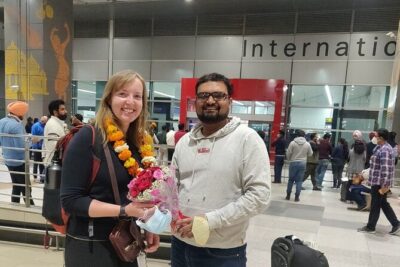
The private format is the big practical win. You get a dedicated driver and private local guides for the sightseeing days, and transport is air-conditioned. There’s also door-to-door pickup and drop-off, including transfers from Indira Gandhi International Airport, which makes arrival day far less stressful.
The itinerary is priced at $835.72 per person, but the real value comes from what’s included: private transport with a driver, sightseeing with private local guides, bottled mineral water during journeys, and key safari entries. If you book the hotel option, you also get 13 nights of accommodation and daily breakfast.
Your one financial caution is straightforward: monument entrance fees are not included. Many stops list admissions as not included, including major attractions. So treat the tour price as the foundation, and set aside an extra budget for ticketed sites.
You can also read our reviews of more historical tours in New Delhi


Day 1 in Delhi: start with temples, step wells, then Old Delhi energy
Delhi on day one is built for orientation. You land at Terminal 3, meet the tour representative and driver, and go straight to your hotel. Then you get an organized first taste of the city with Gurdwara Bangla Sahib, Agrasen Ki Baoli, and time around Old Delhi.
I like that the first stops aren’t only about famous monuments. Gurdwara Bangla Sahib is free to enter, and it gives you a grounded look at Sikh spiritual life, with the tank area often being the visual focus. After that, Agrasen Ki Baoli (a protected step well) adds a different kind of atmosphere. Step wells can feel surprising if you only think of Delhi as modern skyscrapers and traffic.
You’ll also pass through areas where you can feel the city’s rhythm. The itinerary later includes Chandni Chowk, a classic Old Delhi shopping lane scene with dense lanes and stalls, and it’s exactly the kind of place where a guide helps you move through without getting tangled.
One practical note: this is day one, and Delhi traffic is the wild card. The tour handles the transport, but you should still expect timing to feel fluid when you’re driving between major neighborhoods.
Delhi day two: UNESCO tower, Lotus Temple, Mughal monuments in one sweep
Day two in Delhi leans into variety, and you’ll feel the city’s layers. You start with Qutub Minar, a UNESCO World Heritage site, then head to Lotus Temple for its distinct flower-like architecture. Both are free to enter according to the plan for this day.
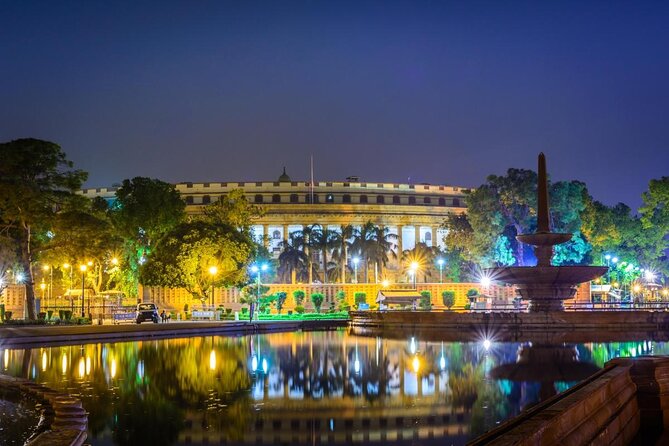
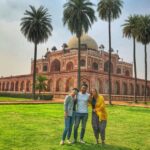
From there, the schedule turns into Mughal Delhi and imperial landmarks. You visit India Gate, then move through Jama Masjid, and also include Humayun’s Tomb. You’ll finish with Chandni Chowk again, which can be a great way to see Old Delhi at a different pace within the same trip arc.
This is one of the days where a private guide really helps. Delhi’s monuments are spread out and stylistically different, so a guide gives you the “why” behind the shapes, eras, and names. It also reduces the amount of guesswork when you’re deciding what to linger at.
Budget for tickets here too. Several items on day two list admission tickets as not included, including Humayun’s Tomb. That’s a recurring theme across the whole tour, so it’s best to treat entry fees as an expected extra rather than a surprise.
Agra Day: sunrise Taj Mahal plus the Mughal trio

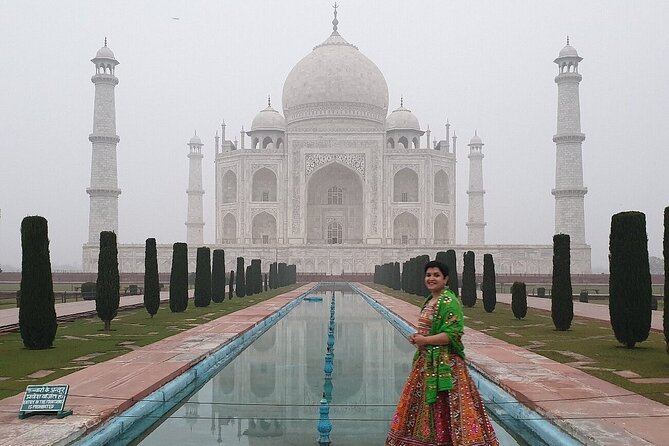
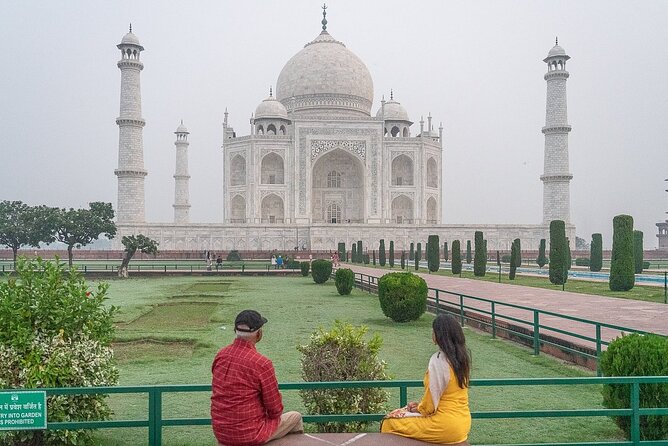
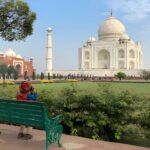
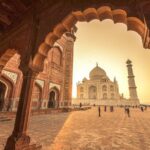
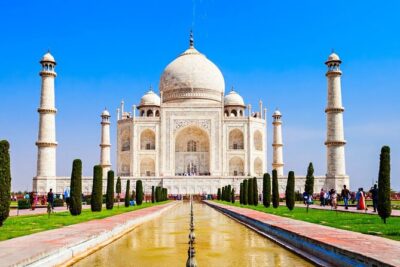
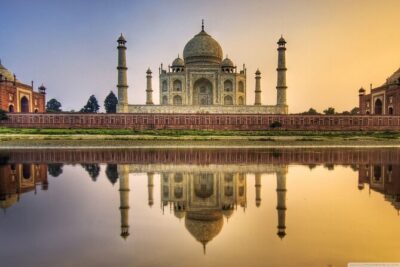
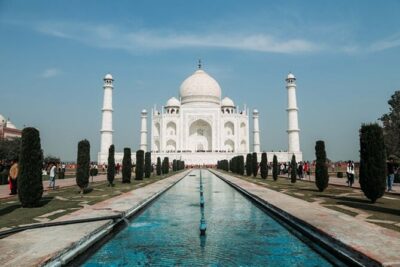
Agra is where the trip turns cinematic. You drive roughly 222 km, then check in and get ready for one of India’s most famous sights. The schedule includes Taj Mahal with a guided visit, and it’s timed for a sunrise experience on the fourth day too, which is a smart way to increase your odds of beautiful light.
On the Agra side, you’ll also see Agra Fort and Itmad-ud-Daula, plus Mehtab Bagh for those classic views across the Yamuna. The “Baby Taj” style mausoleum at Itmad-ud-Daula is often less crowded than the Taj itself, and it gives you a softer entry into Mughal craftsmanship.
What I like here is how they build in variety around the main event. You’re not only doing one stop. You get mausoleums, fortifications, and viewpoints, so the day feels like a story instead of a checklist.
Also, the tour includes a battery bus ride to and from Taj Mahal parking up to the monument. That’s a small logistical gift. Taj Mahal days can be long, and anything that reduces walking when you’re traveling between parking and the main complex helps.
Ticket caution: Taj Mahal and several Agra sites list admissions as not included. So plan on paying entry fees on-site or via your guide’s process.
Fatehpur Sikri and Chand Baori: a stop that resets your brain
After Ranthambore and back into culture mode, day four includes Fatehpur Sikri and Chand Baori before you move toward the safari. Fatehpur Sikri is a massive Mughal complex built under Akbar, and it can feel like stepping into another scale entirely. It’s listed as free admission in the plan for this day, which is a nice cost saver.
Then you get Chand Baori, the deep step well near Abhaneri. Step wells can be surprisingly photogenic, and they’re also one of those places where you understand why architecture was built for climate and community water use, not just aesthetics. You get about an hour, which is usually enough to walk the main areas without feeling rushed.
This day also functions like a palate cleanser. After Delhi and before Rajasthan safari country, it gives you a different kind of awe, less about marble and more about geometry and depth.
One possible drawback: this is a transition day. You’re seeing stops and then checking into Ranthambore area lodging afterward. If you’re the type who hates moving hotels, treat this as the day for energy conservation, not for extra sightseeing.
More New Delhi tours and experiences for the shortlist




Ranthambore wildlife, twice: what that changes for your odds
Ranthambore is the core wildlife block, and the tour is set up around time in the park. You’ll enter Ranthambore National Park with entrance included using a canter or jeep. Then you get two safari times, one after breakfast and a second in the evening.
That double-safari structure matters. Wildlife spotting is never guaranteed, but more time in the right zones increases the chances you’ll see something memorable. Even when sightings are quiet, these safari days still feel like a different kind of travel rhythm: early logistics, quiet anticipation, and a slow scanning of the landscape.
After the safaris, you check in for overnight stays at your hotel near the park. The tour keeps transport private, so you’re not stitching together separate tickets and rides, which can be a headache in wildlife circuits.
Then comes the second wildlife add-on later in Jaipur. Jhalana Safari Park is included as well, and it gives you another chance at sightings in a different setting. If your dream trip includes wildlife beyond just one park, this added day is a strong reason to choose this itinerary.
Jaipur classics: from monkey temple energy to UNESCO science at Jantar Mantar
Jaipur is where the tour flexes its variety. You start with Galtaji Temple (often called the monkey temple), then go to Birla Mandir, and later settle into your hotel. The next sightseeing stretch is full-force city landmarks: Panna Meena ka Kund, Jal Mahal (a photo stop), City Palace, Jantar Mantar (UNESCO), and Hawa Mahal.
The “why it works” here is pacing. Jaipur includes both busy, iconic exteriors and a few places where you can slow down and read the details. Jantar Mantar is a great example: it’s not just a building, it’s instruments for measuring the sky, which makes Jaipur feel more than decorative.
I also like that Hawa Mahal is included as a short stop. It’s a dramatic facade, but you don’t need to spend hours there to get the effect. Meanwhile, City Palace takes longer and gives you that administrative seat-of-power feeling.
Ticket caution applies again. Several Jaipur attractions list admissions as not included, including City Palace, Jantar Mantar, and Hawa Mahal. Since the tour includes many free stops, it helps to treat the paid ones as your chosen priorities rather than a surprise bill for everything.
One more practical tip: Jaipur can be hot and bright. If you’re going in cooler months, you’ll likely find it easier to enjoy longer walks around markets and monuments.
Udaipur by early drive: lake views and an unforced evening
After Jaipur, the tour shifts toward Udaipur. You’ll drive in the early morning, check in, and then have time for local markets and dinner at a restaurant of your choice.
That “choose your dinner” freedom is useful. Udaipur can be romantic and slow, and having unscheduled time keeps you from feeling like you’re in a nonstop museum line. The tour gives you a structure, but not every minute is locked.
If you want to plan ahead, think about how you’ll spend your evening energy. With a lake city, walking near the waterfront and finding a casual spot for local food often becomes the highlight, especially after days packed with forts.
On the next day in Udaipur, you’ll add the big sights: Lake Pichola with a boat ride option, City Palace, and Jagdish Temple. Bagore Ki Haveli Museum is included with private transportation and guided options, but it’s described as skippable. That’s a nice feature if you prefer fewer ticketed stops and more wandering time.
Boat ride admission is not included, so if you want it, you’ll likely pay extra.
Jodhpur: Mehrangarh, museum stops, and a Bishnoi village experience
Jodhpur is reached with an early drive from Udaipur. You’ll check in, then head to the Clock Tower Market, plus the Blue City area experience as described.
Later you’ll visit Mehrangarh Fort, Umaid Bhawan Museum, and Jaswant Thada. These are classic power-and-legacy stops, and a guide helps make sense of why forts and memorials are placed where they are. You’re also watching the shift from the Mughal style world to Rajasthan regional pride and Marwar identity.
A standout part of this section is the Bishnoi village excursion, which the tour calls highly recommended. You’ll spend a few hours there, enjoy local interaction, and then return to the hotel in the evening.
This is where the tour becomes more than architecture. Village visits can give you context for how people live beyond the city’s tourist lanes, as long as you keep an open mind and follow local guidance.
Pushkar and Mandawa: temple morning, lake rituals, and painted haveli walls
The last days bring you into two different cultural flavors.
In Pushkar, you arrive and check in, then visit Brahma Temple and Pushkar Lake areas, including Brahma Ghat for prayers and rituals. The plan lists these as free admissions. Even if you keep your expectations flexible, Pushkar’s spiritual vibe is usually the kind of thing you remember longer than a monument photo.
Then you move to Mandawa, a town known for painted havelis. The schedule includes the Francisco painted havelies, and then time to explore the village area.
These final days are a good landing. After forts and wildlife, you shift to everyday cultural scenes. It’s also helpful if you like travel that ends with color and texture, not just check-out stress.
Price and logistics: what $835.72 really covers
The price, $835.72 per person, is best understood as a bundle of transport, guides, and the big included anchors. Here’s what you can bank on: private, air-conditioned vehicle with driver, airport and hotel transfers, private local guides for sightseeing, and bottled mineral water during journeys. When you pick the hotel option, you also get 13 nights accommodation and daily breakfast.
Wildlife inclusions are a major part of the value. Ranthambore safari park entrance is included with canter or jeep access, and Jhalana Safari Park entrance is included too. Those are not cheap add-ons once you start piecing things together yourself.
What’s not included is where you should budget carefully. The tour states that monument entrance fees and any meal are not included, along with travel insurance and flight or train tickets. If you want to see everything fully inside at places that list admission as not included, your final spending will rise.
Also, tip planning matters. The tour lists driver and guide tips as not included, so keep that in your mind for the end of the trip.
Should you book this 14-day Golden Triangle with wildlife safari tour?
I’d book it if you want a trip that mixes big-name sights with real wildlife time, without juggling separate bookings. The double safari approach at Ranthambore and the extra Jhalana day are the kind of choices that turn a normal Golden Triangle into a more personal, memorable Rajasthan story.
I’d skip it or at least rethink if you hate entrance-fee budgeting. Since monument tickets are not included and several key sites are ticketed, the trip can get pricier than it looks at first glance.
One more decision helper: you’ll likely enjoy this most if you’re traveling as a group that appreciates private guidance. The vehicle setup scales with group size, with a 4-seater sedan for 1 to 2 people, a 6-seater wagon for 3 to 4, and a 10-seater minivan for 5 to 10.
And yes, there’s a small human win here too. Some booking support experiences include proactive coordination from a staff member named Mr. Gopal, which fits how helpful this kind of trip needs to be when you’re moving through multiple cities.
If you want a well-connected route with safari time built in, this is a strong match.
FAQ
What is the duration of the tour?
The tour is listed as approximately 14 days.
Where does the tour start?
The meeting point is Indira Gandhi International Airport, New Delhi, Delhi 110037, India.
What is the price per person?
The price is $835.72 per person.
Is hotel accommodation included?
Accommodation is included as 13 nights only if you book the option including hotels.
Are daily breakfasts included?
Daily breakfast is included when you book with the hotel option.
Are monument entrance fees included?
No. Monument entrance fees are not included.
Are safari park entries included?
Yes. Ranthambore Safari Park entrance with canter or jeep is included, and Jhalana Safari Park entrance is included.
Is transport provided during the tour?
Yes. You get transport by a private, air-conditioned vehicle with a driver, along with hotel or airport pick-up and drop-off.
What vehicle will be used for my group size?
For groups of 1 to 2, it is a 4-seater sedan. For groups of 3 to 4, it is a 6-seater wagon. For groups of 5 to 10, it is a 10-seater minivan.
What is the cancellation policy?
Free cancellation is available, and you can cancel up to 24 hours in advance for a full refund. If you cancel less than 24 hours before the start time, the amount paid will not be refunded.
More Safari Adventures in New Delhi
More Historical Tours in New Delhi


More Tour Reviews in New Delhi




Not for you? Here's more nearby things to do in New Delhi we have reviewed








More Golden Triangle Tours to consider.
 ★ 5.03-Days Private Golden Triangle Tour: Delhi, Agra & Jaipur by CarTickets from $1271,107 traveller reviews
★ 5.03-Days Private Golden Triangle Tour: Delhi, Agra & Jaipur by CarTickets from $1271,098 traveller reviews
★ 5.03-Days Private Golden Triangle Tour: Delhi, Agra & Jaipur by CarTickets from $1271,107 traveller reviews
★ 5.03-Days Private Golden Triangle Tour: Delhi, Agra & Jaipur by CarTickets from $1271,098 traveller reviews
 ★ 5.03-Day Delhi, Agra and Jaipur Private Tour – India Golden TriangleTickets from $110812 traveller reviews
 ★ 5.0Four-Day Private Luxury Golden Triangle Tour to Agra and Jaipur From New DelhiTickets from $160807 traveller reviews
 ★ 5.05 Nights 6 Days Private Golden Triangle Tour – Delhi Agra JaipurTickets from $240574 traveller reviews
 ★ 5.04 Days Golden Triangle TourTickets from $146499 traveller reviews
 ★ 5.0Private Car and Drive for Golden Triangle (4N/5D)Tickets from $167451 traveller reviews
 ★ 5.0Private Golden Triangle Tour Delhi Agra Jaipur ( Top Rated )Tickets from $148436 traveller reviews
More useful Delhi routes