
Review · GOLDEN TRIANGLE TOURS
10 Day Private Luxury Golden Triangle with Khajuraho and Varanasi
Five sacred cities, one well-run route. This private 10-day tour links Delhi and Agra with Jaipur, Khajuraho, and Varanasi, with local guides in each city and time to actually look instead of sprint.
I like two things a lot. First, the private local guides who explain what you are seeing, from Qutub Minar’s origins to the layout of Old Delhi. Second, the battery bus ride for the Taj Mahal approach, which cuts down the stress once you are already up and out.
One drawback to plan for: monument entrance tickets and meals are not included, so you should budget extra for big sites and tip your driver and guide.
Key highlights worth your attention
- Private local guides in every city, so UNESCO stops come with real context.
- Taj Mahal sunrise timing plus included battery bus, making the early start easier.
- Old Delhi contrasts, from Jama Masjid to Chandni Chowk shopping lanes.
- Khajuraho temple focus, including Chandela-era landmarks like Lakshmana and Kandariya Mahadev.
- Varanasi by day and night, with a Ganges walk and the Ganga Aarti from your seat.
What this 10-day private luxury route really feels like
This itinerary is designed for first-timers who want the Golden Triangle core, but also want the big “add-ons” that most fast group tours skip. You cover five major destinations in 10 days, and the private format helps you keep the pace human.
Delhi, Agra, and Jaipur get the classic sights, then Khajuraho and Varanasi shift the mood. You go from Mughal and Rajput monuments to temple sculpture in Khajuraho, then to river rituals in Varanasi.
The “luxury” angle here mostly means comfort and control. You have a private air-conditioned vehicle, your own driver, and guided stops, so you spend less time figuring out logistics and more time enjoying the places.
You can also read our reviews of more private tours in New Delhi
Price and value: what $623.07 gets you, and what it doesn’t
At $623.07 per person, the value depends on which package option you chose. The tour notes 9-nights accommodation is included only if you select the option that includes hotels, and breakfast is included daily (9 breakfasts total).
Included is a big chunk of the practical stuff: private transportation with driver, hotel or airport pick-up and drop-off, all sightseeing with private local guides, bottled mineral water during journeys, and that battery bus ride for the Taj Mahal parking-to-monument route.
What’s not included matters for budgeting. Monument entrance tickets, meals, and driver and guide tips are not included, plus any personal expenses. Since several major stops are marked as admission not included, you should expect additional out-of-pocket costs once you are in each city.
If you want good value, plan your spending like this: tickets plus meals plus tipping, and then relax because the rest is already handled. That’s the sweet spot this kind of private circuit is meant to deliver.
Ground rules for a private driver: vehicle size and real timing
This is a private tour, meaning only your group participates. Your transportation is provided by vehicle type based on group size: a 4-seater sedan for 1 to 2 people, a 6-seater wagon for 3 to 4 people, and a 10-seater minivan for 5 to 10 people.
Why that matters: it changes how comfortable the ride feels over multiple long travel days. Delhi to Agra and Agra to Khajuraho are not short hops, and you will appreciate having a vehicle that matches your group.
Also, timing is built into the itinerary, not left to luck. For example, Taj Mahal day is set up around a sunrise start and a guided interior visit, and Varanasi day is organized for temple time plus evening Ganga Aarti.
Delhi days 1 to 2: Gurudwara calm, Mughal power, and Old Delhi chaos (the fun kind)
Delhi can overwhelm you fast, so I like that this plan gives you variety early. You start with Gurudwara Bangla Sahib, then move through major UNESCO-level monuments and end in the energy of Old Delhi markets.
Gurudwara Bangla Sahib first, then the monuments
Gurudwara Bangla Sahib is where you begin with a peaceful reset. The site is tied to the story of the 8th Sikh Guru visiting in 1664 and curing people affected by epidemics by distributing water from the tank.
The stop is listed at about 30 minutes and free admission. Even if you do not know the story in advance, it sets a thoughtful tone for a city day that later includes large Mughal-era and British-era landmarks.
More New Delhi tours and experiences for the shortlist






Qutub Minar and Lotus Temple: two styles, both worth your time
Next up is Qutub Minar, a 73-metre tall, five-storey tower built in 1193 by Qutub-ud-din Aibak, with design thought to be based on the Minaret of Jam. It is UNESCO-listed, and it is marked as admission not included in the tour.
Then you get a modern architectural contrast at Lotus Temple, built in 1986 and open for everyone regardless of religion. Admission is listed as free, and the visit is about 30 minutes, which is enough to understand the design without turning the day into a checklist.
India Gate, Parliament House, Jama Masjid, and stepwell breaks
India Gate is included as a quick stop, and it is more than a photo spot. It is a war memorial dedicated to soldiers of British India who died in the wars, and it is also a popular picnic area.
You also pass Parliament House, known as Sansad Bhavan, with its shape based on the Ashoka Chakra theme. It’s a short window in the schedule, but it gives you context for modern India alongside the older layers you are seeing.
Jama Masjid is the big Mughal moment in this Delhi stretch, built by Shah Jahan between 1650 and 1656. It is listed as free admission and paired with a short 30-minute stop, so you get the scale and then move on before it gets too long.
After that, you stop at Agrasen ki Baoli, a protected stepwell monument. It is listed as free admission and about 15 minutes, perfect as a quick visual break from tall monumental structures.
Humayun’s Tomb and Chandni Chowk: UNESCO plus street-level reality
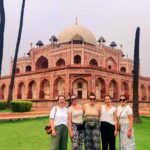
Humayun’s Tomb is a major Mughal-era highlight in Delhi, commissioned in 1558 by Empress Bega Begum. Admission is marked as not included, and the schedule gives you about an hour.
Then you shift back to daily life with Chandni Chowk, one of Old Delhi’s best-known markets. You get about an hour of browsing and absorbing the scene, including spices, dried fruits, silver jewelry, and narrow lanes with small shops.
If you want the most fun here, go in hungry for curiosity. Let your guide help you spot what matters, then pick one or two things to taste or buy rather than trying to do everything.
Jaipur in days 3 to 4: Amber Palace, Jantar Mantar, City Palace, and the Wind Palace
Jaipur is the “showy” city of the Golden Triangle, and this itinerary focuses on a solid set of icons without making it feel like a race.
Day 3: Monkeys, white marble, then check-in
You start Jaipur day with Galtaji Temple, also called Monkey Temple. It has a complex layout and three sacred pools of water, and admission is listed as free.
Then comes Birla Mandir, known for intricate latticework in white marble, with a dedication to Lord Vishnu. It is free admission and a quick 30 minutes, which works well for a first afternoon.
You then check in and overnight in Jaipur, with a flexible block listed as arrival and hotel time.
Day 4: Amer, Jal Mahal, and the science of Jantar Mantar
Amer and Amber Palace get the main focus. The tour includes a two-hour guided exploration of palaces, squares, and monuments, built by Raja Man Singh I, and admission is marked not included.
Jal Mahal, the water palace in Man Sagar Lake, is an easy add-on stop. It’s listed as not included for admission and about 30 minutes, but it gives you that signature picture and a sense of Rajput lakefront design.
Jantar Mantar follows, a UNESCO World Heritage site built in 1734 by Rajput king Sawai Jai Singh II. It is described as an impressive collection of 19 astronomical instruments, and admission is listed as not included.
City Palace and Hawa Mahal: two different kinds of wow
City Palace is next, with about an hour to explore. Built in 1721 as the administrative and ceremonial seat of the Maharaja of Jaipur, it is tied to royal life and religion, and admission is marked not included.
Then you finish the big day with Hawa Mahal, the Palace of Breeze. It’s a five-storey pyramidal structure made with red and pink sandstone, and the stop is about 30 minutes with admission marked not included.
Albert Hall Museum is a quick museum option, described as the oldest museum of Rajasthan and a state museum. The schedule lists it at about 15 minutes, which is enough time to see what you need and not too long to feel stuck.
A day-trip detour toward Agra: Chand Baori stepwell and Fatehpur Sikri
Day 5 is where the trip adds variety and breaks up the “three major cities” feeling. You get a dramatic stepwell and then a Mughal capital experiment.
Chand Baori, near Abhaneri, is one of the largest and deepest stepwells in India, extending about 30 metres into the ground. It is listed as not included and gets about an hour.
Fatehpur Sikri then takes you to Akbar’s capital city from the late 16th century, used as the Mughal capital for around a decade. Admission is listed as free, and you get about an hour to walk the complex.
Later, you arrive in Agra and check in to your hotel. The schedule also provides rest time and leisure for about 5 hours before overnight.
Agra day 6: Taj Mahal sunrise with a guide, plus Agra Fort and Baby Taj
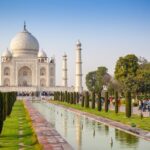
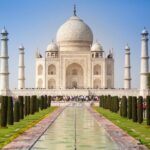
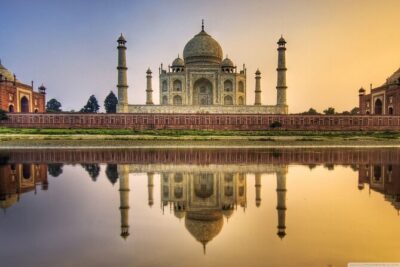
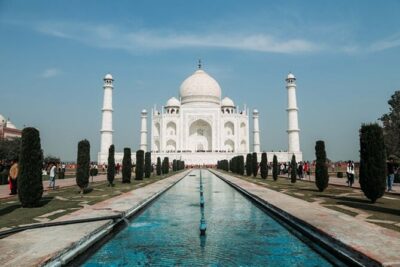
If you are doing only one Golden Triangle icon well, it should be Taj Mahal, and this schedule builds it around a sunrise viewing. It literally says watch the sun rise over the Taj Mahal, then take a guided tour inside for about two hours.
The Taj Mahal entry is marked as not included, but the big practical inclusion is the battery bus ride to and from the Taj Mahal parking lot up to the monument. That is a real quality-of-life upgrade on an early morning, especially if you are traveling with family or just want less hassle.
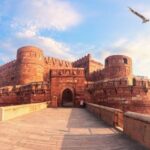
Next is Agra Fort, another UNESCO World Heritage site. You get a guided tour focused on palaces, balconies, and gardens, and it is marked as not included for admission.
Finally, you visit Itmad-ud-Daula, also called Baby Taj, described as a Mughal mausoleum with gardens and multiple outbuildings. The stop is shorter at about 30 minutes, but it is a great follow-up after Taj Mahal because it gives you a different scale and detail level.
Khajuraho day 6 to 7: Chandela temples and the beauty of slower time
Getting to Khajuraho is not a quick hop from Agra. The schedule allocates about 8 hours for the transfer and then checks you into your hotel for the night.
Once you arrive, the itinerary shifts to temples with a more intimate feel. This is where the route stops being only about famous monuments and becomes about artistic styles and stone storytelling.
Lakshmana Temple and Kandariya Mahadev
The first major temple visit is Lakshmana Temple, built in the 10th century by the Chandela ruler Yashovarman. The main idol is of Lord Vaikuntha with three heads and four arms, and admission is listed as free.
Then you go to Kandariya Mahadev Temple, designed and built by Chandela King Vidyadhara in the early 11th century. The description notes it was after Gazni Mahmud had invaded the region and destroyed it, and admission is listed as free.
Khajuraho temple time that lets you actually look
Later, you get time for Khajuraho temples overall, listed as about 5 hours. Admission is listed as free, which helps this day feel like pure sightseeing rather than an afterthought.
If you like seeing how a culture expresses ideas through sculpture, this is the part of the trip you will remember. The pace here is built for observation, not just photos.
Varanasi days 8 to 9: Kashi Vishwanath, Sarnath, Ganges walks, and Ganga Aarti
Varanasi is a different world from the Golden Triangle cities. It’s less about grand imperial architecture and more about everyday spirituality.
The route includes a major travel day from Khajuraho to Varanasi: about 400 km and around 7 hours. After checking in, you then continue sightseeing as planned in the schedule.
Kashi Vishwanath Temple: a dedicated Shiva landmark
Day 9 starts with Kashi Vishwanath Temple, listed as a landmark riverside Shiva temple. It is described as having an 18th-century gold-plated spire and a sacred well, and your time is about 2 hours with free admission.
Sarnath around noon: where Buddha first preached
Next you visit Sarnath around noon, described as a significant Buddhist pilgrimage site where Buddha first preached the Dharma after enlightenment. The schedule gives about 1 hour and notes you will explore ancient ruins of monasteries.
This pairing works well. You get Hindu sacred space in the morning, then shift to Buddhist history for the midday window.
A walk along the Ganges, then Aarti from your seat
Then you head to the Ganges River and enjoy a walk along the river bank for about 1 hour. It is described as a mesmerizing journey through spiritual and cultural heritage, with strolling along the ancient ghats.
In the evening, you see the Ganga Aarti ceremony for about 1 hour. The plan specifies you have the best view from your seat, which is important in Varanasi because the crowd energy can otherwise feel like you are fighting for a clear line of sight.
If you want to make this day easier on yourself, wear comfortable shoes and keep your expectations flexible. Varanasi rewards patience more than speed.
Hotels, breakfasts, and the twin-sharing reality
Accommodation is described as 9 nights if you book the hotel-included option. Breakfast is included daily, listed as 9 breakfasts, which matters because it keeps your mornings simple while you are moving between cities.
Rooms are generally on a twin-sharing basis. If you book 3 people, rooms default to triple-sharing, and there is an additional charge if 3 guests prefer 2 rooms, so it’s worth checking your group size needs early.
The schedule also includes some built-in breathing space. Agra has about 5 hours of free time after arrival, and Jaipur includes a check-in block on day 3 before you start the main sightseeing.
This is where the private format pays off. Even with a lot of monuments, you still get at least some downtime rather than being booked solid from morning to night.
Guides, drivers, and the human side of getting this right
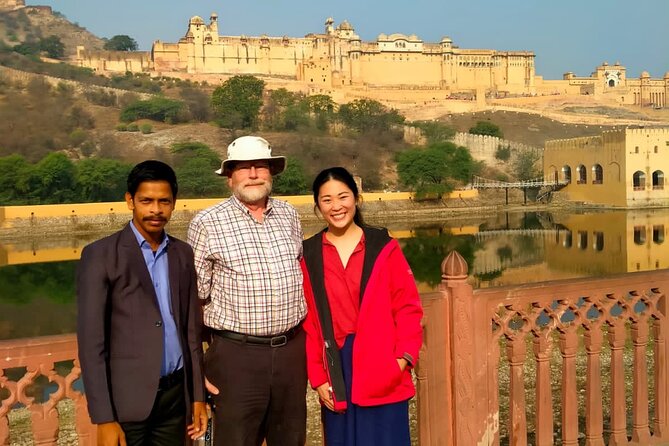
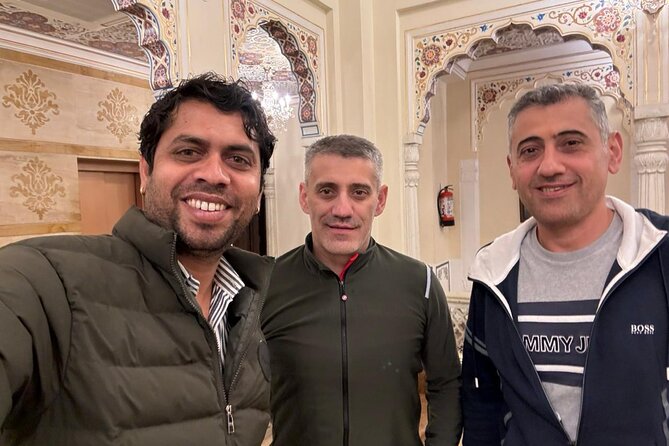
One of the most praised aspects in the feedback you provided is the organization and the team behind it. People highlighted driver attention and safety, plus local guides who were helpful at each stop.
You also have names popping up repeatedly, which is a good sign that the operator has consistent staffing. Drivers mentioned include Surendra, Ajay, Man Singh, Deepak, Maan, and Himmett, and one organizer named Gopal shows up as a key point of contact for planning.
Another standout from the same feedback is that Gopal helped some people add a Jaipur Jhalana leopard safari. That is not stated as part of the core itinerary here, but it does suggest the team can coordinate add-ons if you ask and if timing allows.
For you, the practical take is simple: a private itinerary is only as good as the people running it. When the driver is calm and the guides can explain what you are seeing, the whole route feels smoother.
Should you book this 10-day Golden Triangle with Khajuraho and Varanasi?
I would book it if you want a first-timer-friendly route that covers the Golden Triangle and also includes two major “culture shift” destinations. Delhi, Agra, and Jaipur give you UNESCO highlights and iconic architecture, then Khajuraho and Varanasi add temple sculpture and Ganges ceremony into the same trip.
It is also a good fit if you like structure but still want breathing room. The schedule includes guided stops, breaks, and at least one leisure window in Agra.
I would think twice if you do not want to budget for extra costs. Monument entrance tickets, meals, and tips are not included, and those expenses add up across multiple big sites like Taj Mahal and major temple complexes.
If you decide to go, plan ahead for the ticket and meal side, and you will feel the value quickly. This route works best when you treat it like a guided journey through India’s key layers, not a grab-and-go photo mission.
FAQ
Are monument entrance tickets included?
No. Monument entrance tickets are listed as not included in the tour.
What is included with the tour price?
The tour includes private air-conditioned transport with a driver, hotel or airport pick-up and drop-off, all sightseeing with private local guides, daily hotel breakfast (if you book with the hotel option), bottled mineral water during journeys, and a battery bus ride to and from the Taj Mahal parking lot up to the monument.
Does the price include hotels?
Accommodation is included for 9 nights only if you book the option that includes hotels. Otherwise, your package may not include lodging.
What kind of vehicle will I use?
For 1 to 2 people, it is a 4-seater sedan. For 3 to 4 people, it is a 6-seater wagon. For 5 to 10 people, it is a 10-seater minivan.
Is Taj Mahal admission and transport included?
The tour includes the battery bus ride to and from the Taj Mahal parking lot up to the monument. Taj Mahal admission is listed as not included.
How long is the drive from Khajuraho to Varanasi?
The drive is about 400 km and takes around 7 hours.
Can I cancel for a full refund?
Yes. Free cancellation is available up to 24 hours in advance for a full refund. If you cancel less than 24 hours before the start time, the amount you paid will not be refunded.
More VIP Experiences in New Delhi
More Private Tours in New Delhi


More Tour Reviews in New Delhi



Not for you? Here's more nearby things to do in New Delhi we have reviewed






More Golden Triangle Tours to consider.
 ★ 5.03-Days Private Golden Triangle Tour: Delhi, Agra & Jaipur by CarTickets from $1271,107 traveller reviews
★ 5.03-Days Private Golden Triangle Tour: Delhi, Agra & Jaipur by CarTickets from $1271,098 traveller reviews
★ 5.03-Days Private Golden Triangle Tour: Delhi, Agra & Jaipur by CarTickets from $1271,107 traveller reviews
★ 5.03-Days Private Golden Triangle Tour: Delhi, Agra & Jaipur by CarTickets from $1271,098 traveller reviews
 ★ 5.03-Day Delhi, Agra and Jaipur Private Tour – India Golden TriangleTickets from $110812 traveller reviews
 ★ 5.0Four-Day Private Luxury Golden Triangle Tour to Agra and Jaipur From New DelhiTickets from $160807 traveller reviews
 ★ 5.05 Nights 6 Days Private Golden Triangle Tour – Delhi Agra JaipurTickets from $240574 traveller reviews
 ★ 5.04 Days Golden Triangle TourTickets from $146499 traveller reviews
 ★ 5.0Private Car and Drive for Golden Triangle (4N/5D)Tickets from $167451 traveller reviews
 ★ 5.0Private Golden Triangle Tour Delhi Agra Jaipur ( Top Rated )Tickets from $148436 traveller reviews
More useful Delhi routes